Screen-Free Evening Routines: Simple Ways to Unwind and Sleep Better
Nicholas Lynn··5 min read

A screen-free evening routine is a structured series of low-stimulation, tactile activities done in the last hour before sleep to help signal to your body that the day is over. By swapping bright blue light and passive media consumption for grounded, tactile tasks like colouring, light stretching, or reading printed books, many adults find their minds settle far more quickly.
When you spend your entire evening scrolling through social feeds or watching fast-paced television, your senses remain on alert. Even when you feel physically exhausted, your brain may still be processing visual noise, headlines, and notifications. Establishing an intentional wind-down period without digital devices gives your nervous system the breathing room it needs to shift into rest.
Here is a practical look at why stepping away from screens in the evening helps, along with realistic ways to build a restful wind-down habit that fits your lifestyle.
Why Evenings Without Screens Feel So Different
Most modern evenings involve moving from an office computer to a phone, and then to a television screen. While watching a favourite series or browsing articles can feel like relaxing, digital screens stimulate cognitive pathways rather than quieting them.
The Impact of Blue Light and Mental Overload
Screens emit blue-spectrum light, which closely mimics daytime sunlight. This exposure can delay your body's natural release of melatonin, the hormone that promotes drowsiness. Beyond the light itself, the content we consume on screens often asks something of us. An email demands a decision, a social feed triggers social comparison or curiosity, and breaking news elevates emotional engagement.
The Shift to Tactile Calm
When you remove digital devices from your final waking hour, your attention naturally shifts outward to your physical environment. Tactile actions—holding a pencil, turning paper pages, folding a blanket, sipping warm herbal tea—anchor your focus in the present moment. Instead of absorbing rapid-fire visual information, your senses register texture, gentle rhythm, and quiet.
Building a Practical 45-Minute Screen-Free Routine
A relaxing bedtime routine does not need to be complicated or overly rigid. If an elaborate multi-step schedule feels like another chore on your to-do list, it defeats the purpose. A sustainable evening ritual is simple, forgiving, and pleasant.
Here is a gentle 45-minute template you can adapt:
1. The Digital Sunset (First 5 Minutes)
Pick a realistic time—such as 9:30 PM or one hour before you hope to sleep—to park your phone. Plug it in across the room or in another space entirely so you are not tempted to check it "just once more." Dim the overhead lights and switch to warm, low-wattage side lamps.
2. A Low-Stimulation Creative Break (15–20 Minutes)
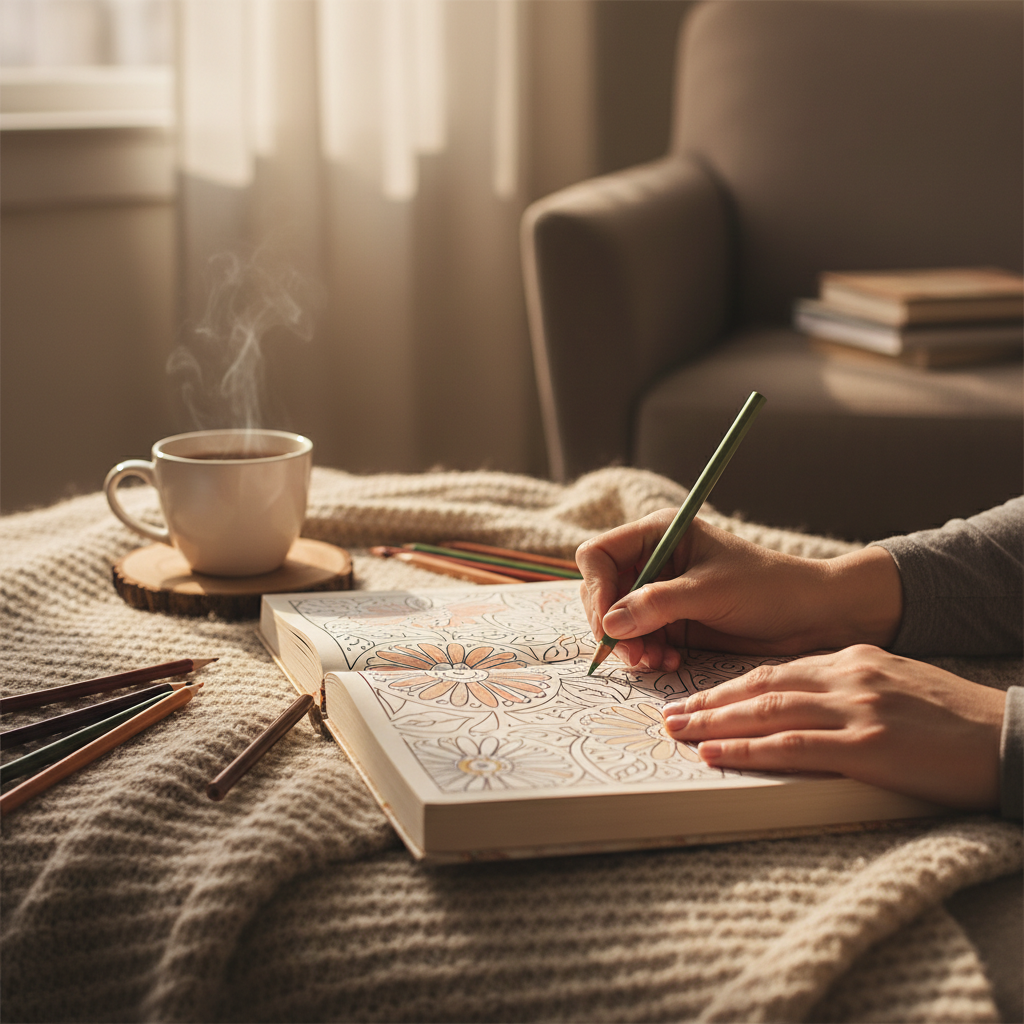
Sit somewhere comfortable with a simple, hands-on task that requires no performance pressure. This is where adult colouring works exceptionally well. Focusing on filling in geometric shapes or botanical leaves requires just enough attention to keep intrusive thoughts away, yet not enough to stimulate deep problem-solving.
3. Gentle Body Reset (10 Minutes)
Follow your creative time with light physical grounding. You might do slow neck rolls, gentle shoulder releases, or a simple forward fold. If stretching is not your preference, a warm shower or washing your face slowly with a warm cloth provides a similar sensory release.
4. Quiet Bedside Reading or Reflection (10 Minutes)
Slip under the covers with a printed book, a notebook, or simply your own thoughts. Jotting down two or three ordinary things you appreciated during your day can help quiet lingering worry before you switch off the bedside lamp.
How Colouring Fits into Evening Wind-Down
Many adults who try to meditate in the evening find that sitting in silence with their eyes closed simply amplifies racing thoughts. Colouring provides what mindfulness practitioners often describe as an "attentional anchor."
At Zen Colour Art, our creative philosophy is that colouring should feel calm and unhurried. Pages are designed to be inviting rather than intimidating, with a balanced mix of open space and quiet detail. When you pick up a coloured pencil before bed, several positive shifts happen naturally:
- Repetitive, rhythmic motion: The physical stroke of moving a pencil across artist-grade paper creates a steady, repetitive sensory loop that many people find grounding.
- Low stakes: There is no blank canvas to conquer and no correct outcome. You are simply choosing a shade and following line art that already exists.
- A defined boundary: Colouring a small section or a single mandala offers a satisfying sense of completion without demanding hours of continuous focus.
If you are looking for an evening practice, a title like Moonlight Mandalas is designed specifically for this purpose. It features 72 pages of low-stimulation mandalas printed on thick 120gsm paper, keeping your nighttime ritual quiet and uncluttered. If you prefer natural themes, Floral Reverie offers botanical illustrations of wild meadows and quiet bouquets that pair naturally with a slow cup of chamomile tea.
For more ideas on weaving creative practices into your week, explore our guide on mindful colouring routines for beginners.
Practical Tips for Making Your Routine Stick
Adopting a new habit takes a little patience, especially when phones are engineered to capture our attention. A few minor adjustments can make screen-free evenings much easier to sustain:
- Keep supplies visible and ready: Place your colouring book, sharpener, and a small tin of pencils on your nightstand or beside your favourite armchair. If you have to dig through a cupboard to find them, you are more likely to pick up your phone instead.
- Avoid bright art markers at night: While alcohol markers and vivid colours have their place, soft coloured pencils or muted gel pens tend to feel gentler on tired eyes in low evening lighting.
- Do not grade your work: A nighttime colouring session is not an art test. Leave pages unfinished if you get drowsy halfway through; you can always return to them tomorrow.
- Protect the room environment: Keep bedroom temperatures comfortably cool and avoid harsh white bulbs in your reading lamps.
If late-night phone habits have become a stubborn pattern, reading about how short colouring breaks compare to doom-scrolling can provide extra motivation to test a digital sunset for just one week.
A Calm Way to End the Day
Winding down in the evening is not about discipline; it is about offering your body a gentle invitation to rest. By closing laptops, setting aside smartphones, and spending fifteen quiet minutes with paper and pencil, you create a buffer between the demands of your daytime routine and the renewal of deep sleep.