Mindful Colouring for Beginners: A Simple Starting Routine
Nicholas Lynn··7 min read

Mindful colouring is the practice of focusing your full, gentle attention on the tactile act of applying colour to paper. You do not need artistic experience, complex colour theory, or hours of open time to do it. By pairing simple, repetitive strokes with quiet breathing, many people find that even ten minutes of colouring can support a calmer state of mind and offer a welcome break from digital screens.
If you have ever felt intimidated by an intricate adult colouring book or wondered whether you are "doing it right," this beginner guide offers an unhurried, low-pressure way to start.
Why Colouring Works as a Mindful Practice
Mindfulness is simply resting your attention in the present moment without judging whatever comes up. While seated meditation can sometimes feel difficult when your mind is racing, colouring provides a gentle anchor for your senses.
When you sit down with a page and a pencil, your focus naturally narrows to tangible details:
- The subtle tooth and texture of artist paper under your hand.
- The rhythmic sound of graphite or coloured wax moving across the sheet.
- The deliberate choice of moving from one small shape to the next.
Because the outlines are already provided, you are freed from the pressure of drawing something from scratch. Many people find that this balance between gentle structure and creative freedom helps quiet everyday mental chatter.
What You Need to Get Started
One of the best aspects of mindful colouring is how little equipment it requires. You do not need a 120-piece art set or specialty studio desk. In fact, fewer choices often lead to a calmer experience.
1. A Simple Colouring Book
Look for designs that feel welcoming rather than overwhelming. Pages should feature balanced line weights and a healthy mix of open space and detail so you do not feel rushed.
Paper quality also matters. Thicker sheets, such as 120gsm acid-free artist paper, keep colours vibrant and prevent markers or gel pens from bleeding through to the next page. Single-sided designs are especially helpful because they let you work with heavier media without worrying about spoiling a pattern on the back.
2. A Small Set of Colouring Pencils or Gel Pens
Begin with a modest set of 12 to 24 coloured pencils or fine-tip markers. Coloured pencils are ideal for beginners because they allow for soft pressure, effortless blending, and tactile feedback.
3. A Comfortable, Uncluttered Spot
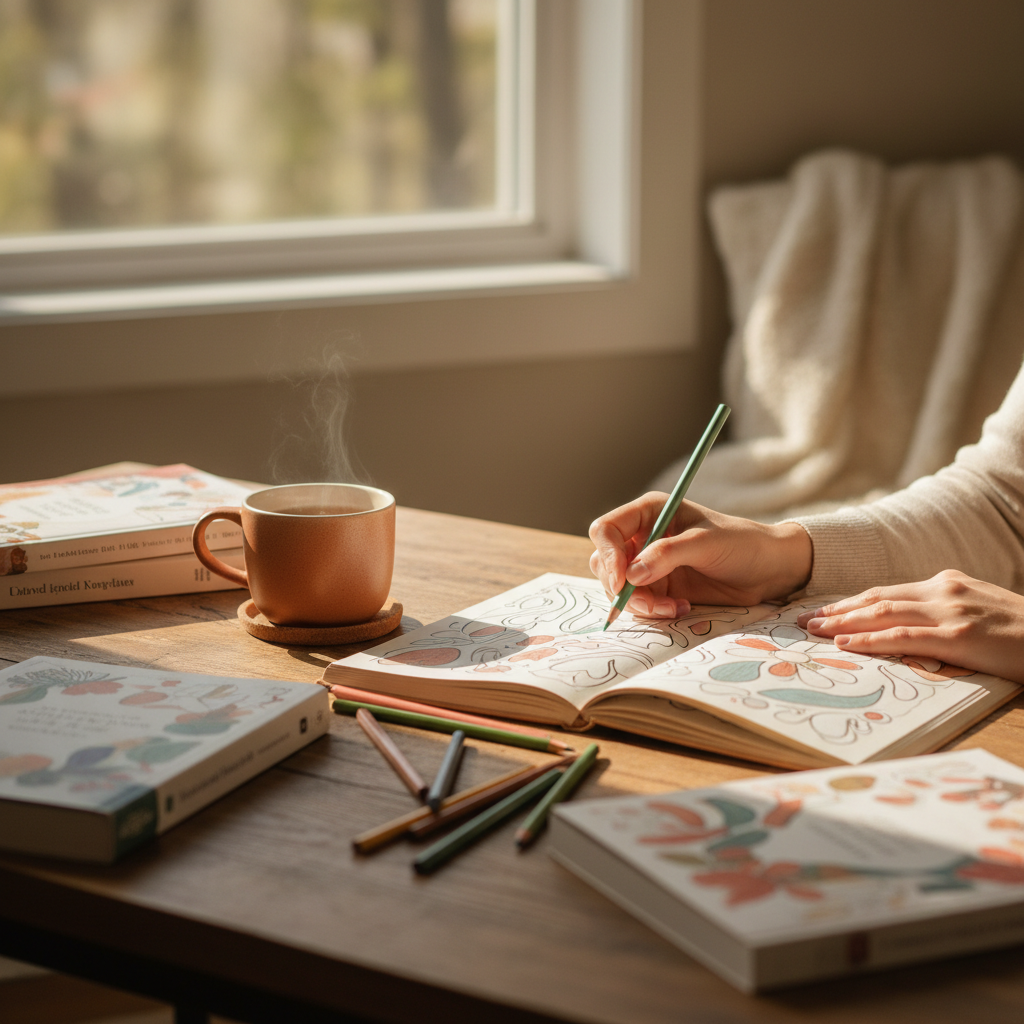
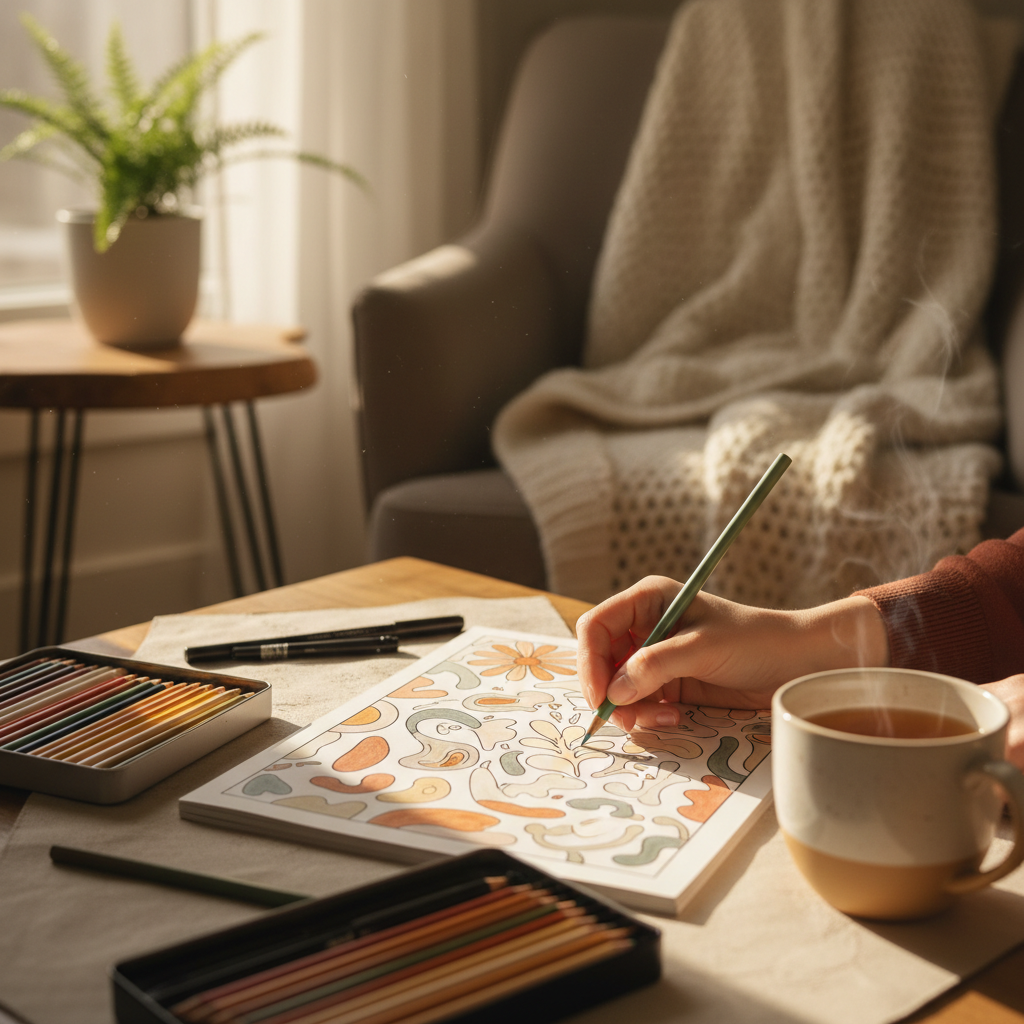
Find a seat with decent lighting—a kitchen table near a window or an armchair with a lap desk. Put your smartphone in another room or turn on do-not-disturb mode for the duration of your session.
The 10-Minute Starting Routine: Step by Step
Building a new creative habit works best when it feels manageable. Here is a step-by-step routine designed to fit into ten unhurried minutes, whether you colour during a morning pause, a quiet afternoon break, or as part of your evening wind-down.
[10-Minute Routine Overview]
Minute 0–2:   Settle in, take three breaths, pick 3 to 4 colours
Minute 2–8:   Colour a single section with steady, rhythmic strokes
Minute 8–10:  Step back, observe your work without critique, and pause
Step 1: Arrive and Breathe (Minutes 0–2)
Sit comfortably and place your hands flat on your colouring book. Close your eyes and take three slow, steady breaths. Notice the physical feeling of your feet on the floor and the quiet in the room.
Open your book to a fresh page, but do not worry about completing the whole illustration today. Pick three or four colours that catch your eye. Limiting your palette removes decision fatigue so your mind can rest.
Step 2: Focus on the Physical Sensation (Minutes 2–8)
Pick one small shape or corner of the design to begin. As you lay down pigment, pay close attention to the sensory details:
- Pressure: Notice how firmly you grip the pencil. Loosen your fingers if your grip feels tight.
- Stroke: Match your colouring strokes to a steady, rhythmic pace.
- Breath: Try to breathe evenly as you fill each boundary.
If you find your mind wandering back to work emails, chores, or tomorrow's to-do list, that is completely normal. Gently notice the thought, let it drift away, and return your awareness to the point where the pencil touches paper.
Step 3: Pause and Appreciate (Minutes 8–10)
When your ten minutes are up, set your pencil down. Take a moment to look at the patch of colour you created.
Avoid judging the technical outcome. There are no grades or deadlines here. Simply acknowledge the ten minutes of quiet you set aside for yourself. If you feel relaxed and want to keep colouring, continue as long as you like. If your time is up, close the book and go about your day feeling a little more grounded.
Three Common Beginner Traps (and How to Avoid Them)
| Trap | Why It Happens | Mindful Remedy |
|---|---|---|
| Pressure to finish | Treating the page like a task to complete. | Treat each shape as its own complete mini-meditation. |
| Choice paralysis | Having too many pencil colours on the table. | Select just 3 colours before you begin each session. |
| Perfectionism | Worrying about colouring outside the lines. | Treat "mistakes" as spontaneous character marks. |
1. Treating Colouring Like a Task
When people see an intricate page, their instinct is often to hurry toward the finish line. Mindful colouring is not about completing books; it is about the calm you experience while colouring one single leaf, petal, or curve. If you only finish one small section in a session, that session is still a complete success.
2. Overthinking Colour Harmony
You do not need formal art training to choose pleasing colours. If you feel stuck, try one of these simple starting frameworks:
- Monochrome calm: Use three shades of a single colour (for instance, sky blue, ocean blue, and navy).
- Nature inspired: Choose colours you see outside your window, such as forest green, moss, and stone grey.
- Intuitive pick: Grab two pencils without thinking and let them guide the page.
For more insight on pairing shades naturally, explore our guide on Colour Theory Basics for Adult Colouring.
3. Comparing Your Work to Social Media
Online art communities are full of heavily shaded, photorealistic colouring pages. Remember that mindful colouring is an inward practice, not a performance. Your page does not need to be displayed anywhere; it simply needs to serve your calm.
Pairing Colouring with Daily Habits
Attaching your new mindful colouring routine to an existing daily habit makes it much easier to sustain over time. Here are three natural moments to slip ten minutes of colouring into your routine:
- The Midday Reset: Keep a small book and a pencil wrap near your desk. After finishing lunch, spend eight minutes colouring before opening your email inbox.
- The Creative Afternoon Pause: In Simcoe County and across Ontario, late afternoons can be the perfect time to trade screen time for tactile art beside a warm cup of herbal tea.
- The Evening Screen Swap: Swap out ten minutes of phone scrolling before bed for gentle colouring under warm lamplight. For step-by-step guidance on evening routines, read How to Build a Screen-Free Evening Routine with Adult Colouring.
Thoughtful Titles from Our Barrie Studio
At Zen Colour Art, our creator Nicholas Lynn designs colouring books to feel inviting rather than intimidating. Every title is created with an intentional balance of open space and quiet detail so you can settle in without feeling rushed.
If you are looking for a title to begin your mindful routine, consider:
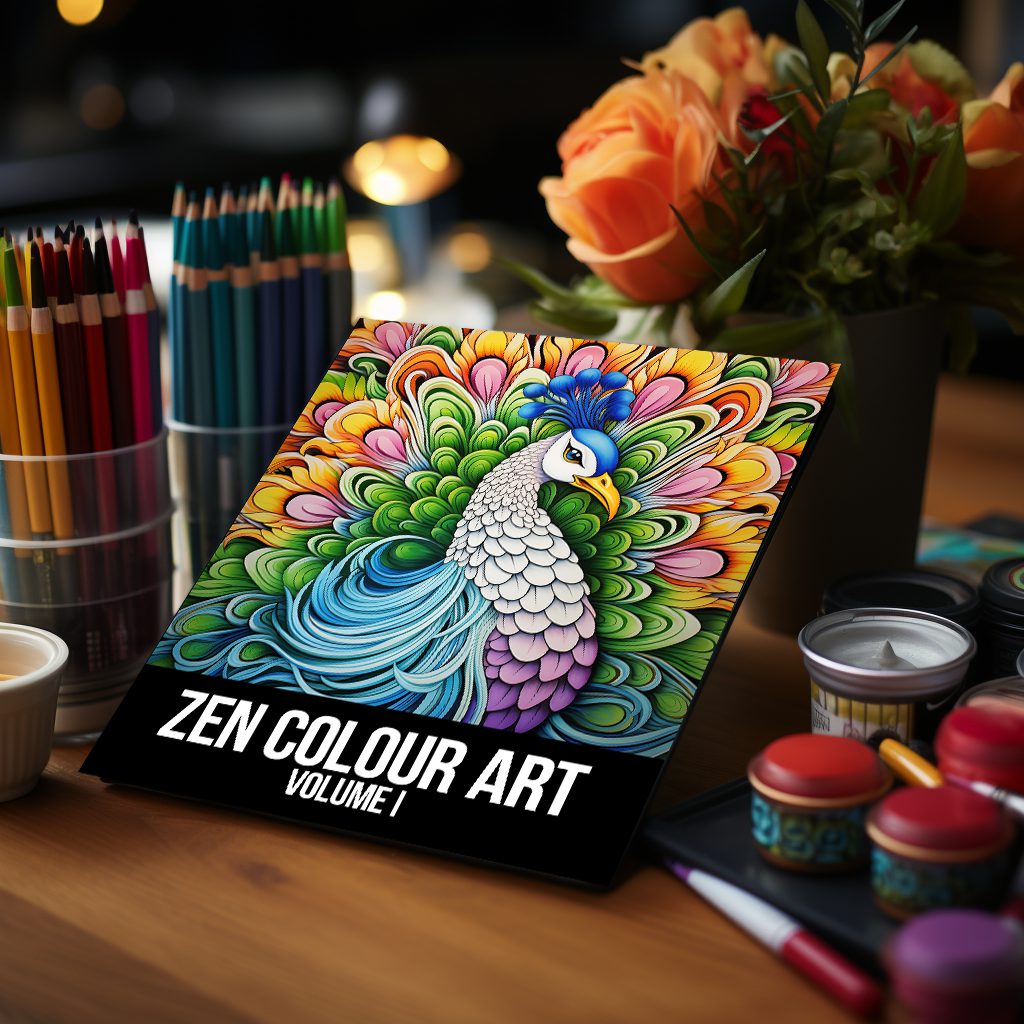
- Volume 1 (The Calm Collection): A 96-page hand-curated mix of mandalas, florals, and quiet patterns chosen specifically for deep relaxation (CAD $28.00).
- Mandala Edition (Mindful Mandalas, Vol. 1): 80 pages featuring forty hand-drawn mandalas designed for slow, repetitive focus, printed single-sided on 120gsm artist paper (CAD $24.00).
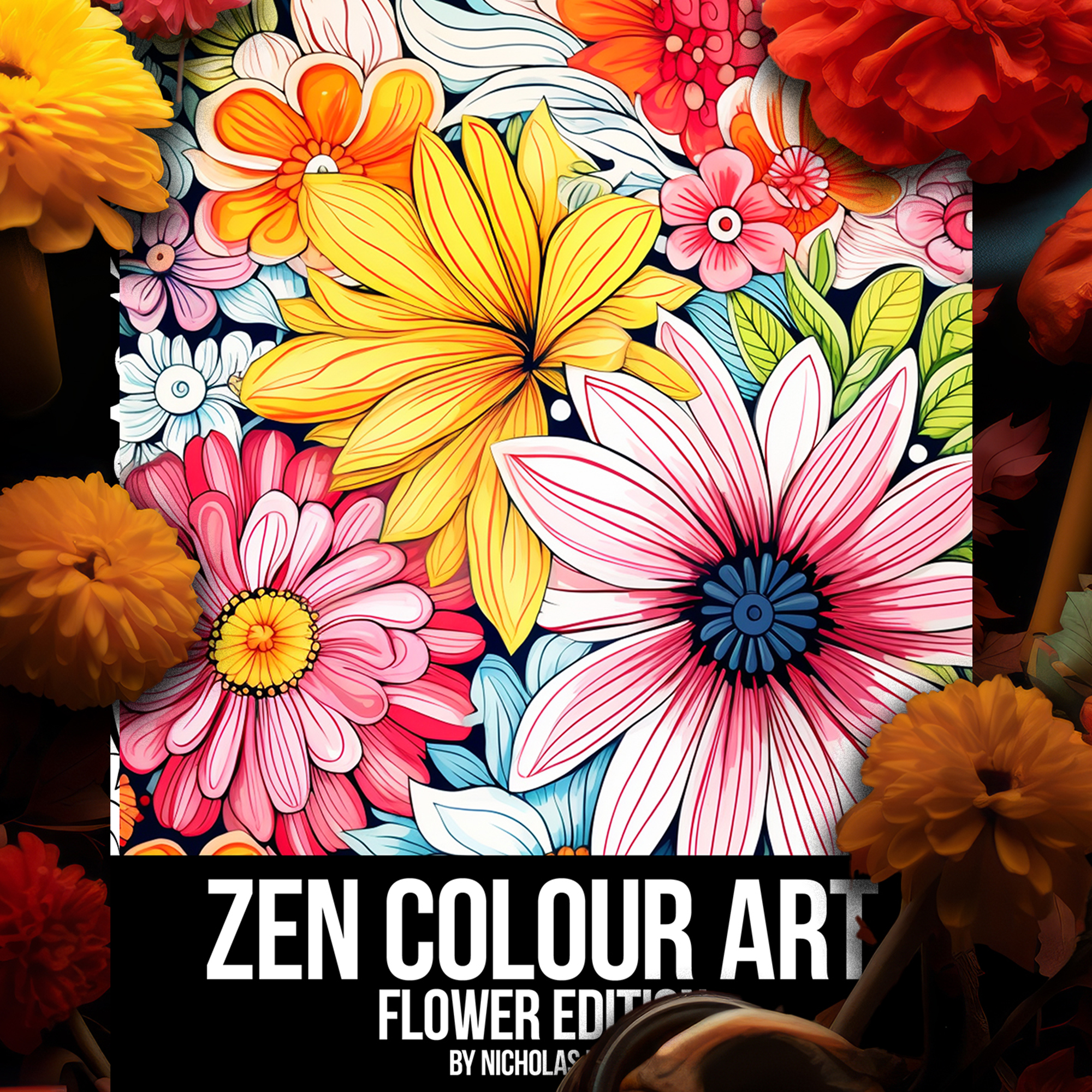
- Flower Edition (Floral Reverie): 80 pages of lush botanicals, wild meadows, and quiet bouquets suited for gentle, nature-inspired sessions (CAD $24.00).
Every book is printed on heavyweight 120gsm acid-free paper, so your pencils glide smoothly and gel pens will not ghost through. Orders ship across Canada within 1 to 2 business days, and local pickup is always available at 101 Grace Crescent in Barrie, Ontario.
Conclusion
Mindful colouring does not demand skill, extensive tools, or rigid discipline. By dedicating just ten minutes to simple colours and quiet strokes, you can carve out an unhurried, tactile sanctuary in the middle of a busy week. Choose three colours, open a page, and let your hands do the resting.