10 Minutes of Colouring vs Doom-Scrolling: Back to Calm Tonight
Zen Colour Art··8 min read
Back to Calm: Why 10 Minutes of Colouring Beats Doom-Scrolling
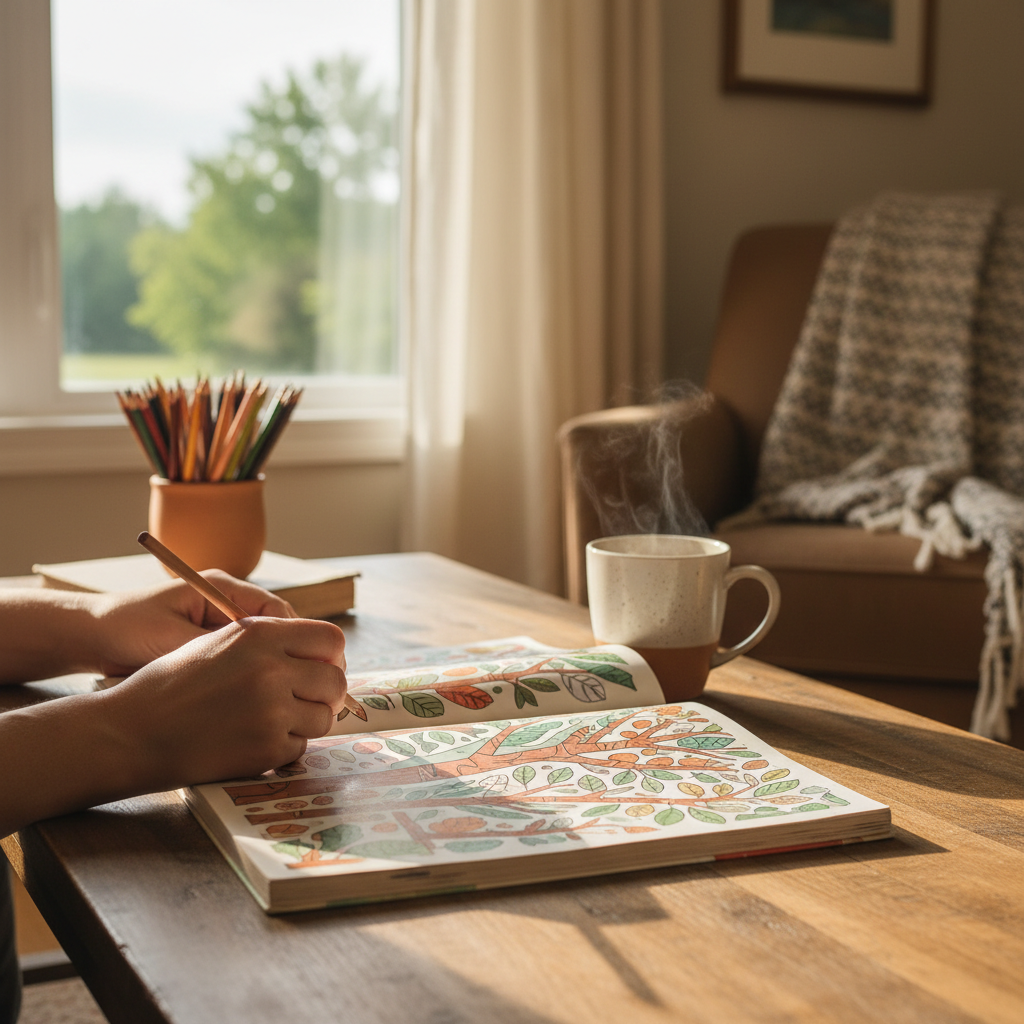
You open your phone "for a second" and an hour later you're still scrolling. The headlines, the feeds, the endless stream of worry — it's called doom-scrolling and it steals more than time. As summer turns to fall and we enter the Back to Calm season, there's a simple, screen-free swap that actually works: ten minutes of adult colouring.
Colouring isn't childish. It's a portable, evidence-backed way to downshift your nervous system, interrupt rumination, and soothe your mind. Whether you're winding down in Barrie after a day at work, settling the kids, or coming home from an evening on the waterfront, ten focused minutes with pencils can do what endless scrolling cannot: help you sleep, think clearer, and feel calmer.
In this guide you'll find why colouring beats doom-scrolling, how ten minutes is enough, a practical evening routine, supplies that won't overwhelm you, local ideas for Barrie and Simcoe County, and voice-search-friendly tips you can use tonight.
Doom-Scrolling vs Colouring: what's happening in your brain
Doom-scrolling is designed to capture attention. Algorithms feed sensational content, and your brain responds with a stress cocktail:
- Cortisol spikes when you read alarming news or engage in heated online conversations.
- Blue light delays melatonin release, making it harder to fall asleep.
- Rumination keeps neural pathways active, replaying worries until you can't switch off.
Colouring does almost the opposite:
- It activates the parasympathetic nervous system — the 'rest and digest' mode — when you slow down and focus.
- Repetitive, low-stakes activity helps quiet the prefrontal cortex that plans and ruminates.
- Sensory engagement (colour, texture, pencil pressure) draws attention into the present moment — a small dose of mindfulness.
You don't need an hour of perfect mindfulness to benefit. Ten minutes is long enough to interrupt a reactive spiral, reduce physiological arousal, and set a different tone for the rest of the night.
Why 10 minutes works (not too little, not too much)
Micro-habits win because they're doable. Ten minutes: realistic, repeatable, and long enough to shift mood.
- Quick cortisol reduction: short, calming activities lower stress hormones measurably.
- Breaks the scrolling loop: a deliberate activity displaces automatic phone habits.
- Enter a flow window: 10–15 minutes is often the sweet spot to enter a light flow state — focused but relaxed.
- Consistency over intensity: daily 10-minute sessions beat occasional long sessions.
If you can commit to ten minutes tonight, you build momentum for better sleep, clearer thinking, and an evening that feels intentional instead of reactive.
A 10-minute nighttime colouring routine you can start tonight
Follow this simple routine to replace doom-scrolling with a small, nurturing ritual:
- Set the timer: 10 minutes on your phone or a kitchen timer across the room.
- Put your phone away: airplane mode or in another room to avoid notifications.
- Choose a page: something gentle — florals, waves, geometric patterns.
- Pick 3-4 colours: limited palettes reduce decision fatigue and increase satisfaction.
- Breathe and begin: two slow breaths, then colour for 10 minutes. Let perfection go.
- Finish with a small closing: note how you feel, dim the light, head to bed.
Why limited colours? Using only a few hues encourages cohesion and reduces the "paradox of choice". You get visible progress quickly, which boosts mood.
Supplies that make 10 minutes feel luxurious (without the clutter)
You don't need expensive gear. Choose a few things that invite you to return:
- Good-quality coloured pencils (wax or oil-based) — smooth, blendable, and forgiving.
- One or two fine liners for small details.
- A single adult colouring book or a stack of themed pages.
- A small pencil sharpener and an eraser.
- A small stand or cushion for comfortable posture.
If you live in Barrie or Simcoe County, local shops and markets often carry independent art supplies and handmade stationery — support local and find items that feel personal. Browse our shop for curated starter kits paired for calm.
Quick variations for different nights
- The Busy Brain Night: Choose mandala or repetitive patterns to quiet thinking.
- The Emotional Night: Use warm colours for comfort (mustard, rose, soft orange).
- The Creative Spark Night: Pick an abstract page and experiment with layering colours.
- The Social Night: Colour with a partner or friend, in person or via video, and share playlists.
Whatever the variation, the point is to create a predictable pause that replaces reactive scrolling.
Why this works for sleep and mood
Studies on relaxation techniques and simple arts-based tasks show benefits for sleep quality and anxiety reduction. Colouring's calming effect can:
- Reduce racing thoughts that keep you awake.
- Lower heart rate after stimulation.
- Change the narrative from 'what if' to 'right now'.
Plus, removing screens an hour before bed reduces blue light exposure — helping your body produce melatonin naturally.
Quick science snippets (voice-search friendly answers)
- Q: "Does colouring help with stress?" A: Short, focused colouring sessions can reduce stress by promoting relaxation and attention to the present.
- Q: "How long should I colour at night?" A: Ten minutes is an effective, evidence-aligned micro-habit to shift mood and prepare for sleep.
- Q: "Is colouring helpful for adults?" A: Yes — adult colouring supports mindfulness, reduces rumination, and can ease anxiety.
These concise answers work well for voice-search and featured snippets — clear, direct, and action-oriented.
Make it feel like a seasonal ritual (Back to Calm)
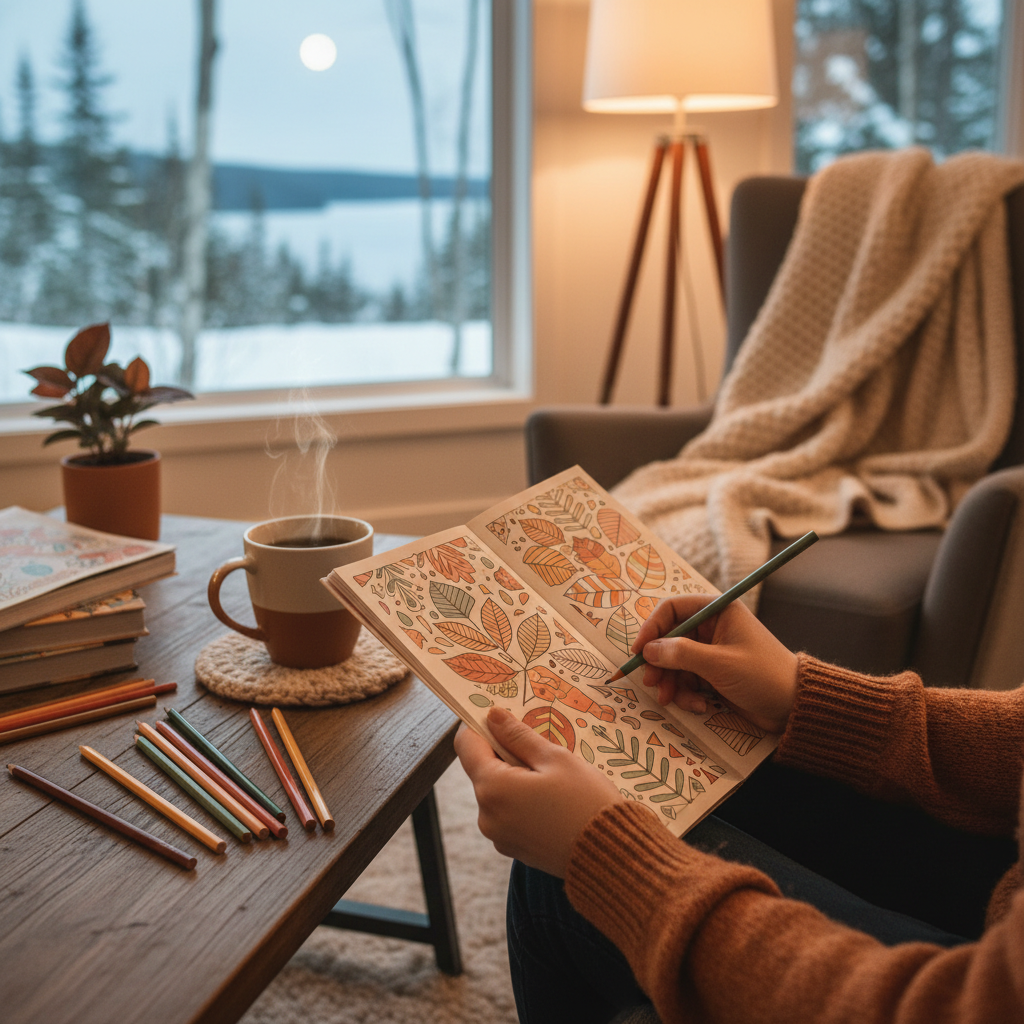
Back to Calm is about gentle transitions: slowing down as daylight shortens, and re-centering routines that support rest. Colouring fits perfectly as a seasonal ritual:
- Use autumnal palettes (deep greens, rusts, ochres) to mirror local Barrie scenery.
- Pair your 10-minute session with a calming tea or warm socks.
- Keep a small 'Back to Calm' basket — colouring book, pencils, timer — by your favourite chair.
Local idea: gather a small group at a cozy Barrie café or community centre for a Back to Calm colouring evening. It's low pressure and deeply restorative.
Where to fit colouring in your evening schedule
- Right after locking up work devices: Draw a clear boundary between work and rest.
- After dinner, before family time: Recharge without disappearing into screens.
- As the last screen-free step before bed: a non-strenuous wind-down.
A regular placement in your evening makes it automatic. Your brain begins to associate colouring with calm and sleep readiness.
Obstacles and how to overcome them
Common roadblocks and quick fixes:
- "I don’t have time." Commit to one ten-minute session for a week — you’ll notice the difference.
- "I’m not artistic." Colouring is about presence, not masterpieces. No one needs to see your pages.
- "My phone beckons." Put it in another room, use a physical timer, or charge it across the house.
- "I get bored." Change the page, limit colours, or try a 5-minute doodle warm-up.
Small adjustments keep the habit alive.
Bringing Barrie and Simcoe County into the practice
As a Barrie-based brand, we love suggesting local touches:
- Use colours found on the Barrie waterfront at sunset — navy blues, soft pinks, and warm golds.
- Combine colouring with a short walk at Heritage Park earlier in the evening.
- Pick up pencils or a locally printed colouring book at small shops in downtown Barrie or farmers' markets.
Community matters. Invite a neighbour or friend from Simcoe County to try a weekly Back to Calm colouring call to keep each other accountable.
How to measure change without obsessing
You don’t need data to know it helps, but small tracking can be motivating:
- Mood check: rate your calm on a 1–5 scale before and after each session for a week.
- Sleep log: note time to fall asleep and number of awakenings.
- Habit streak: mark sessions on a calendar or use a habit tracker.
These simple measures help you see the cumulative benefit of consistent ten-minute sessions.
When colouring isn't enough (and what to do)
Colouring is a powerful tool, but it's one tool among many. Seek professional help if:
- You experience persistent insomnia lasting weeks.
- You have severe anxiety or depression symptoms.
- You find it hard to function day-to-day.
Complement colouring with other restful habits: evening walks, talk therapy, reduced caffeine, and a consistent sleep schedule.
Quick tips for staying consistent
- Keep your kit visible: an inviting stack by your chair is an invitation, not a chore.
- Make it social: a weekly colouring night with a friend is accountability and joy.
- Reward yourself: add a small pleasant endnote (a chapter of a book, a cup of herbal tea).
Consistency grows the calm.
Ready-to-try 10-minute colouring patterns
- Mandalas: great for stabilizing attention.
- Waves and organic shapes: soothing and forgiving.
- Repeating geometric tiles: satisfyingly structured.
- Simple florals: familiar forms that invite color exploration.
Pick one pattern and use it for a week to notice cumulative calming effects.
A note about perfectionism and comparison
Doom-scrolling often feeds perfectionism — seeing curated lives and polished outcomes. Colouring invites the opposite: process over product. If you catch yourself comparing, return to breath and remind yourself: this is for you, not for an audience.
Where to find more resources
If you'd like more guided pages, seasonal kits, or community events in Barrie/Simcoe County, check our curated starter kits at shop and browse calming reads and how-to articles on our blog. We design products and local events that make the Back to Calm season welcoming and accessible.
Final thought: small swaps, big returns
Ten minutes sounds small — and that's the point. Small, reliable swaps beat dramatic changes because they fit real life. Tonight, when the urge to scroll arrives, try this: put the phone down, set a timer for ten minutes, pick three colours, and colour with gentle attention. It may be the simplest way to reclaim your evening and sleep a little easier.
Start tonight. It only takes ten minutes to choose calm over the noise.