Why 10 Minutes of Colouring Beats Nighttime Doom-Scrolling This Summer
Zen Colour Art··8 min read

Why 10 Minutes of Colouring Beats Doom-Scrolling at Night (Summer Edition)
We’ve all been there: one glance at our phone turns into an hour of headlines, algorithms and anxiety. Doom-scrolling doesn’t feel like a choice when the feed keeps pulling you in — especially on warm summer nights when daylight lingers and bedtime stretches.
But what if 10 minutes of colouring could replace that spiral? Not a grand art project, not a long commitment, just ten calm minutes with a pencil and a page. For adults seeking stress relief, mindfulness, and a screen-free creative habit, this tiny ritual can be transformative. Especially here in Barrie and across Simcoe County, where summer evenings invite a slower pace and a chance to reconnect.
A short story from Barrie
One of our customers told us she used to fall into doom-scrolling after dinner. Summer felt endless, but by 10:30 p.m. her mood would slump and sleep became elusive. She started keeping a small colouring pad and a neutral pencil by her favourite chair. Ten minutes, no pressure. She noticed she slept deeper within a week. That simple switch gave her evenings back.
If that sounds familiar, read on. This post will explain why colouring works, how to set up a 10-minute routine, summer-themed prompts, and ways to make it feel like a little nightly gift.
What doom-scrolling does to your night
Doom-scrolling is more than a bad habit. It’s a physiological pattern that keeps your body in a state of alert.
- Blue light from screens can interfere with melatonin, the sleep hormone.
- Continuous negative or sensational content raises cortisol and adrenaline.
- Passive scrolling trains your brain to stay reactive rather than restorative.
- Nighttime rumination increases anxiety and can fragment sleep.
A short burst of doom-scrolling rewires your evening—not for rest, but for stimulation. You go to bed with your nervous system still in gear.
Why colouring is an antidote (in just 10 minutes)
Colouring is often dismissed as a children’s activity. But for adults it’s a gentle, low-stakes practice that blends creativity, focus, and sensory pleasure. Here’s what happens in ten minutes:
- Focus shifts from external noise to a simple, repetitive task. That shift soothes the mind.
- Fine motor activity activates the parasympathetic nervous system (the ‘rest and digest’ response).
- Colour choices and tactile engagement bring mindful awareness to the present moment.
- The screen-free sensory break reduces blue light exposure right before sleep.
It’s not about output or perfection. Ten minutes of sustained, deliberate colouring nudges your brain out of reactivity and toward rest.
Quick science (without the jargon)
Research on colouring and mindfulness shows consistent benefits for stress, anxiety and mood. Studies comparing active, creative tasks to passive screen time find improved emotional regulation and lowered physiological arousal.
Put simply: when you choose a small, tactile activity instead of a scrolling loop, your body responds by calming down.
How to create a 10-minute evening colouring ritual
The power of this habit lies in its simplicity and consistency. Here’s a tiny ritual you can try tonight:
- Pick a card-sized colouring sheet or a single page from a summer-themed colouring book.
- Put your phone in another room or flip it face-down and set a soft alarm for 10 minutes.
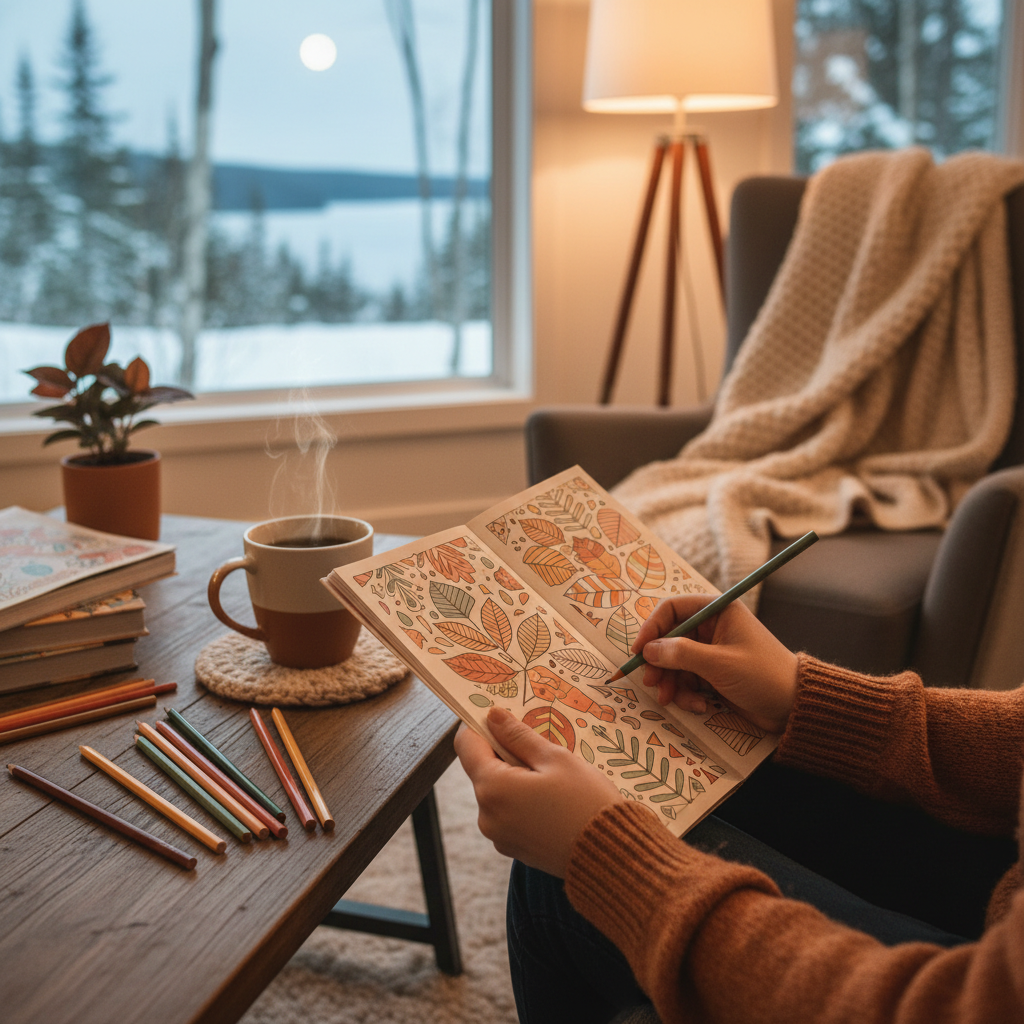
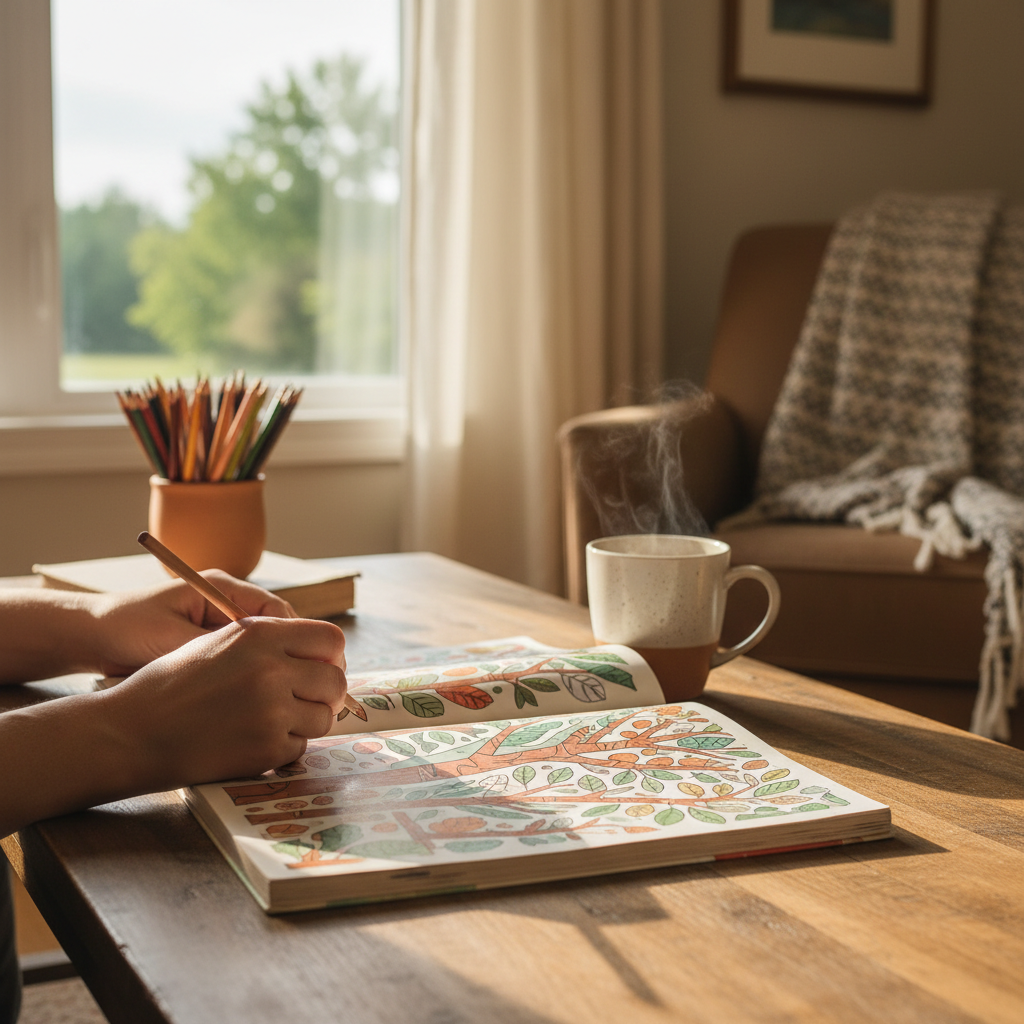
- Sit in a comfortable chair, ideally near a window or on your porch if it’s warm out.
- Take three slow breaths, then start colouring with one pencil or marker—no perfectionism.
- When the timer rings, take a moment to notice how you feel and tuck your page away.
Why this works: a short, repeatable ritual lowers the activation energy. Ten minutes feels doable even after a busy day.
Tips for success
- Keep supplies visible: a small tray on your bedside table or coffee table helps the habit stick.
- Use a soft wrist motion rather than tight gripping; relaxation is the aim.
- Choose colour families if decision fatigue is an issue (e.g., choose blues and warm neutrals).
- Use ambient summer sounds—crickets, a fan, a distant lawnmower—to deepen relaxation.
Summer colouring prompts for adults
Summer offers simple themes that connect you to warmth, light and place—especially if you live in Barrie or Simcoe County.
- Sunset over Kempenfelt Bay: warm oranges and mauves.
- Lakeside picnic pattern: gingham, berries, and blanket textures.
- Wildflower border: pops of daisy white, wild lupin purples, and meadow greens.
- Night garden: deep blues with pops of firefly yellow.
- Cottage window: cool neutrals with sunlit highlights.
These prompts help you anchor the practice in seasonal sensory memories and local places you love.
A mindful 10-minute sequence (step-by-step)
Use this sequence to move from stress to rest in ten minutes:
- Set intention: “I’m colouring for calm.”
- Breathing cue: inhale 4 counts, exhale 6 counts (two cycles).
- Colour for one area first—fill one motif slowly.
- Pause at halfway: notice tension in shoulders, unclench.
- Complete remaining space, keep breaths steady.
- Close with gratitude: name one small thing from today.
That last step—gratitude—frames the night for positive reflection, not rumination.
Supplies that make a 10-minute habit feel special
You don’t need expensive tools, but a few thoughtful supplies make the ritual inviting:
- A small softbound colouring booklet or single cards (lightweight and easy to store).
- A handful of quality pencils or water-soluble pencils for smooth blending.
- A pencil sharpener and small eraser.
- A tiny tray or tin to hold your tools.
If you’re local to Barrie, visit small shops that carry paper goods, or check our shop for curated kits designed for short rituals.
The rhythm of summer nights in Simcoe County
Summer evenings in Barrie have a particular magic: long golden light, cooler breezes over Kempenfelt Bay, and the comfort of open windows. That seasonal energy makes it easier to unhook from screens and sink into a low-key creative practice.
Try bringing your coloring spot outside on a warm evening. The shift in atmosphere—birds, warm asphalt, distant boat hum—changes how your mind processes the activity. Colouring while the sky deepens lights a natural bridge to sleep.
When 10 minutes becomes more
Sometimes ten minutes is all you want. Other nights the page invites you to keep going. Both are wins. The aim is not length but consistency.
If you find yourself enjoying longer sessions, that’s fine. But if your evenings are crowded, keep the commitment at ten minutes. The benefits come from repeatability.
Combating the urge to doom-scroll: quick strategies
Colouring works best with a few guardrails to make it stick:
- Charge your phone outside the bedroom.
- Use ‘Do Not Disturb’ during your colouring window.
- Replace the ‘open apps’ habit with a physical cue: a colouring card on the couch.
- Tell a friend you’re trying a nightly screen break—social accountability helps.
These small environment tweaks reduce friction and support the habit.
Stories from our Barrie community
We hear the same theme: people reclaim their evenings. A teacher in Innisfil uses a 10-minute page to decompress after grading. A nurse on nights swaps scrolling for a little nature-themed colouring and says it makes the transition to sleep gentler.
Shared rituals matter. If you want more ideas or to connect with folks trying the same habit, find summer colouring posts on our blog or tag us on social.
Morning benefits of an evening reset
It’s not just about sleep. Ten minutes of calming activity at night sets you up for better mornings:
- Lowered nighttime reactivity leads to fewer micro-awakenings.
- Improved sleep quality boosts mood and cognitive clarity the next day.
- Regular creative time preserves cognitive flexibility and reduces burnout.
In short, those ten minutes compound into clearer days.
Common objections (and gentle responses)
- "I’m not creative." You don’t need to be. Colouring is about presence, not product.
- "I don’t have time." Ten minutes is less time than choosing one additional social feed. Put it on the clock and try it.
- "I’ll feel silly." If it helps you sleep and feel calmer, it’s worth it.
Give yourself permission to try without expectation.
A short 10-minute colouring checklist
- Choose a page: simple motif or summer scene.
- Pick 1–3 colours.
- Set a soft timer for 10 minutes.
- Sit comfortably and breathe.
- Notice how you feel afterwards.
Carry this checklist on a small index card if you need a cue.
Make it your own: small variations
- Add soft music or summer soundscapes.
- Colour with a partner: quiet companionship without screens.
- Keep a ‘colouring journal’ of pages you finish and how you felt.
These tiny rituals personalize the habit and make it more joyful.
Where to find quick, adult-friendly colouring pages
Look for single-sheet packs, postcards or small booklets that invite short sessions. Our curated kits at shop are designed for ten-minute rituals and include summer palettes inspired by local Barrie landscapes.
You can also find printable single pages in our blog posts for seasonal prompts and stroll-worthy patterns.
Final note: permission to pause
Doom-scrolling fills space with noise. Colouring fills it with presence. Ten minutes doesn’t erase stress or fix everything, but it gives you a gentle reset—a chance to be tactile, to breathe, and to honour the day.
This summer in Barrie, as the sun softens and the nights warm, give yourself ten minutes. Keep the phone away. Colour one page. See how your sleep shifts, how your mood eases, and how a small creative act becomes a nightly kindness.
If you’re ready to try, explore our handheld kits and quick-page packs at shop, or read more about simple rituals on our blog. Nighttime doesn’t have to be a battleground between you and your feed. With a pencil and ten minutes, you can choose rest.
Resources and next steps
- Try one 10-minute session tonight—no expectations.
- Share your experience with a friend or on social for accountability.
- Keep a tiny stack of pages near your favourite summer chair.
See you on the porch with a pencil.