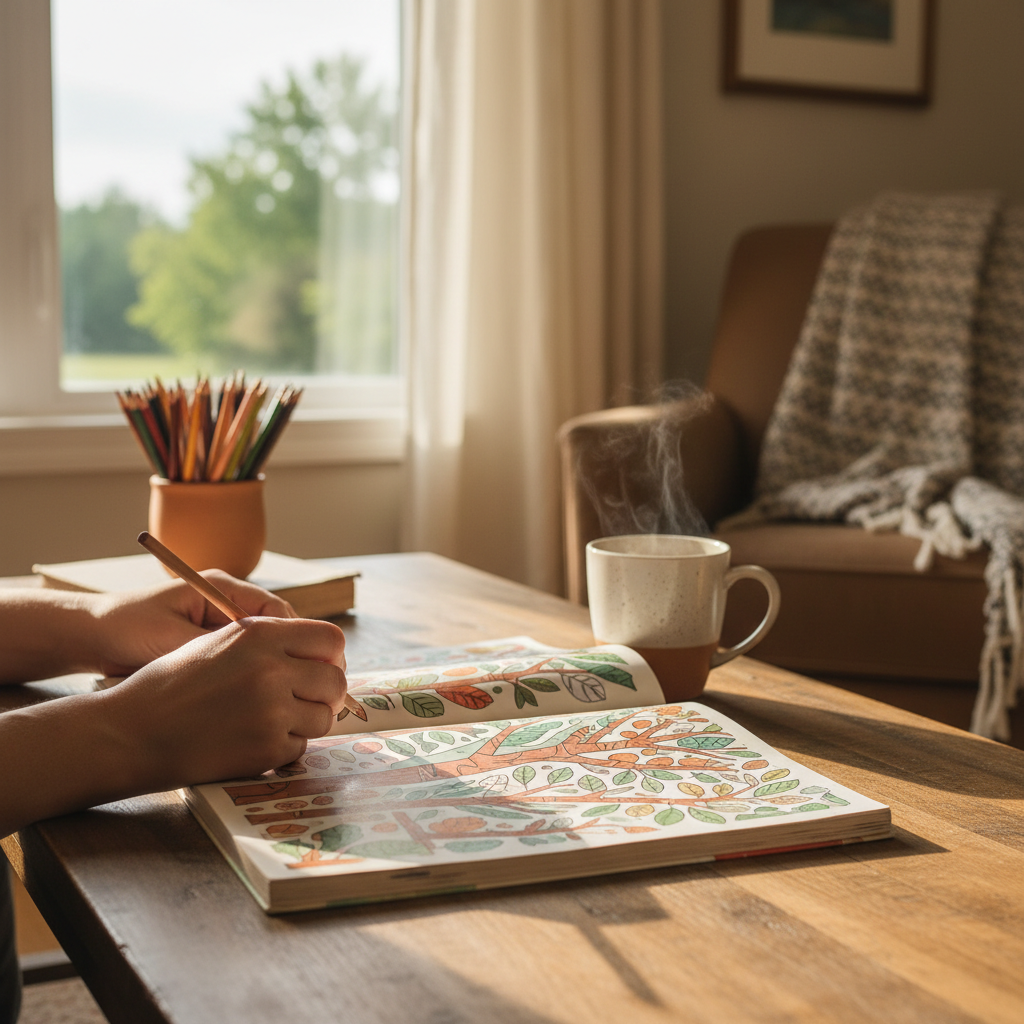
Why 10 Minutes of Colouring Beats Doom-Scrolling at Night — Calm
Zen Colour Art··8 min read

Why 10 Minutes of Colouring Beats Doom-Scrolling at Night
You know the loop: you tell yourself "just five more minutes" and an hour later you're reeling through headlines, notifications, and other people's problems. Doom-scrolling is designed to keep you glued to the glow. But what if the antidote could be as simple as 10 minutes with a pencil and a page? In this Back to Calm season, especially if you live in Barrie or Simcoe County, switching that late-night habit can change your sleep, your mood, and your relationship with screens.
This post walks you through why short colouring sessions trump doom-scrolling, how to make the switch with ease, and practical steps to create a nightly mini-ritual that actually sticks.
A short note about Back to Calm
Back to Calm is a gentle reminder: as routines and responsibilities pile back up—after summer, holidays, or life’s busy seasons—we can intentionally choose small practices that restore balance. Ten minutes is small enough to be realistic and powerful enough to make a difference.
What doom-scrolling does to your brain and body
We often doom-scroll because our brains crave information and stimulation. But the late-night barrage of negative news and blue light does real harm:
- Activates stress and anxiety centers—news that highlights threats keeps cortisol and adrenaline elevated.
- Disrupts sleep—blue light from screens suppresses melatonin, making it harder to fall asleep and stay asleep.
- Reinforces negative thinking—consuming problem-focused content trains your mind to ruminate.
- Drains emotional energy—by the time you put the phone down you feel worn out, not soothed.
If you live in Barrie and wake up early for work, school runs, or outdoor runs along Kempenfelt Bay, that poor sleep ripples through your whole day.
Why 10 minutes of colouring changes things (in plain language)
Colouring isn't child’s play—it's a mindful, creative act that gently engages attention without demanding perfection. In just ten minutes it can:
- Lower stress and anxiety by shifting your focus from thoughts to sensory experience.
- Calm the nervous system—repetitive, rhythmic colouring can trigger a relaxation response.
- Improve sleep readiness by reducing screen exposure and mental arousal before bed.
- Build a sense of accomplishment—finishing a small area or page gives you a quiet win.
- Spark creativity and curiosity without pressure.
These shifts matter. Ten focused minutes can be the difference between tumbling into late-night worry and slipping into a relaxed pre-sleep state.
The neuroscience in a sentence
Focusing on a simple, absorbing task like colouring engages the brain’s attentional networks and reduces activity in the default mode network (the area linked to rumination). At the same time, tactile, repetitive motions can lower heart rate and breathing—key markers of relaxation.
Why colouring works better than other activities
Not every calm activity is equal for bedtime. Here's why colouring often beats alternatives like reading social feeds, doom-scrolling, or even watching TV:
- Screen-free: No blue light exposure, no notifications, no headline loop.
- Low cognitive load: Unlike complex puzzles or intense books, colouring asks for presence without heavy concentration.
- Sensory engagement: You use touch, colour, and sometimes scent (a candle or tea), which anchors you in the present.
- Accessible: No special skills required—anyone can pick up a pencil and start.
How ten minutes stacks up against doom-scrolling
A typical doom-scrolling session extends wakefulness, trains the brain to expect high-arousal content at night, and increases anxiety. Ten minutes of colouring does the opposite:
- Colouring: reduces arousal, supports melatonin, and provides closure to the day.
- Doom-scrolling: increases arousal, suppresses melatonin, and leaves you mentally open-ended.
Even one week of replacing late-night scrolling with colouring can improve sleep quality and your morning mood.
Quick science-backed tips (without jargon)
- Reduce blue light an hour before bed. Colouring is screen-free, so it helps your body produce melatonin.
- Choose simple patterns. Overly complex pages can keep the mind active; floral motifs, mandalas, or flowing lines are calming.
- Breathe: couple your colouring with slow exhalations. Inhale naturally, exhale longer—this signals relaxation.
How to start a 10-minute nightly colouring ritual
Here’s a practical, step-by-step plan to replace doom-scrolling with colouring tonight:
- Set a trigger: Make the switch part of an existing habit (e.g., after brushing your teeth, put your phone on Do Not Disturb and pick up a colouring page).
- Keep supplies ready: A small stack of pages and a pencil cup on your nightstand makes the choice frictionless.
- Use a timer: Ten minutes is intentionally short. Set a gentle alarm if needed.
- No perfection: Focus on movement and colour, not staying inside the lines.
- Finish with a closing ritual: Put the page aside, dim the light, and notice one thing you’re grateful for before you sleep.
If you live in Barrie, try this by a window overlooking a quiet street, or bring your colouring to a local coffee shop in the early evening for a calm headspace before heading home.
What supplies you really need (and what you don't)
You don't need an art degree. Keep it simple and accessible:
- A small sketchbook or printed colouring pages
- A pencil or two and some coloured pencils or markers
- Optional: a soft lamp or candle for gentle light
Things you don't need:
- Expensive supplies
- A perfect design or Instagram-worthy result
If you're curious about curated kits, check out our shop for simple bundles designed for short, soothing sessions.
Simple colouring patterns that calm
Not every design soothes the same way. Try these ideas:
- Mandalas: Circular patterns that encourage rhythmic motion.
- Flowing lines and waves: Great for gentle, meditative strokes.
- Nature motifs: Leaves, petals, and pebbles mimic outdoor calm.
- Single-hue shading: Choose one colour family and explore tones.
Experiment and notice which patterns quiet your mind fastest.
How to make this habit stick in a busy life
Habits are built on consistency and simplicity. Use these nudges:
- Keep materials in sight: Out of sight often means out of mind.
- Make it enjoyable: Pair colouring with a cup of herbal tea or a favorite playlist on low volume (or silence).
- Track small wins: Put a tiny checkmark on a calendar after each session.
- Share gently: Invite a friend in Barrie to join a weekly colouring meet-up at a park or community centre—social accountability helps.
Using ten minutes to handle evening triggers
If anxiety hits after scrolling headlines, colouring can act as an emotional reset. Try this micro-practice:
- Step 1: Put the phone face-down.
- Step 2: Breathe 3 slow breaths.
- Step 3: Colour a single small area for ten breaths.
- Step 4: Notice your body—are shoulders softer? Is the jaw unclenched?
Small, repeatable actions like this build resilience over time.
Real-life stories (Barrie voices)
Many of our customers from Barrie and Simcoe County tell similar stories: nights used to be a blur of news and worry. After swapping 10 minutes with an adult colouring page, they report deeper sleep, calmer mornings, and a surprising boost in creative energy.
One teacher from Allandale said she used to doom-scroll after marking papers. Now she colours for ten minutes at her kitchen table, and the shift has made her evenings quieter and more restorative.
When to give it a week trial—and what to expect
Give this practice seven nights and watch for shifts:
- Night 1–2: You may still crave the phone—this is normal.
- Night 3–5: Sleep can feel more continuous; waking feels less groggy.
- Night 6–7: You may notice calmer thoughts and a clearer morning headspace.
If you miss a night, don’t worry. Just start again tomorrow.
Combining colouring with other sleep-friendly practices
Colouring is powerful, but it pairs well with other gentle steps:
- Dim lights 30–60 minutes before bed
- Avoid heavy meals or intense exercise right before sleep
- Keep a consistent bedtime
- Try a brief gratitude note after colouring
Together, these small practices create a predictable pre-sleep routine that signals safety to your nervous system.
Colouring for different personalities
Different people find different things soothing:
- The planner: Use structured patterns like geometric pages.
- The free spirit: Try open-ended doodle sheets or abstract swatches.
- The social person: Join a virtual colouring circle or local meet-up in Barrie.
There’s no single correct way—it's about what helps you unwind.
Addressing objections honestly
- "I don’t have time." Ten minutes is the point—it fits even busy evenings.
- "I’m not artistic." You don't need to be—colouring is about process, not product.
- "I’ll just check my phone again." Set a firm boundary: phone on Do Not Disturb, out of reach.
If resistance pops up, remind yourself: this is a tiny experiment with potentially big returns.
Tips for parents and partners
If you live with others who doom-scroll at night, invite them to try your ten-minute swap or set a household quiet hour. Even one person modelling the habit can change the home’s evening rhythm.
For parents, a shared colouring activity with children can be a gentle end to the day—and it models calm screen habits for the whole family.
Where colouring fits in a busy Barrie lifestyle
Barrie is a city that loves outdoor life and community rhythm. After a busy day—commuting, school events, or a sunset walk along the waterfront—colouring can be your portable calm. Bring a small kit to keep in your car for a brief pause between errands, or use it as a wind-down after a shift at a local shop or market.
Community spaces and libraries in Simcoe County are also great spots to connect and color with others during Back to Calm events.
Next steps: a tiny plan to try tonight
- Put your phone on Do Not Disturb 20 minutes before bed.
- Lay out a small page and pencil by your bedside.
- Set a gentle timer for 10 minutes.
- Colour without judgment. Breathe.
- Turn off the light, notice one good thing, and sleep.
If you want a simple starter kit, visit our shop. For more ideas on small creative rituals, explore our blog.
Final thought: tiny practices, big returns
Doom-scrolling is engineered to keep your attention, but it's a high-cost habit for your mental health and sleep. Ten minutes of colouring is a low-cost, high-return swap: short, accessible, and nourishing. Especially during Back to Calm, give yourself permission to choose a small ritual that restores your evenings. Your future self—calmer, more rested, and perhaps a little more colourful—will thank you.