Why 10 Minutes of Colouring Beats Night Doom-Scrolling This Summer
Zen Colour Art··8 min read

Why 10 minutes of colouring beats doom-scrolling at night
If you are reading this after a long, bright summer day in Barrie or hiking around Simcoe County, chances are your phone is already calling. That pull to refresh feeds, chase headlines, or scroll through endless reels is a modern reflex. But ten minutes of colouring before bed can interrupt that reflex in a way that feels gentle, creative, and restorative.
This article explains, in plain language, why a tiny, screen-free habit can beat doom-scrolling, how to do it, and the science and simple rituals that help it stick. It includes summer-friendly ideas for Barrie adults and practical steps you can use tonight.
Quick answer for voice search and busy minds
- Ask: Why does colouring help sleep? Answer: 10 minutes of colouring reduces screen time and blue light exposure, activates calming focus, lowers stress hormones, and helps your body prepare for sleep.
If you want the deeper why, keep reading. If you want a quick routine to try tonight, skip to "A simple 10-minute night colouring ritual."
The problem with doom-scrolling at night
Doom-scrolling is the name we give to late-night scrolling through bad news, outrage, or just endless content. It feels productive or distracting, but it carries real costs:
- Blue light from screens suppresses melatonin and delays sleep onset.
- Emotional arousal from upsetting news keeps the nervous system in a fight-or-flight state.
- Passive consumption leaves you unsatisfied and often more anxious.
- Habit loops make you reach for the phone automatically, even when you want to sleep.
In summer, when evenings are longer, these habits can expand. A bright sunset over Kempenfelt Bay might end with a dimly lit phone screen instead of a calm, screen-free wind-down.
Why colouring works: the science, simply explained
Colouring is not just a nostalgic craft. For adults it can support mental health and sleep in several measurable ways:
- Focused attention: Colouring requires low-level concentration. That focused attention interrupts rumination and reduces the mind's habit of chasing anxious thoughts.
- Parasympathetic activation: Engaging in a calm, repetitive activity encourages the 'rest-and-digest' nervous system, lowering heart rate and stress hormones.
- Reduced blue light and screen stimulation: Picking up pencils instead of a phone cuts exposure to stimulating light and algorithms built to hook your attention.
- Creative satisfaction: Completing a small creative task releases dopamine in a gentle, stabilizing way that feels good without overstimulation.
- Mindfulness affordance: Colouring allows you to practice present-moment awareness — noticing colour, texture, breath — without needing meditation experience.
Studies on adult colouring books have found reductions in perceived stress and improvements in calmness after short sessions. Ten minutes is often enough to break the cycle of doom-scrolling and set the stage for better sleep.
Why 10 minutes? Why not 30 or 5?
Ten minutes hits a sweet spot:
- Short enough to be doable every night, even when you are tired.
- Long enough to disengage attention from your phone and start calming your nervous system.
- Easier to habit-stack into an existing routine like teeth brushing, showering, or stepping onto the porch after dinner.
Five minutes might feel too short to shift your mood; thirty can feel like a big time commitment when you just want to unwind. Ten minutes is the smallest effective dose.
A simple 10-minute night colouring ritual
Try this tonight. It takes about 10 minutes and is designed for summer evenings in Barrie, but it works anywhere.
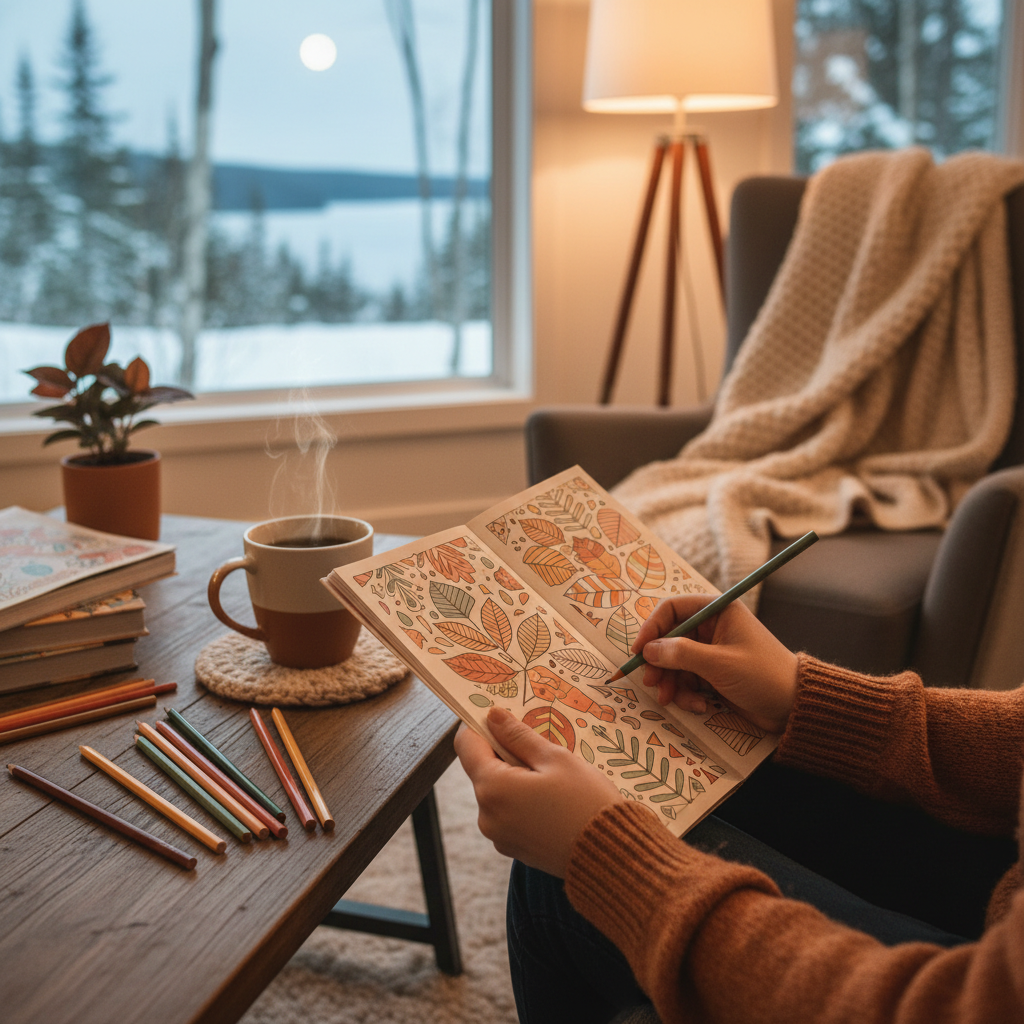
- Set a clear cue: 30 minutes before bed, switch your phone to Do Not Disturb and place it face down or in another room. If you're in Barrie, situate yourself by an open window or on a porch where you can hear evening sounds.
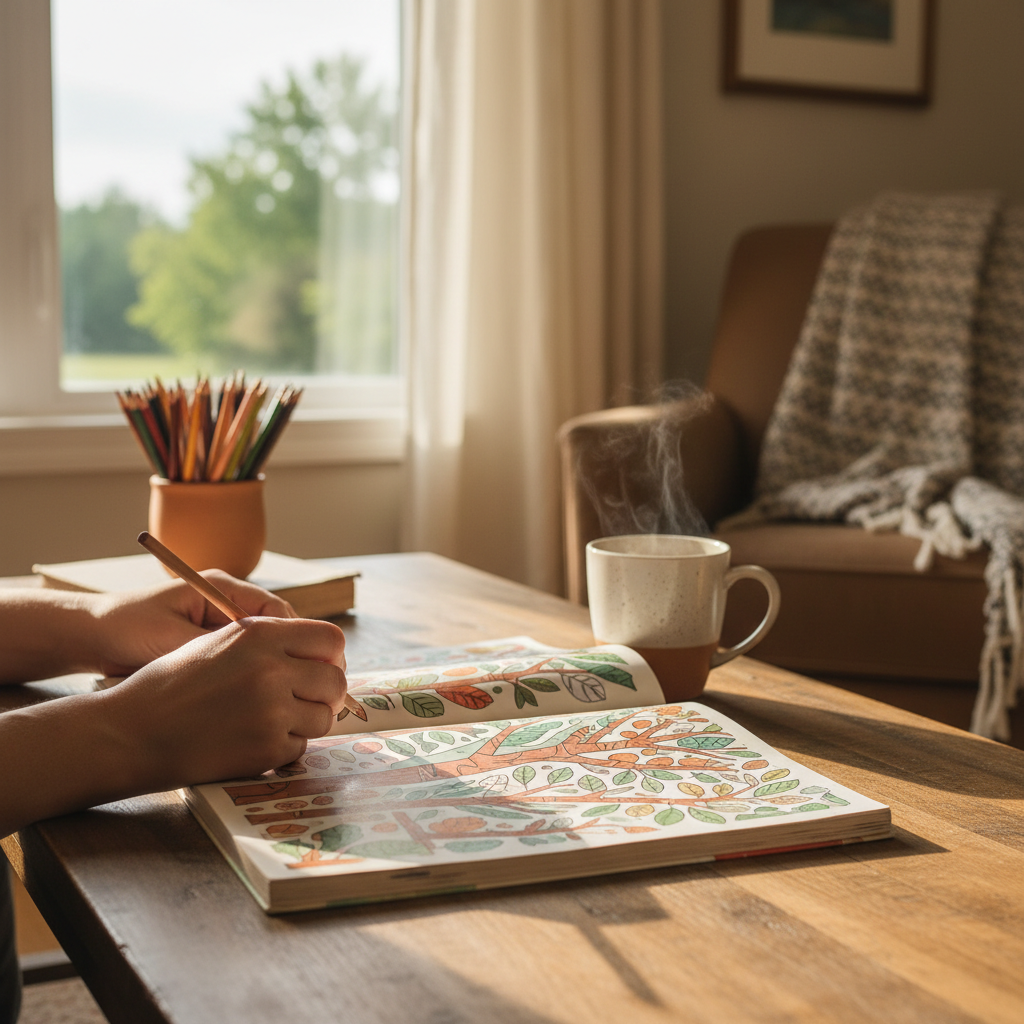
- Gather supplies: one colouring page or a small page from an adult colouring book, two pencils or fine-tipped markers, a glass of water or herbal tea. Keep them on a small tray so they feel easy to reach.
- Create gentle lighting: choose a warm lamp or a battery candle. Avoid blue-toned LED overhead lights.
- Breathe & choose: take two slow breaths, then pick a starting colour. Let go of perfection; your goal is presence, not a perfect page.
- Colour for 10 minutes: set a non-intrusive timer (a gentle alarm or a kitchen timer) and focus on the motion of your hand, the way colours meet lines, and your breath.
- Finish gently: when the timer ends, close the book or put the page in a folder. Spend one minute noting how you feel and move to your bedtime routine.
This ritual interrupts the autopilot phone habit and replaces it with a small, repeatable creative act.
Summer-friendly variations for Barrie and Simcoe County
- Porch colouring: Sit on your porch or balcony as the sun sets over Kempenfelt Bay. The natural light and evening breeze deepen relaxation.
- Park bench pause: After a summer walk at Centennial Park, bring a small sketchbook and colour for ten minutes on a bench, watching evening light.
- Cottage-mode colouring: If you have a Simcoe County cottage, make colouring part of your dock ritual — a perfect screen-free way to end the day.
Each variation opens sensory anchors — the sound of water, cicadas, or evening breeze — that help the colouring experience feel grounded and restorative.
Supplies that make 10 minutes feel like a treat
You don't need fancy gear, but a few thoughtful choices increase the appeal:
- A small pocket-sized adult colouring book or single-sheet prints.
- Smooth, good-quality coloured pencils or a couple of gel pens.
- A warm desk lamp or a rechargeable candle lamp.
- A folder or small box to store finished pages — seeing small progress is motivating.
At Zen Colour Art we design seasonal pages and pages inspired by Barrie landscapes, if you want local flavour. Browse our shop for summer-themed packs or our blog for creative ideas.
How colouring supports better sleep biologically
- Less blue light means your pineal gland can release melatonin more naturally.
- The calming, focused activity lowers cortisol, a stress hormone that interferes with sleep.
- The ritual produces a psychological cue: your brain learns that colouring equals wind-down.
Over time, this creates a stronger pre-sleep routine and fewer nights lost to worry or late-night doom-scrolling.
How to break the doom-scrolling habit with habit stacking
Habit stacking means attaching a new habit to an existing one. Examples for night colouring:
- After I brush my teeth, I will colour for 10 minutes.
- After I close my laptop, I will sit on the porch and colour.
- After I turn on my lamp, I will place my phone in another room and colour.
Keep the environment friction-free: store pencils in a jar near your nightstand so the choice is easy.
Mindful prompts to use while colouring
If your mind wanders to news or your to-do list, use short prompts to reorient to the present:
- Name a colour you see and trace it with your finger on your page.
- Notice five things you can hear outside.
- Breathe in for four counts, out for six.
These micro-practices convert colouring into a mindfulness tool without requiring formal meditation training.
Quick wins: what to expect after one week
If you try this routine for seven nights you may notice:
- Falling asleep faster by several minutes.
- Fewer early-night phone pickups.
- A small boost in mood and creative satisfaction.
- Increased ease shifting from day to rest mode.
Celebrate small wins. Ten minutes is a low bar with high returns.
What if I get pulled to my phone anyway?
It happens. This is about progress, not perfection. Try these tactics:
- Put your phone in another room or use a timed app lock.
- Replace the phone pickup with a non-phone cue: a book, a small tray, or a pre-filled cup of tea.
- Invite a buddy in Barrie to try the 10-minute ritual and check in — social accountability helps.
Colouring versus other screen-free options
Colouring is especially effective because it combines low-effort creativity with focused attention. Compared to reading, it requires less cognitive load and is less likely to trigger emotional rumination. Compared to a short walk, it is easier to do indoors at night and less dependent on weather.
That said, mix and match: some nights may call for a quiet walk by Kempenfelt Bay, others for colouring. The key is reducing screen exposure and increasing restorative practices.
A local invitation: make it part of Barrie summer evenings
Consider starting a small evening colouring swap with friends in Barrie or a local meet-up at a park picnic table. A short, screen-free gathering — each person colours for ten minutes — makes a surprisingly powerful community ritual. Share finished pages in a physical folder or local bulletin board rather than online to preserve the screen-free intention.
If you want local designs, try pages inspired by Barrie summer scenes from our shop and learn more about mindful creativity in our blog.
Tips for staying consistent
- Keep supplies visible and ready.
- Use a non-intrusive, gentle timer.
- Link colouring to another nightly habit.
- Track your streak on paper — not in an app.
Consistency builds a habit loop that makes the phone habit less automatic.
When to seek more support
If doom-scrolling is a symptom of deeper anxiety or if sleep problems persist, colouring is a helpful tool but not a replacement for professional care. Reach out to a healthcare provider or mental health professional in Barrie or Simcoe County if you experience chronic insomnia or worsening anxiety.
One-week challenge: give 10 minutes a try
Try this plan for seven consecutive nights:
- Night 1: Follow the 10-minute ritual exactly. Notice differences.
- Night 2: Add a new colour palette.
- Night 3: Move to a porch or balcony and notice evening sounds.
- Night 4: Invite a friend to try the ritual simultaneously.
- Night 5: Organize pages into a folder and reflect on your favourite piece.
- Night 6: Combine colouring with a cup of herbal tea.
- Night 7: Make a short note about sleep latency and mood.
After a week, reflect on what changed and what felt easiest. Small wins matter.
Short FAQ (featured snippet ready)
- What is the best time to colour at night? 10 to 30 minutes before your bedtime routine starts is ideal.
- How long should I colour to beat doom-scrolling? Ten minutes nightly is an effective minimum.
- Can colouring improve sleep? Yes—by reducing screen time, lowering stress, and promoting relaxation.
Final note: small rituals, big changes
Doom-scrolling feels like a tiny habit, but it compounds. Ten minutes of colouring is a small, compassionate, and creative act that restores agency over your evenings. This summer in Barrie and across Simcoe County, let a short colouring ritual replace the reflex to refresh. It is simple, effective, and delightfully human.
Explore seasonally inspired packs at our shop, or read more about mindful creativity on our blog. If you try the 10-minute challenge, share what you notice — we love hearing Barrie stories.
References and resources
- Research on adult colouring and stress reduction.
- Sleep hygiene guides and tips about blue light.
- Local Barrie walking and park suggestions to pair with colouring.
(For research links and source documents, see our blog for curated sources and further reading.)