Screen-Free Creativity Science for Stress Relief This Summer
Zen Colour Art··8 min read
The science of screen-free creativity for stress relief (summer edition)
Summer in Barrie invites a different pace: warm afternoons on the waterfront, the smell of cut grass at Sunnidale Park, and long golden evenings by Kempenfelt Bay. For adults carrying the steady hum of email, social media, and news alerts, those summer moments are prime opportunities to press pause and choose screen-free creativity instead.
This article explores the science behind why turning off devices and turning toward tactile, creative activities reduces stress, supports mindfulness, and restores mental energy. You will find evidence-based explanations, practical summer-friendly activities (including adult colouring), a 30-minute routine you can try right away, and local ideas for Barrie and Simcoe County.
Who this is for
- Adults looking for manageable stress relief practices
- People who want to replace mindless scrolling with mindful play
- Anyone curious about the neuroscience behind creativity and calm
If you prefer a quick start, grab a colouring set from our shop and try the 30-minute routine below. If you want deeper reading, check related posts on our blog.
How screens affect stress and attention
Screens are engineered to capture and hold attention. That matters because attention shapes physiology: what we focus on influences heart rate, breathing patterns, hormone release, and the brain networks that are active.
- Continuous partial attention: Constant notifications and the infinite scroll mode keep the brain in a state of shallow engagement. That prevents extended focus and reduces the chance of entering calming, restorative mental states.
- Elevated arousal: Rapid visual changes and salient notifications can trigger sympathetic nervous system responses—faster heart rate, quicker breath, and higher stress hormone levels like cortisol.
- Fragmented memory consolidation: When attention is repeatedly disrupted, consolidation of thoughts and emotions becomes harder. That can leave stress unresolved.
A growing body of research links heavy screen use—especially passive consumption—to increased anxiety and poorer sleep. The antidote isn't simply more distraction; it's deliberate, screen-free activities that invite slow attention and sensory grounding.
What happens in the brain during screen-free creative practice
When you engage in tactile creativity—colouring, sketching, collage, hand-lettering—several calming and restorative processes tend to occur:
- Activation of the parasympathetic system: Slow, focused manual work tends to lower heart rate and breathing, signaling the body to relax.
- Default Mode Network (DMN) engagement: Low-stakes creative tasks can encourage the DMN to support reflective thinking and self-integration rather than constant external monitoring.
- Dopamine balance: Completing small creative actions (finishing a motif, choosing a colour) gives tiny, steady dopamine rewards without the unpredictable spikes associated with notifications.
- Flow states: With an appropriate challenge level, people often enter flow—an immersive state where self-consciousness fades and time feels altered. Flow is linked to greater psychological well-being.
These mechanisms are why a simple practice like adult colouring can feel profoundly calming even when it seems like 'only' a hobby.
Creativity, mindfulness, and stress hormones
Stress is not just a feeling. It's a cascade of hormones—cortisol among them—that influence mood, digestion, sleep, and inflammation. Activities that support mindful attention tend to reduce cortisol levels and help the nervous system recover.
- Mindful creativity encourages nonjudgmental attention to the present moment. That reduces rumination, one of the main drivers of sustained cortisol release.
- The predictability of hand-based tasks lowers uncertainty. Routine patterns—repeating a stroke, filling a shape with colour—offer micro-safety cues to the brain.
- Physical movement of the hand and breathing rhythm tied to focused work promote autonomic regulation, shifting from fight-or-flight to rest-and-digest.
Even short, regular screen-free creative breaks can produce measurable benefits. You don't need hours—15 to 30 minutes daily is a realistic and effective target.
Why summer is the perfect season for screen-free creativity in Barrie
Summer changes the sensory landscape. Longer daylight, warmer air, and accessible outdoor spaces around Barrie and Simcoe County make it easier to replace screen time with creative, sensory-rich activities.
- Natural light boosts mood and aligns circadian rhythms, helping sleep and recovery.
- Outdoor settings provide varied textures, sounds, and scents that deepen sensory grounding—think lake breezes at the Barrie waterfront, birdsong in Centennial Park, or the soft crunch of a trail at Sunnidale Park.
- Community events, patios, and markets create low-pressure social settings where you can be creative in public, which helps normalize screen-free behaviour.
Summer also offers practical advantages: you can colour on a picnic blanket, sketch near the water, or collage with found natural materials like pressed leaves and flowers.
Screen-free creative practices that reduce stress (ideas you can try today)
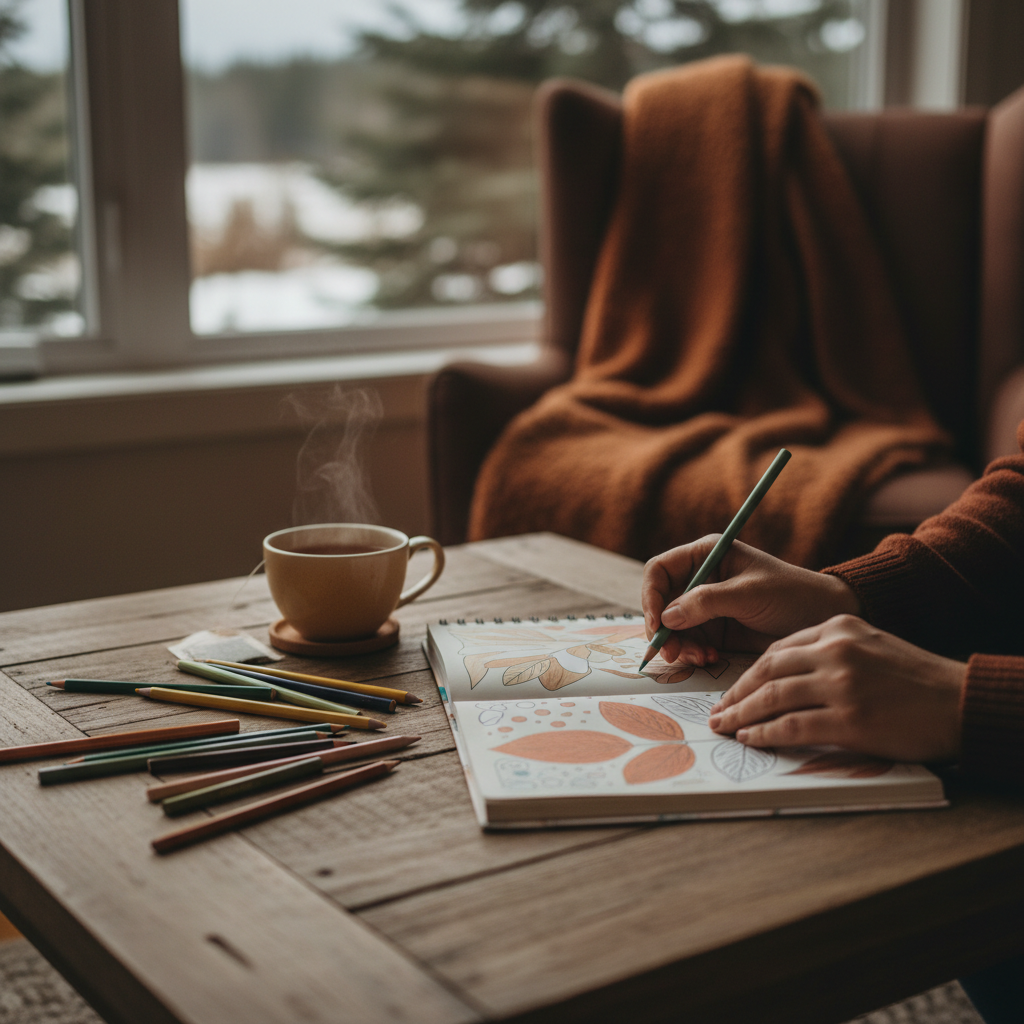
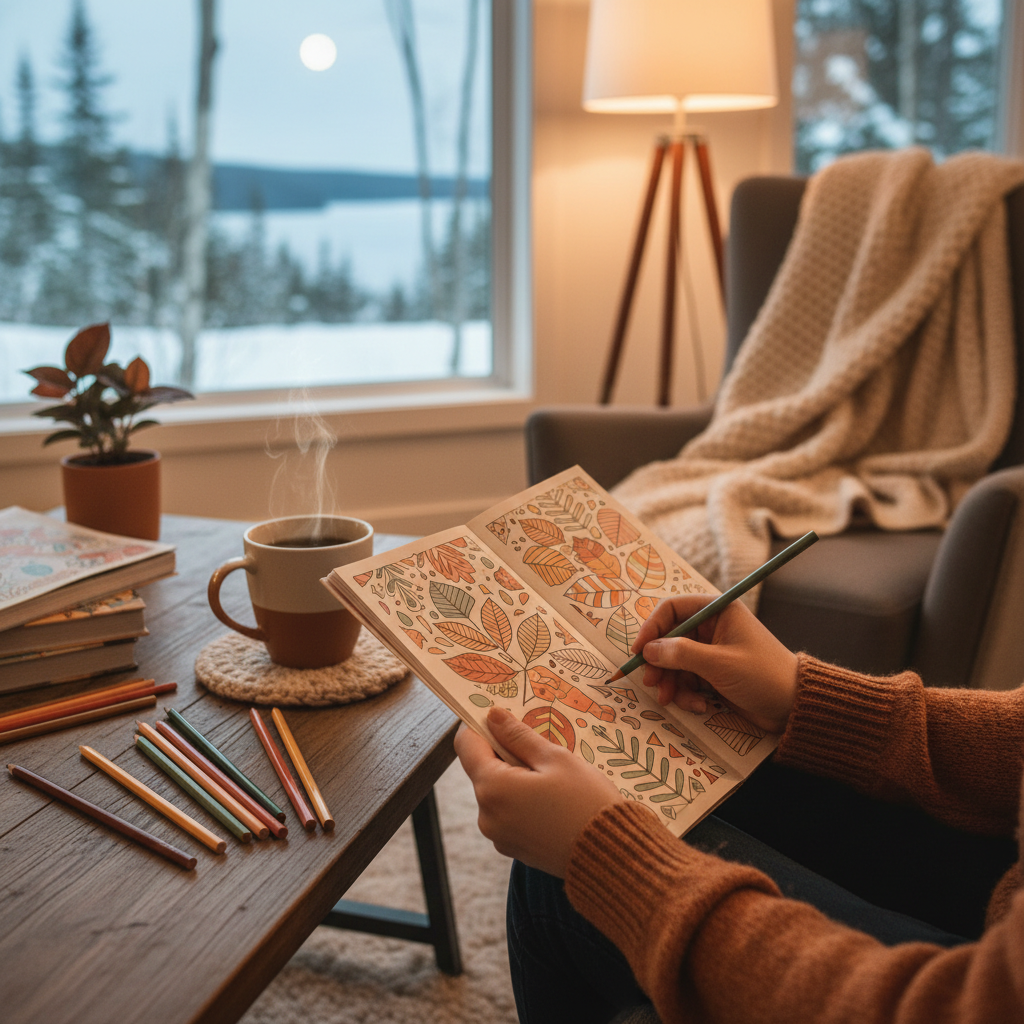
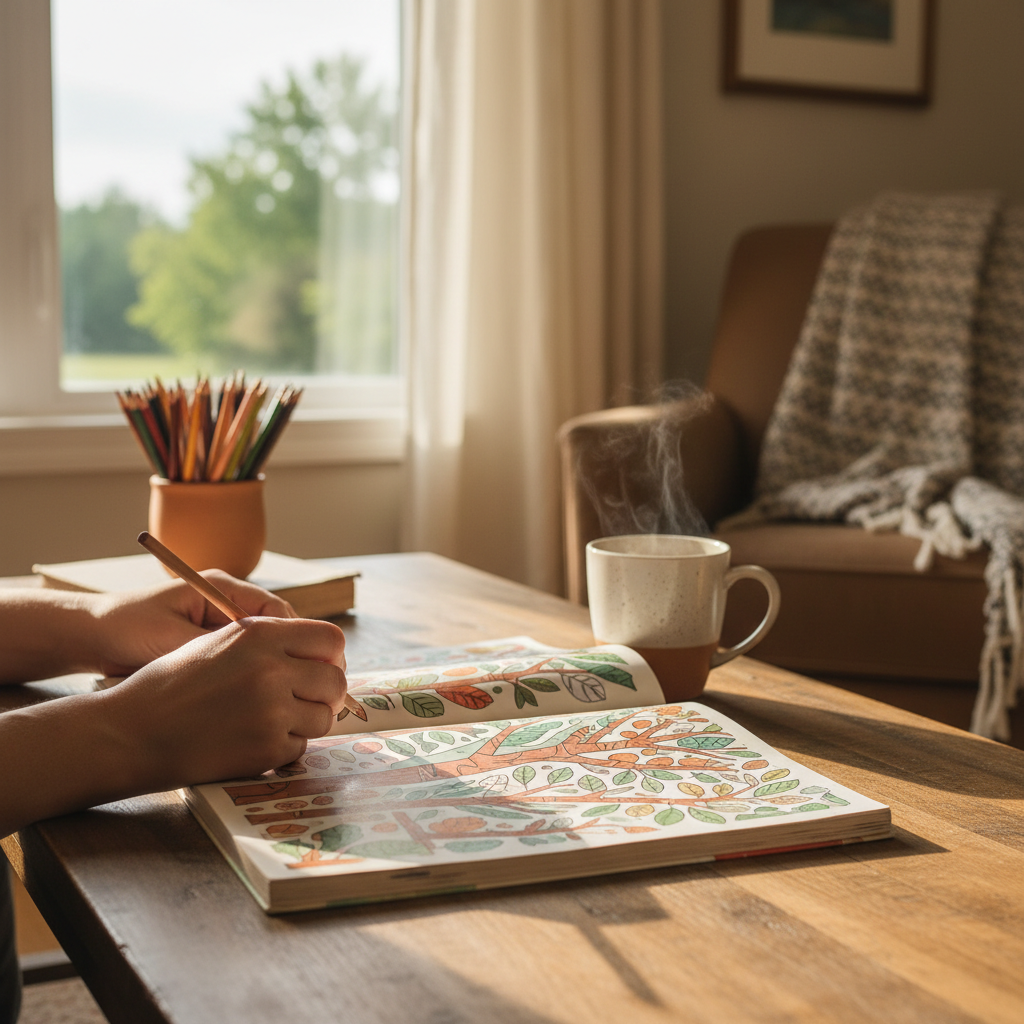
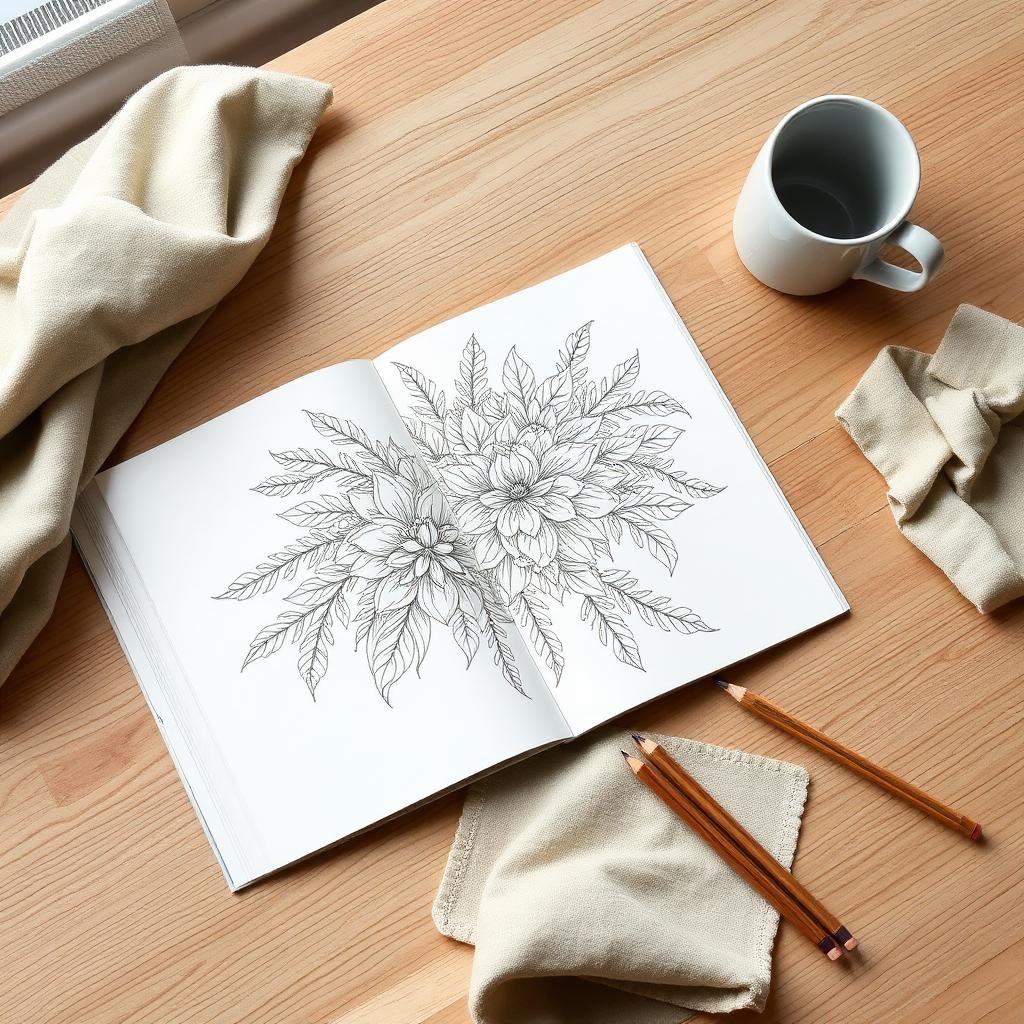
- Adult colouring
- Why it helps: Structured patterns are a gentle cognitive scaffold. The repetitive motion and colour choice help tune attention away from worry.
- Try this: A mandala or nature-inspired page, soft pencils or water-soluble pens, 20–30 minutes by the waterfront.
- Journaling with prompts
- Why it helps: Writing organizes thoughts and externalizes worry.
- Try this: 10 minutes of 'what I notice right now' followed by 5 minutes of free-association.
- Nature sketching and pocket plein air
- Why it helps: Direct observation sharpens focus and deepens sensory presence.
- Try this: Bring a small sketchbook and a compact pencil set on a walk around Kempenfelt Bay.
- Collage and mixed media
- Why it helps: Collage invites playful decision-making rather than perfectionism.
- Try this: Collect summer ephemera—tickets, postcards, pressed blooms—and assemble on paper.
- Hand-lettering or mindful doodling
- Why it helps: Rhythmic, simple strokes are meditative and require minimal setup.
- Try this: Practice a phrase that grounds you—'breathe' or 'one step'—in decorative lettering.
All these activities are accessible, portable, and ideal for summer afternoons and evenings.
A 30-minute screen-free routine to reduce stress (step-by-step)
This compact routine fits into a lunch break, a long summer pause, or the gap between meetings. It combines sensory grounding, gentle movement, and creative focus.
- Prepare (2 minutes)
- Put your phone on Do Not Disturb and place it face down or in another room.
- Gather a small kit: colouring pad or sketchbook, two pencils or pens, a water bottle.
- Grounding breath and senses (3 minutes)
- Sit comfortably. Close your eyes for one minute. Inhale smooth 4 counts, exhale 6 counts.
- Open your eyes and name three things you can see, two things you can hear, and one thing you can feel.
- Creative focus (20 minutes)
- Choose a single page or project. Set a gentle intention: 'I will enjoy the process, not perfection.'
- Work steadily without checking the time—let the task absorb you.
- If your mind wanders, note it and return to the sensation of colour, line, or texture.
- Short reflection (5 minutes)
- Close the session with a quick journal note: one sentence about how you feel now.
- Stretch your shoulders, take a sip of water, and notice any change in breathing.
Repeat daily or several times weekly. Over a few weeks you may notice easier focus, improved mood, and smoother transitions into rest in the evenings.
Materials checklist for summer screen-free creativity
- Portable sketchbook or adult colouring book
- Soft-colour pencils, fineliners, or a compact water brush
- Small clipboard or lap desk for outdoor work
- A foldable blanket or lightweight chair for waterfront sessions
- Sun protection: hat, sunscreen, sunglasses
- Water bottle and a snack
- Bug spray for evening sessions
- A small zip pouch to hold bits and bobs (pressings, tickets, leaves)
Keep a ready kit in your car or bag so spontaneous creative breaks are easier to start.
Tips to keep summer screen-free creative sessions sustainable
- Make it social: invite a friend for a waterfront colouring picnic at the Barrie waterfront or a sketching date in Centennial Park.
- Set calendars gently: a recurring 20–30 minute block in the early evening can be a protective screen-free ritual.
- Lower stakes: limit yourself to small projects. Tiny, consistent practice beats the occasional marathon.
- Pair with movement: walk to a spot, do a short session, then walk home to anchor the experience with fresh air.
- Celebrate progress: keep a small folder of completed pages. Tallying little wins builds motivation.
Local ideas in Barrie and Simcoe County
- Waterfront colouring: Bring a lap desk and a few pages to the Barrie waterfront. The lake breeze and views of Kempenfelt Bay encourage lingering focus.
- Park sketch crawl: Plan a short route through Sunnidale Park and Centennial Park with a sketch stop at each scenic bench.
- Farmers' market collage: Use market ephemera—labels, receipts, small botanical finds—to assemble a summer collage after a market stroll.
- Community meetups: Look for local art groups, outdoor yoga + sketch events, or craft fairs in Barrie. Shared practice reduces the barrier to starting.
Zen Colour Art supports local Barrie creatives and makes compact, beautiful colouring sets designed for summer use. Browse our seasonal kits at shop and read related stories on our blog.
When screen-free creativity isn't enough: layering support
If stress is persistent and heavy—marked by sleep disruption, persistent anxiety, or functional impairment—creativity is a helpful complement but not a replacement for professional care. Consider:
- Talking with a family physician or mental health clinician in Barrie or Simcoe County
- Adding evidence-based practices: CBT techniques, guided mindfulness, or structured therapy
- Combining creative breaks with gentle movement and social connection
Small changes compound. Screen-free creativity builds resilience but works best alongside other supportive habits.
How to measure progress (simple markers)
- Subjective calm: ask yourself weekly how often you felt more relaxed after sessions.
- Sleep quality: notice if falling asleep or waking feels easier after regular daytime creative breaks.
- Attention endurance: monitor if you can sustain focus for longer blocks at work.
- Emotional regulation: track whether you respond to stress with less reactivity.
Keep a simple log for a month: date, minutes spent, and one sentence on mood change.
Real stories: what Barrie adults report
People who come into our community in Barrie say they notice small but meaningful changes:
- A teacher who colours for 20 minutes after school reported less rumination and more patience in the evening.
- A parent who keeps a portable kit in the car uses colouring during summer practices and noticed better sleep that week.
- A retiree who joined a waterfront sketch group found the social element made the practice stick.
These examples aren’t scientific trials, but they mirror common research findings: small, consistent practices improve well-being.
Final thoughts: how to begin this summer
Summer in Barrie and Simcoe County creates ideal conditions for screen-free creative practice. Start small: a single 20–30 minute session, twice a week. Use the senses—the lake air, the warmth on your skin, the sound of leaves—to anchor attention. Keep materials simple and portable so a creative break requires minimal preparation.
If you want a gentle place to begin, try an adult colouring set built for tactile comfort and summer portability—explore options at our shop. For more ideas, seasonal prompts, and local events, visit our blog.
You don't have to be an artist to benefit. Creativity here is a tool for calming the nervous system, enhancing focus, and connecting you to summer's restorative rhythms. Give yourself the permission to switch off the screen and colour one small corner of your day.