The Science of Screen-Free Creativity: Summer Stress Relief Guide
Zen Colour Art··8 min read

Quick answer: Why screen-free creativity works for stress relief
Screen-free creative activities—like adult colouring, sketching, journaling or tactile crafts—engage the brain differently than screens. They downshift the sympathetic stress response, invite parasympathetic activation, and help the mind enter flow. In summer, simple outdoor or hands-on practices are especially restorative for adults in Barrie and across Simcoe County.
Why this matters now: summer, screens, and adult stress
Longer days and warmer weather in Barrie mean more options for outdoor time, but summer can also bring unique stressors: social plans, work pile-ups, family logistics and striving to make every sunny day count. At the same time, screen use often rises—social apps, streaming, and endless notifications. The result is mental fatigue and less capacity to enjoy the season.
Screen-free creative practices create a counterbalance. They demand your attention in a gentle way, give your eyes a break from blue light, and help you feel present. For adults seeking mindfulness and stress relief, these activities are an accessible, science-backed route back to calm.
What happens in the brain when you go screen-free and create
Short answer: you switch networks and hormone patterns.
- Default Mode Network (DMN) recalibrates: mindful creative tasks often reduce ruminative, self-critical thinking linked to the DMN and allow more restful, constructive reflection.
- Flow states activate task-focused attention: low-to-moderate challenge tasks like colouring can produce sustained attention without the frantic spikes of dopamine that come from scrolling.
- Parasympathetic activation: slow, tactile activities encourage slower breathing and heart rate variability—signs of a relaxed nervous system.
- Reduced cortisol spikes: studies show that engaging creative hobbies can lower stress hormones over time, improving sleep and mood.
Put simply: switching from an alert, reactive screen state to a calm, creative state changes both your brain activity and your body chemistry.
The science behind stress reduction: mechanisms explained
Attention Restoration Theory
Attention Restoration Theory (ART) proposes that directed attention—what you use for tasks like working or driving—gets depleted. Passive interest or effortless attention restores it. Many screen-free creative activities provide soft fascination: pleasing patterns, colours and textures that gently hold attention while letting the mind rest.
Flow and competence
Flow is the sweet spot of challenge and skill. Adult colouring, for example, is just structured enough to guide your focus without demanding high performance. When you feel competent and absorbed, stress and self-consciousness diminish.
Multisensory grounding
Tactile input (paper, pencil, paint) provides grounding feedback. Unlike touchless screen taps, physical materials offer resistance and texture, which help orient you to the present moment and reduce anxiety.
Breath and movement coupling
Many quiet creative tasks naturally encourage slower breathing and subtle repetitive movements. That coupling stimulates the vagus nerve and shifts physiology toward relaxation.
Screen-free activities that science says help (and why)
Here are accessible, evidence-informed activities for adults who want stress relief this summer.
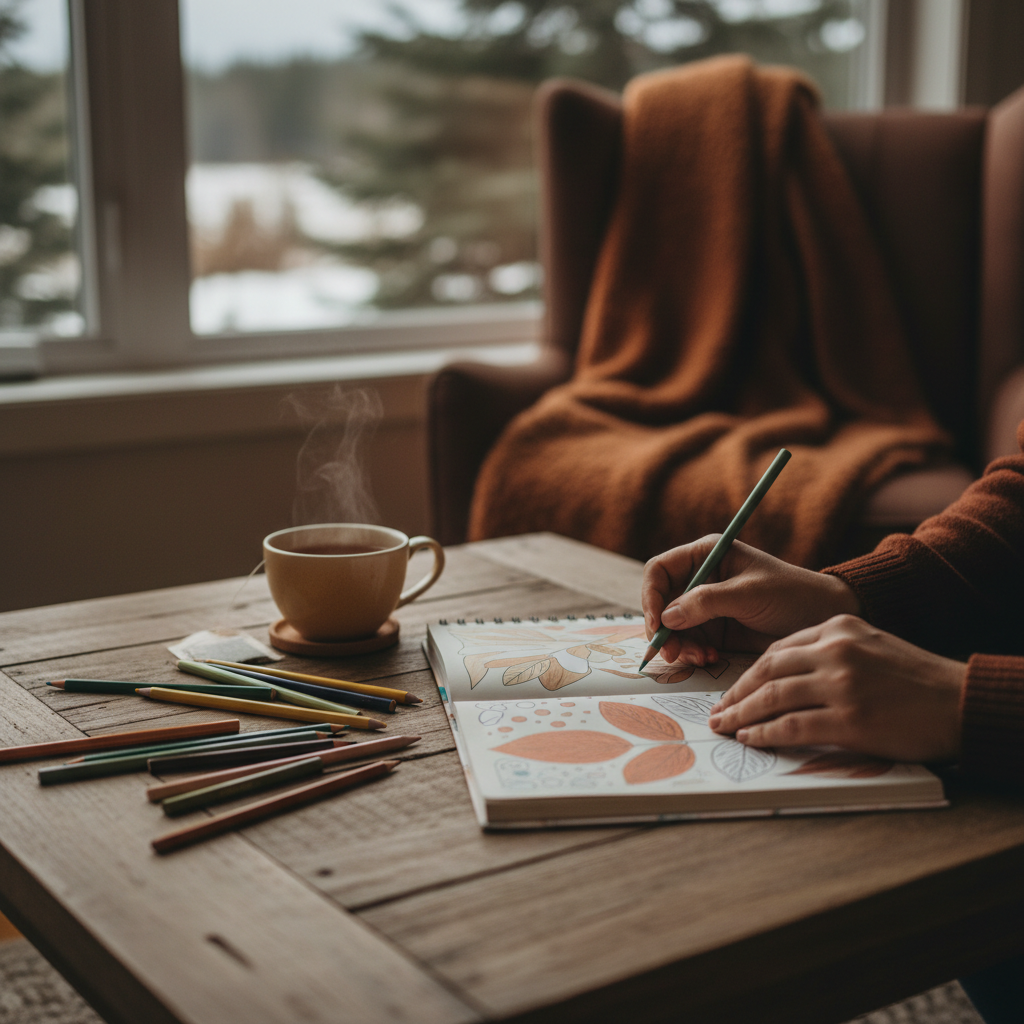
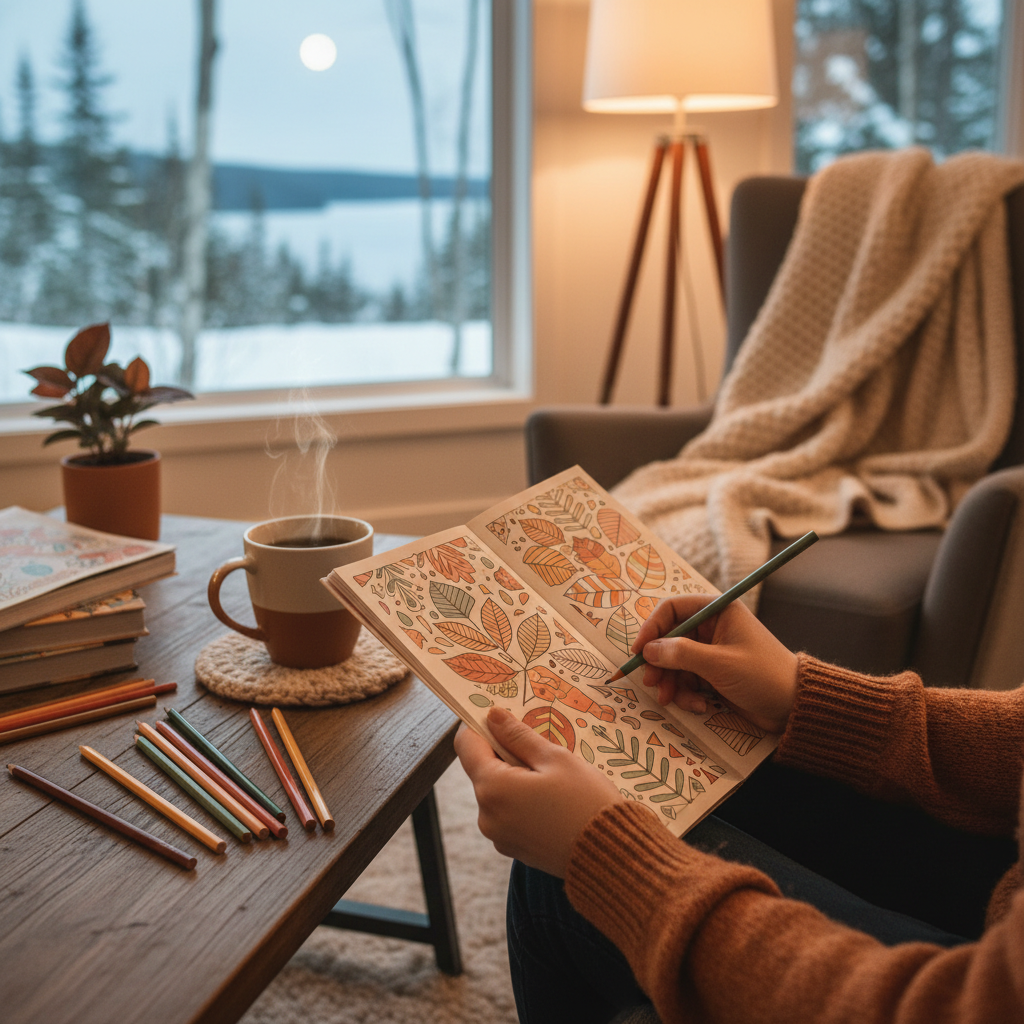
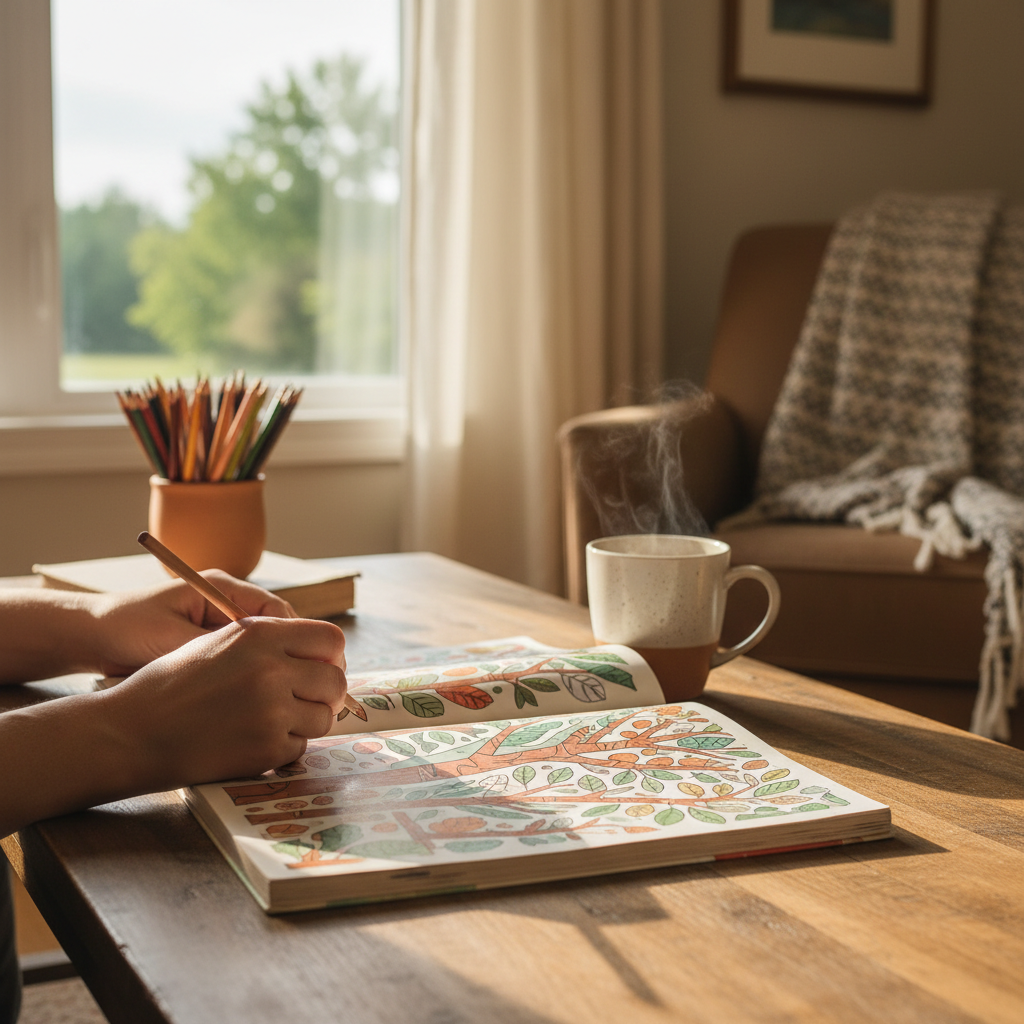
- Adult colouring
- Why: structured, repetitive, low-pressure. Supports flow and reduces rumination.
- Tip: choose nature-themed pages to combine ART benefits with tactile focus.
- Sketching or mindful drawing
- Why: promotes observation and sustained attention to detail.
- Tip: sit at the Barrie waterfront or near Kempenfelt Bay and draw what you see.
- Journaling with prompts
- Why: expressive writing lowers stress and clarifies emotions.
- Tip: use 10-minute morning pages to offload worry.
- Collage and mixed media
- Why: tactile and creative problem-solving stimulate positive affect.
- Tip: make a seasonal collage with photos, leaves, or ticket stubs from local events.
- Nature-based crafts (leaf rubbings, pressed summer blooms)
- Why: combines nature exposure with manual skill for double benefits.
- Tip: collect materials from Sunnidale Park for a quiet afternoon project.
- Knitting, embroidery, tatting
- Why: rhythmic motion and focus lower heart rate and produce meditative benefits.
- Tip: bring a small project to a local coffee shop patio in Barrie.
A summer plan: 30, 60, and 120-minute screen-free sessions
- 30 minutes: quick reset
- Find a shady spot at the Barrie waterfront. Set a 30-minute timer. Colour one page, sketch a boat, or do a 10-minute journaling prompt. Finish with three slow breaths.
- 60 minutes: deep unwind
- Bring a small sketchbook, a handful of pencils, and a drink. Walk for 10 minutes, sit, and draw what you notice. Let the session be imperfect—the goal is presence, not production.
- 120 minutes: restorative afternoon
- Pack a picnic, a portable creative kit, and a friend. Spend time collecting materials for a collage, pressing flowers, or creating a themed series of colour pages. Combine social connection with quiet creativity.
How to make it practical: simple setup tips
- Choose tactile tools: wax crayons, coloured pencils, water-based markers and textured paper feel good in your hand.
- Keep a small kit ready: a travel pouch with a few pencils, an eraser, a sharpener and one colouring pad fits easily in a tote for summer outings in Simcoe County.
- Timebox your session: 15–30 minutes is enough to get benefits if you can be fully present.
- Remove cues to return to screens: put your phone on airplane mode or leave it in your bag.
- Use nature as an amplifier: sit under a tree in Meridian Place or on the shores of Tiny Marsh for heightened restoration.
Start in five minutes: a quick, research-backed sequence
- Sit comfortably and breathe 3 times, in for 4, out for 6.
- Choose one simple tool (coloured pencil or pen) and one page or blank sheet.
- Set a 10-minute timer and colour or draw without judgment.
- After the timer, write one sentence about how you feel.
This short ritual signals to your nervous system that the aim is presence, not productivity.
Pairing creativity with summer routines in Barrie and Simcoe County
- Morning walks along the Barrie waterfront: bring a pocket sketchbook to draw early light on the water.
- Cottage weekends on Georgian Bay: pack lightweight colouring kits for calm evenings after swimming and lake explorations.
- Picnic afternoons in Sunnidale Park: gather natural materials for small collages or leaf rubbings.
- Patio time between errands: keep a compact colouring set in your car for a 15-minute reset.
Local community spaces, farmer markets and craft nights often have creative pop-ups—check community calendars and our blog for seasonal events.
Social creativity vs. solo practice: choose what feels right
- Solo practice: better for deep reflection, stress reduction, and entering flow.
- Group sessions: provide social support and accountability, and can be intentional gatherings for mental health.
Consider alternating: solo morning colouring to centre yourself, plus a casual craft night with friends once a month.
How long until you notice benefits?
Many adults notice immediate mood lifts after a single session—calmer breathing, clearer mind, and a small mood boost. Sustained benefits (better sleep, lower baseline anxiety) often show up with regular practice 2–4 times per week over several weeks.
Evidence-based tips to boost results
- Regularity beats intensity: short daily sessions often outperform long sporadic ones.
- Combine with movement: a 10-minute walk before a creative session primes attention and mood.
- Sleep matters: creativity is more restorative when you’re not sleep-deprived.
- Avoid perfectionism: the therapeutic value is in the process, not the outcome.
Accessibility and low-cost options
- You don’t need expensive supplies. A pencil and scrap paper or free printable colouring pages are powerful tools.
- Libraries and community centres in Simcoe County sometimes lend craft kits or host drop-in creative groups.
- For guided resources, check curated kits and mindful colouring books—our shop features portable options for summer.
When to seek additional help
Screen-free creativity is an excellent self-care tool but not a replacement for professional care. Seek a mental health professional if you experience persistent depression, panic attacks, or thoughts of self-harm. Use creative practices as a complementary tool alongside therapy and medical care.
Short guided practice: 7 steps to a calming 15-minute summer session
- Find a comfortable seat outdoors or by a sunny window.
- Put your phone away or on silent and out of reach.
- Choose one tool—coloured pencil or fine marker—and one prompt (a leaf, a memory, a colour palette).
- Spend two minutes observing: colours, textures, light.
- Colour or draw for 10 minutes with nonjudgmental attention.
- Finish with three slow breaths and one sentence in a journal.
- Notice one positive change: calmer breathing, lighter mood, or clearer thought.
This ritual can become a portable summer habit that restores attention and reduces stress.
Making screen-free creativity part of your long-term stress toolkit
- Schedule it: add 15–30 minute slots to your weekly calendar until it becomes a habit.
- Rotate activities: alternate colouring, sketching, and nature crafts to keep novelty and engagement high.
- Reflect on benefits: track changes in sleep, mood, and stress to reinforce the habit.
- Share with community: host a low-key creative evening with friends across Barrie to combine connection with calm.
Final reassurance: creativity is for every adult
You don’t have to be “good” at art to benefit. The therapeutic power of screen-free creativity comes from the process—engaged attention, tactile feedback and the chance to be present. This summer, let a small kit, a shady bench at the waterfront, or a quiet cottage dock be your reset.
If you want practical supplies to get started, browse mindful kits in our shop and read seasonal creativity ideas on our blog.
FAQ
Q: How long should a screen-free creative session be to reduce stress? A: Even 10–15 minutes can reduce stress and improve mood. Aim for 2–4 short sessions per week for sustained benefits.
Q: Does colouring actually lower cortisol? A: Research suggests creative hobbies can lower cortisol over time by reducing rumination and encouraging relaxation. The effect is strongest with regular practice.
Q: Is nature exposure necessary for the benefits? A: Nature amplifies restorative effects but isn’t required. Indoor tactile activities still reduce stress, though combining with outdoor time often increases impact.
Q: Can screen-free creativity help with insomnia? A: Yes. Calming creative activities before bed can quiet the mind and reduce screen-time-induced blue light exposure, supporting better sleep.
Q: What if I feel self-conscious about my art? A: Focus on the process, not the product. Use guided pages or prompts and remind yourself that therapeutic value comes from engagement, not perfection.
Q: Where can I find local screen-free creative meetups in Barrie? A: Check community centre calendars, local libraries, and our blog for seasonal events. Farmer markets and craft fairs often list pop-up workshops.