How to Build a Screen-Free Evening Routine with Adult Colouring
Nicholas Lynn··5 min read
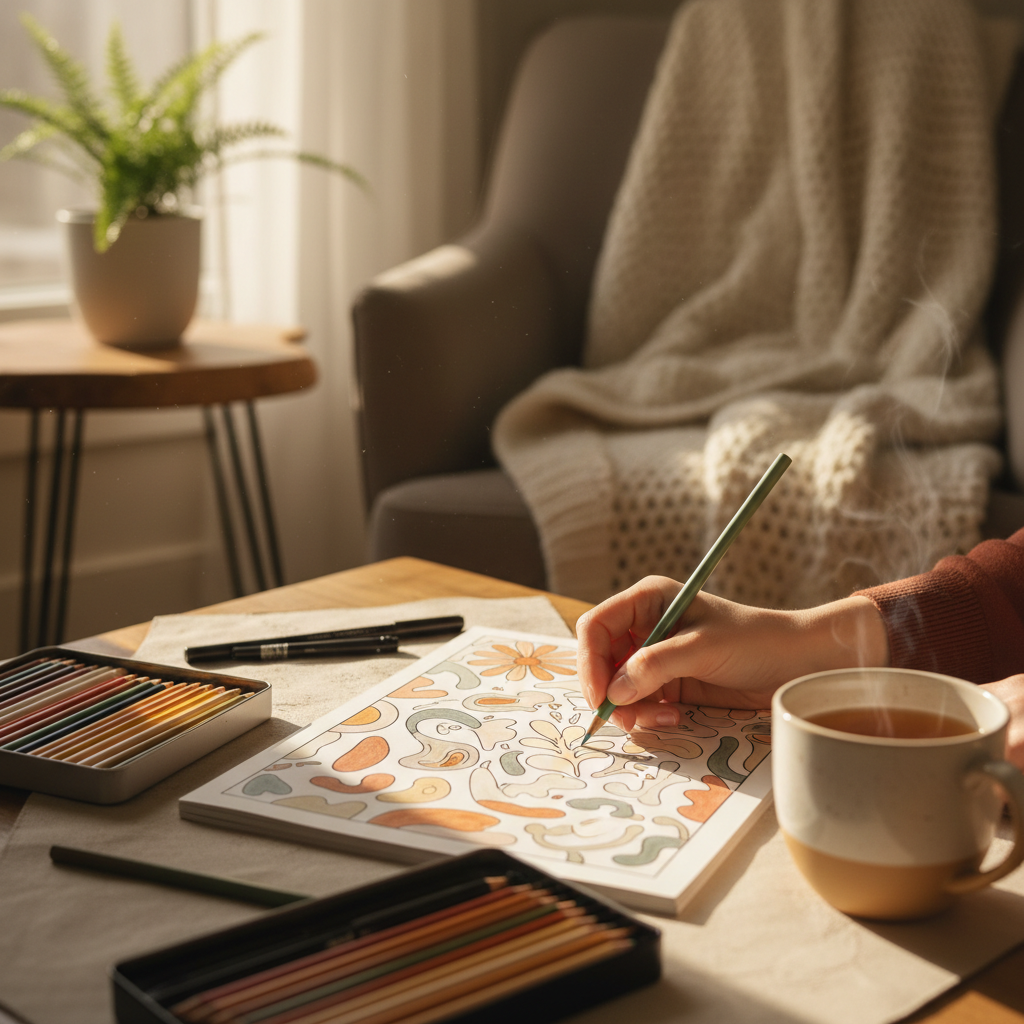
A screen-free evening routine is a deliberate habit of replacing phones, tablets, and televisions with quiet, tactile activities before bed. By removing bright blue light and rapid digital input, this practice signals to your nervous system that the day is concluding. Many adults find that pairing a screen-free window with gentle, low-pressure creative habits like adult colouring can support a smoother transition into restful sleep.
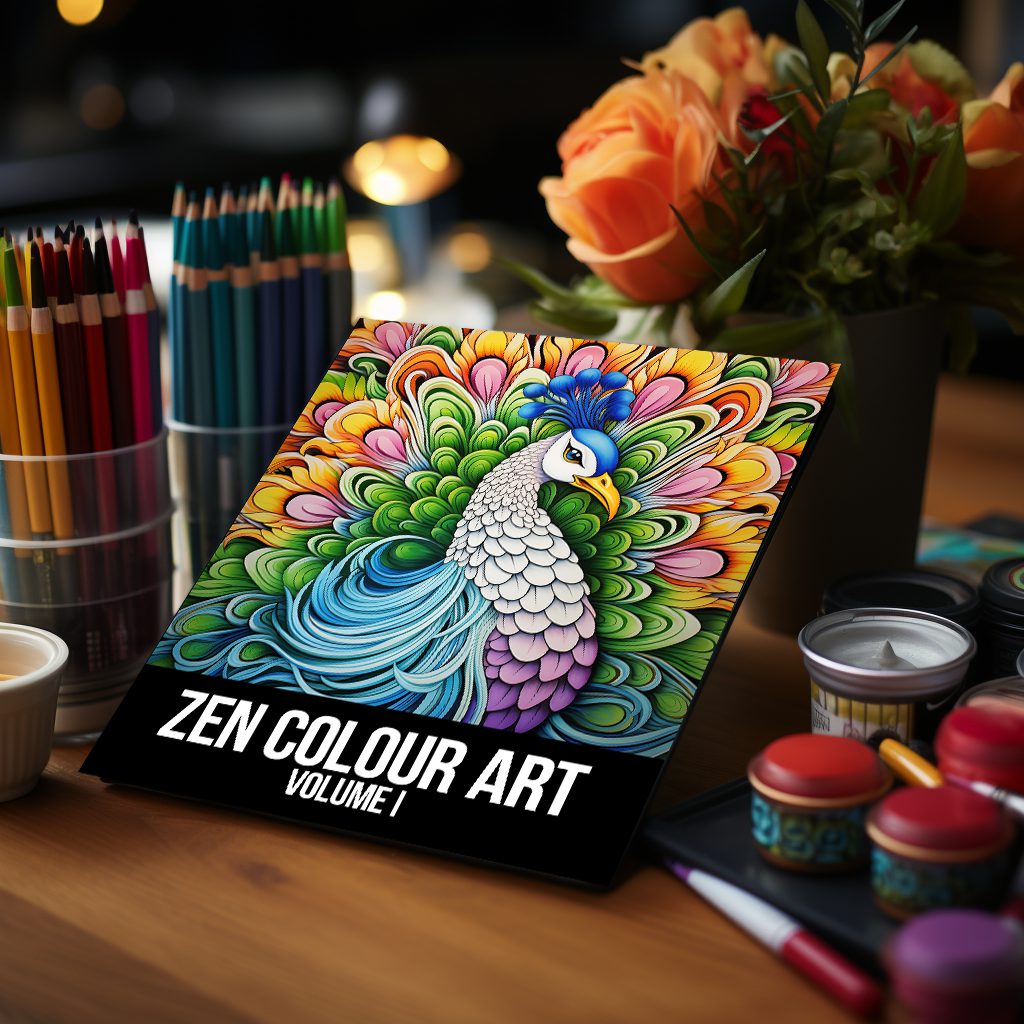
At Zen Colour Art, our creator Nicholas Lynn designs pages around a clear philosophy: colouring should feel calm and unhurried. Pages mix open space with delicate detail so sitting down with a book feels inviting rather than intimidating. When integrated into your nightly rhythm, this simple physical activity offers an accessible, comforting bridge between a busy day and a quiet night.
Why Late-Night Screens Keep the Mind Working
Most of us know the feeling of lying in bed with a phone held above our pillows, scrolling through social feeds or news updates long after we intended to sleep. Even when content feels lighthearted, the combination of back-lit displays and continuous data processing keeps the brain alert.
Screens demand constant decisions: swiping, evaluating headlines, replying to messages, or processing quick video cuts. This rapid stimulation can leave your thoughts spinning, making it harder to settle into sleep. Furthermore, exposure to bright light late in the evening delays the natural release of melatonin, the hormone responsible for regulating your sleep cycle.
Stepping away from screens an hour before bed provides immediate relief from that cognitive hum. The challenge, however, is figuring out what to do with that quiet time when you are accustomed to digital entertainment.
The Tactile Appeal of Adult Colouring at Night
Replacing a digital habit requires an alternative that feels enjoyable rather than punitive. If your evening wind-down feels boring or demanding, it is difficult to maintain. This is where colouring fits naturally.
Colouring offers several distinct qualities that suit nighttime:
- Single-task focus: Unlike modern multitasking, colouring asks your attention to settle in one place. Following a line or shading a contour invites your thoughts to gather in the present moment.
- Low cognitive stakes: You do not have to write words, solve a puzzle, or analyze information. There is no right or wrong outcome, removing performance pressure.
- Tactile sensory feedback: The physical glide of a pencil or gel pen against heavy paper offers a grounding sensory contrast to glass touchscreens.
- A definite boundary: You can shade one petal, complete a single repeating pattern, or fill an entire corner of a page, then stop whenever your eyelids feel heavy.
While colouring does not treat or cure medical conditions, many people find that this gentle repetition can be a relaxing activity that eases tension accumulated throughout the work day.
How to Build a Simple 30-Minute Screen-Free Evening Routine
Creating an evening routine does not require an elaborate ritual or hours of spare time. In fact, keeping things realistic makes the habit much easier to keep. Here is a simple, three-part framework designed for busy evenings.
1. Set a Gentle Digital Curfew
Choose a fixed time—roughly 30 to 60 minutes before your target bedtime—to put your devices to sleep. Place your phone face down across the room or on a hallway console so you are not tempted to check notifications. If you use your phone as an alarm, consider switching to a basic bedside clock.
2. Adjust Your Environment
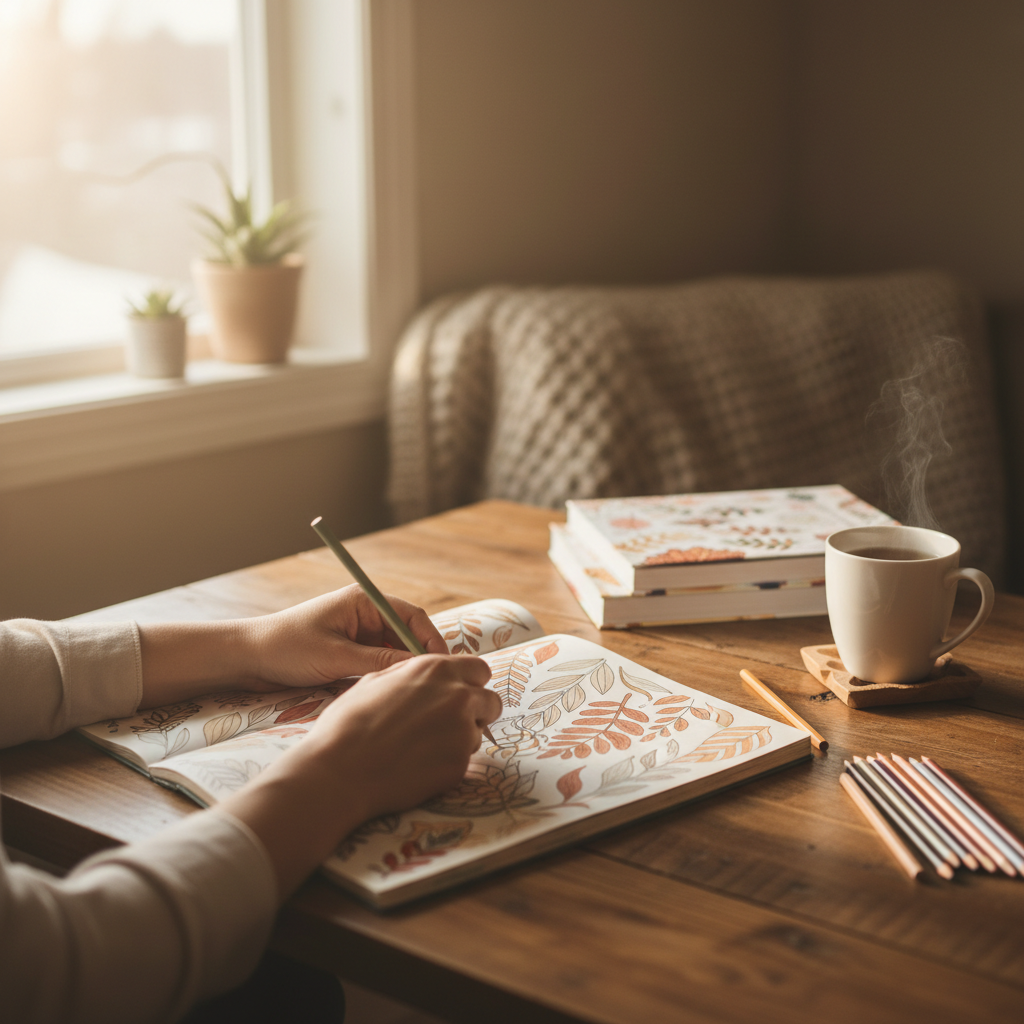
Lower the ambient lighting in your living room or bedroom. Warm, indirect lamplight tells your body that night has arrived. You might brew a warm herbal tea, slip into comfortable loungewear, or put on soft ambient music. The goal is to lower sensory volume across your whole home.
3. Settle In with Paper and Colour
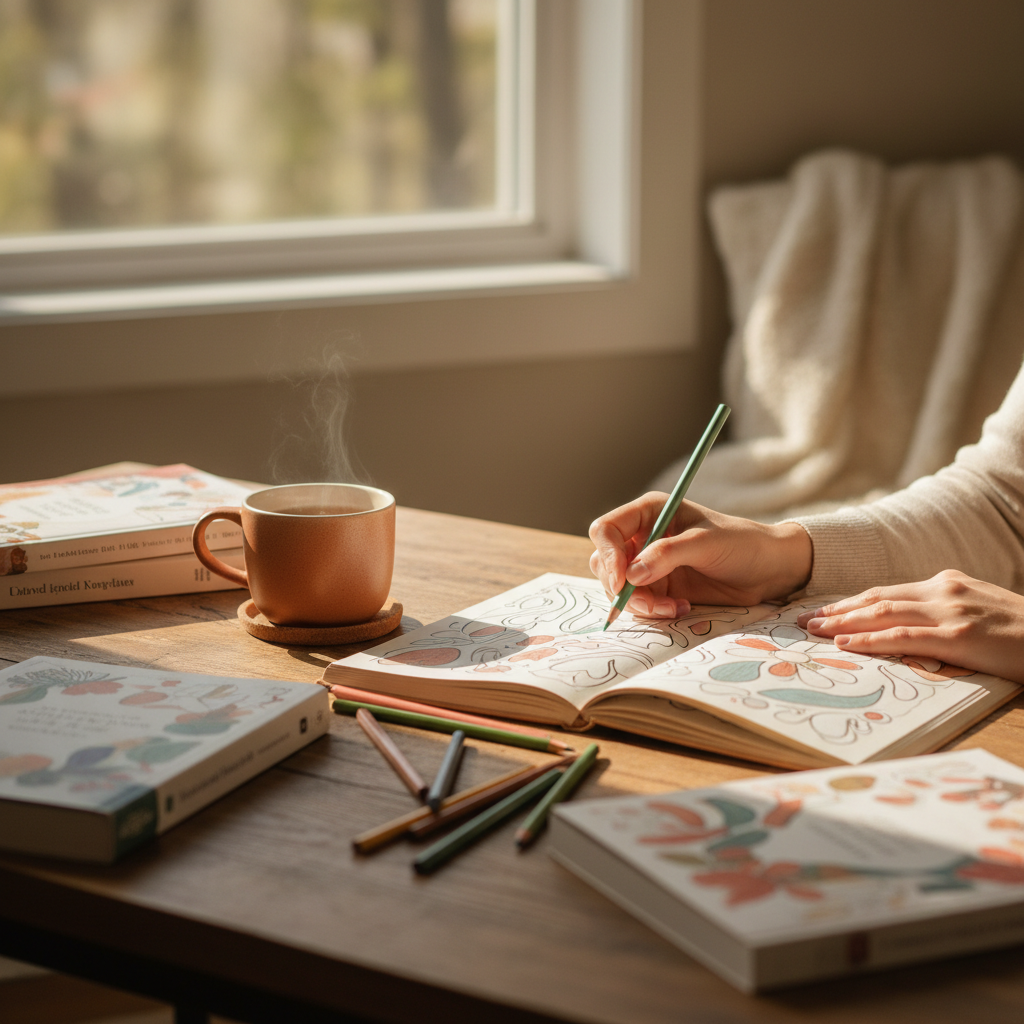
Set up a comfortable spot on your sofa, at a cleared kitchen table, or in an armchair. Open your book to a page that catches your eye. You do not need to finish an entire illustration; colouring for ten to twenty minutes is plenty to steady your breathing and quiet a chattering mind.
For more ideas on weaving brief mindful habits into everyday schedules, explore our guide to Mindful Colouring for Beginners: A Simple Starting Routine.
Selecting Supplies for Nighttime Colouring
Your tools affect how relaxing the experience feels. When setting up an evening colouring corner, keep your supply kit minimal and satisfying to use.
Choosing Your Medium
- Coloured pencils: Soft-core coloured pencils are quiet, smooth, and forgiving. They produce gentle friction on the page and allow soft, layered shading without harsh odours or ink bleed.
- Gel pens: Gel pens glide with minimal pressure, making them wonderful if your hands feel fatigued after typing all day.
- Fine-tip water-based markers: Markers offer bold, saturated colour quickly. Ensure your paper is thick enough to handle the ink without bleed-through.
Why Paper Quality Matters
Thin, translucent paper can tear under firm pressure and allows wet inks to seep through, ruining the design on the reverse side. That frustration disrupts the calm you are trying to cultivate.
At our Barrie studio, every Zen Colour Art book is printed on durable 120gsm acid-free artist paper that readily handles pencils, gel pens, and most fine-tip markers. Our adult and mindfulness collections are printed single-sided, ensuring heavier media will not ghost through and leaving each finished illustration ready to frame or display.
Choosing Your Palette
At night, you do not need a sixty-pencil tin scattered across your lap. In fact, having too many options can trigger mild decision fatigue. Pick three to five harmonious shades before you start—such as soft blues, sage greens, and muted violets—and stick with that tight palette for the session.
Thoughtful Titles for Nighttime Wind-Down
If you are searching for an intentional companion for your evening ritual, consider the design style of your colouring book. Highly cluttered or hyper-detailed layouts can sometimes feel demanding when your eyes are tired.
Our nighttime title, Moonlight Mandalas (72 pages, CAD $24.00), was created specifically as an evening wind-down companion. It features low-stimulation mandalas designed to be coloured before bed, offering balanced geometry that encourages slow, rhythmic pencil strokes.
For those who prefer organic botanicals alongside quiet geometric patterns, The Calm Collection (96 pages, CAD $28.00) brings together a hand-curated mix of mandalas, quiet patterns, and florals designed for unhurried creative breaks. Both titles are printed single-sided on our signature 120gsm paper, so your nighttime pages stay clean and crisp.
Bringing Calm to Your Nights
An evening routine does not have to be rigid to be meaningful. Some nights you may colour for half an hour; other nights, filling in three small petals before turning out the lamp is enough. The value lies in giving yourself permission to disconnect from digital noise and engage your senses in something gentle and creative.
By treating your evenings as an unhurried wind-down rather than a race to exhaustion, you create space for better rest and calmer mornings.