Colour Therapy for Anxiety: A Beginner's Summer Guide to Calm
Zen Colour Art··8 min read
Colour therapy for anxiety: a beginner's guide for summer calm
Summer in Barrie brings warm evenings, lake breezes and a chance to slow down. If you're an adult feeling the tug of anxiety but craving a simple, screen-free way to relax, colour therapy through mindful colouring might be the exact summer ritual you need.
This guide is written for beginners who want practical, emotional and creative strategies. You’ll get easy exercises, colour meanings, session plans, and ways to bring this practice into everyday life in Barrie and Simcoe County.
Quick note: adult colouring isn't about staying inside a line — it's about giving the mind a safe, rhythmic space to rest.
Why colour therapy helps with anxiety
Colour therapy combines two powerful things: the calming rhythm of a repetitive creative activity and the emotional influence of colour. When you colour mindfully, your brain shifts focus away from worry loops and toward sensory, present-moment experience.
Here’s what happens when you pick up pencils and slow down:
- The body responds with a relaxed nervous system — breathing deepens and the heart rate can slow.
- Repetitive motion activates the parasympathetic nervous system — the ‘rest and digest’ state.
- Colour choices and visual stimulation influence mood and make feelings easier to name.
- Focusing on a small, enjoyable task reduces catastrophic thinking and the stress cascade.
For people in Barrie, a quick lakeside colouring session after a walk along Kempenfelt Bay can feel grounding. Colour therapy is portable and simple: pencils, a few sheets, and a small moment for yourself.
Getting started: supplies and setup
You don't need expensive gear. Start small and make your space inviting.
What to have on hand:
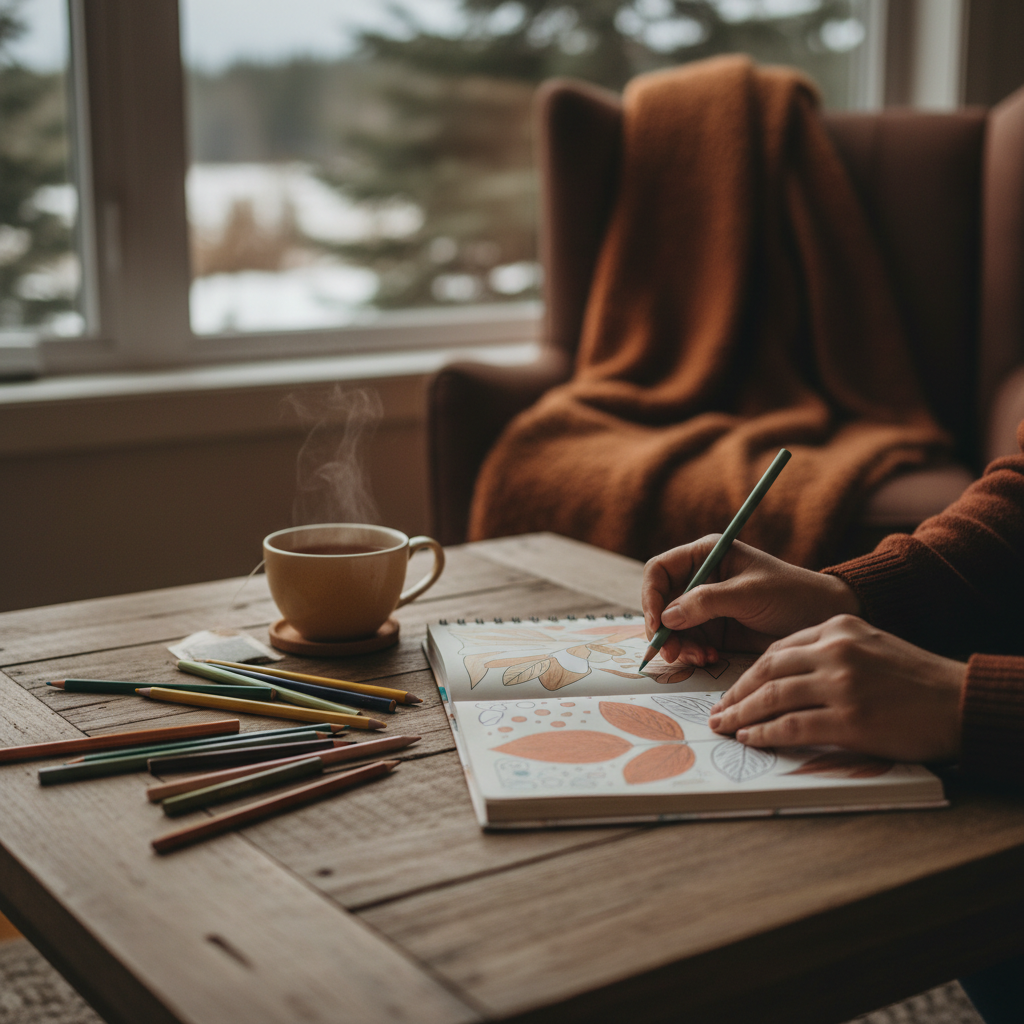
- A set of quality coloured pencils (a 24-colour set is plenty).
- A few adult colouring pages or a colouring book designed for adults.
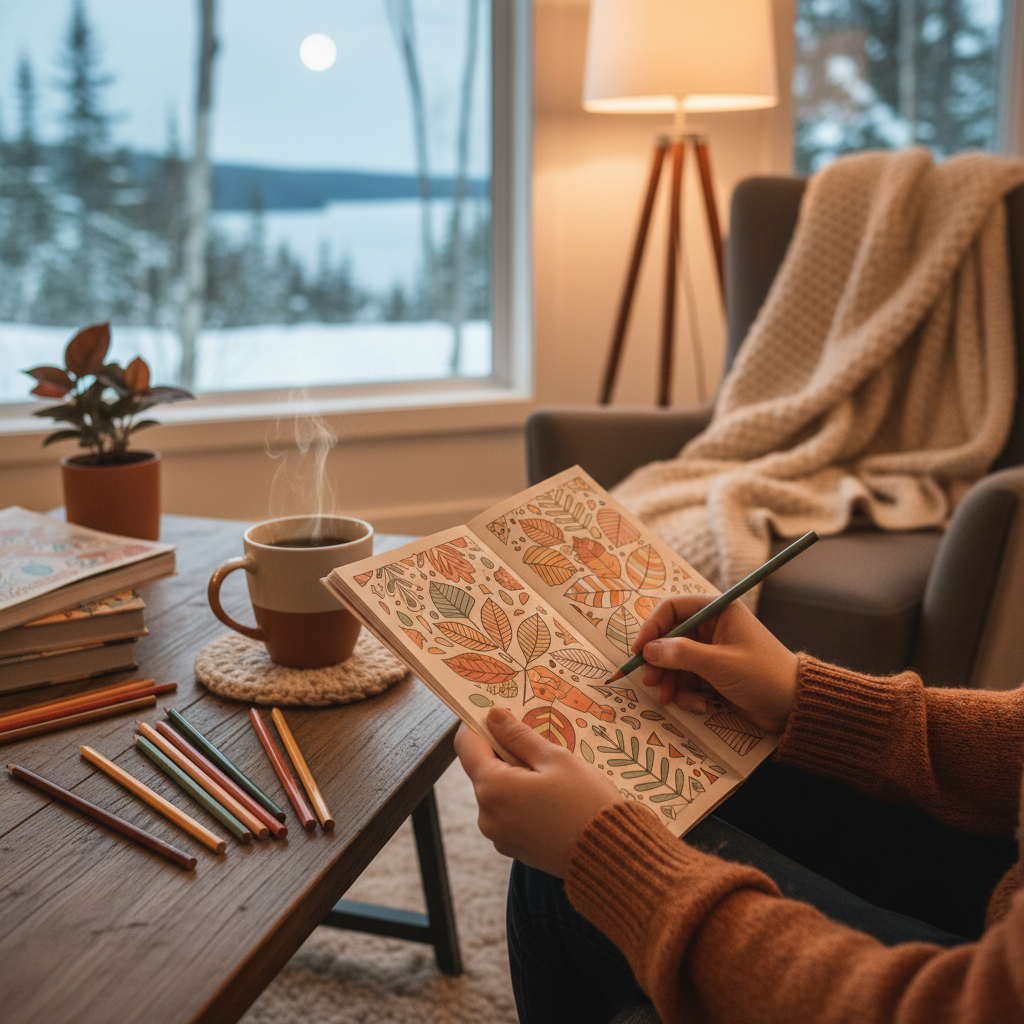
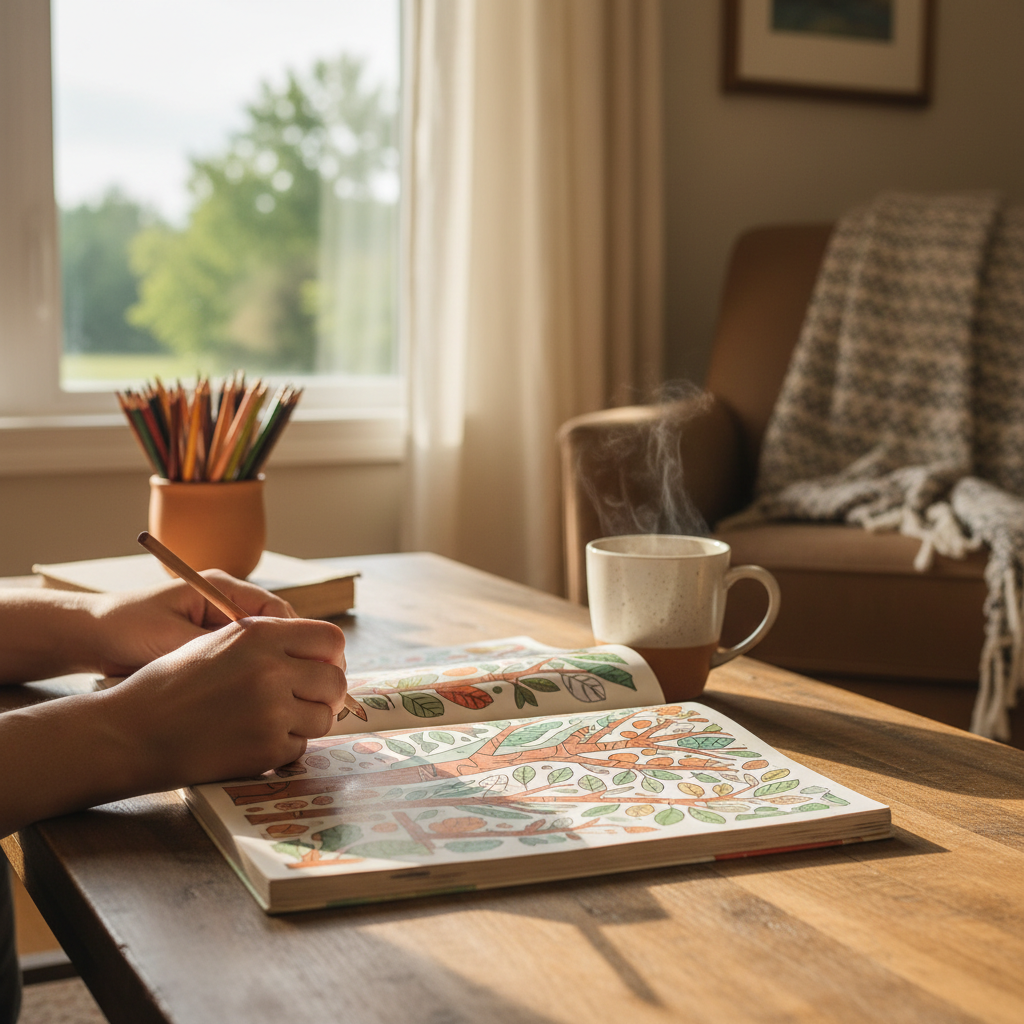
- A comfortable seat and natural light if possible — summer evenings are perfect.
- Optional: fine liners for outlines, a pencil sharpener, and a small tin or case.
Create a calming corner:
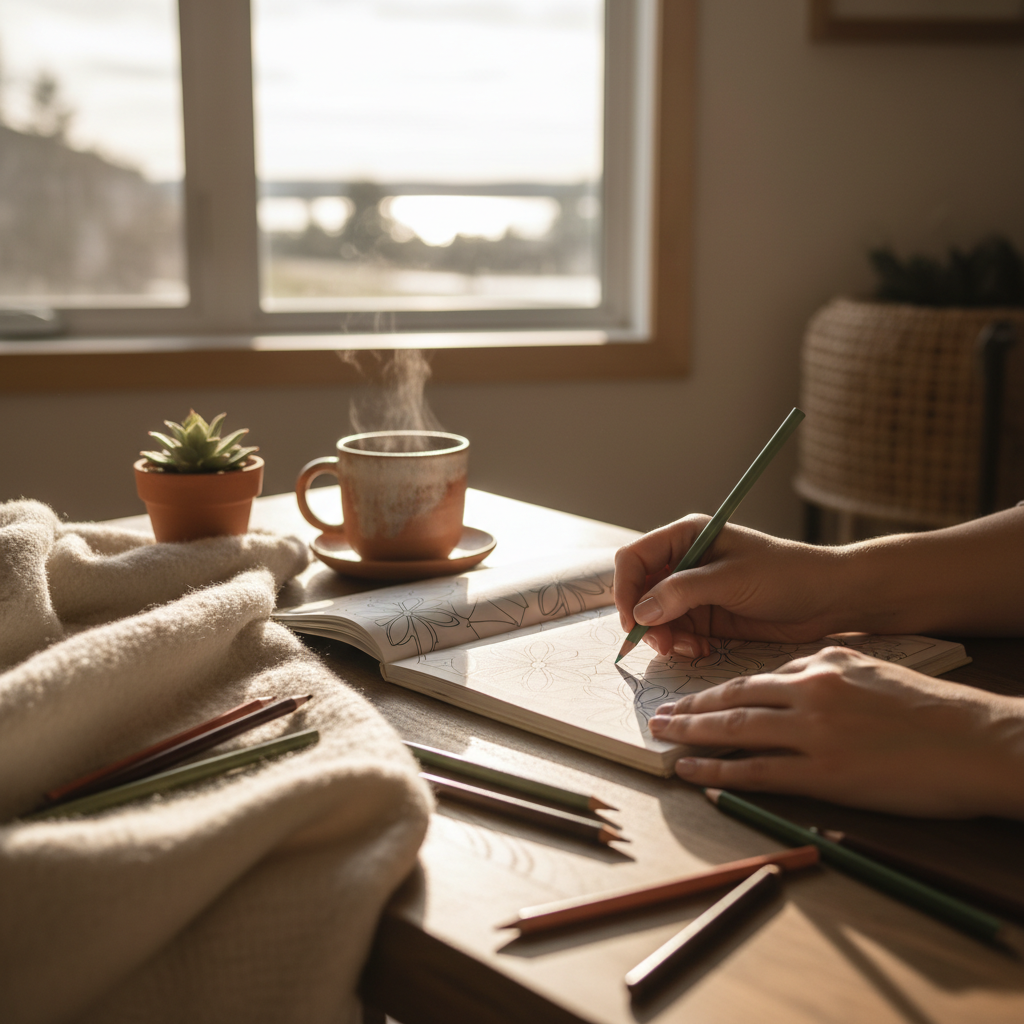
- Find a chair with good back support. A small table near a window or a shaded spot on a porch works well.
- Play low-volume ambient music or nature sounds — or choose silence.
- Keep a glass of water or herbal tea nearby.
Supplies don't need to be expensive or elaborate. Local shops in Barrie and Simcoe County often carry boutique colouring books and pencils; browsing local shop pages or markets can make the process feel special.
Simple breathing and grounding before you colour
Begin every session with a two-minute grounding ritual to steady the body and mind.
Try this quick sequence:
- Sit comfortably and place both feet on the floor.
- Inhale slowly for four counts. Hold for one count.
- Exhale slowly for six counts. Repeat four times.
- Scan your body from head to toe and soften any tension.
This short ritual shifts the nervous system so your colouring time becomes restorative rather than an anxious attempt to 'fix' feelings.
Colour meanings: a gentle guide for anxious moments
Colours carry associations that can guide your choices, but there are no hard rules. Use these suggestions as a starting point.
- Blue: calming, grounding, helpful for racing thoughts. Imagine a quiet Barrie sunset reflecting on Kempenfelt Bay.
- Green: soothing, balancing, connects to nature. Great after a summer walk in Sunnidale Park.
- Yellow: energizing, warm, like sunlight on your skin. Use sparingly if anxious energy feels low.
- Purple: introspective, soothing for creative reflection.
- Orange: warmth and encouragement — try it when you want gentle motivation.
- Pink: comforting, tender, supportive for self-compassion exercises.
- Gray/neutral tones: safe choices when overwhelmed; they can anchor a palette without overstimulation.
Tip: Mix calming blues/greens with a hint of warm colour for emotional nuance. You might choose a mostly blue page with tiny dabs of yellow to represent small sparks of joy.
A beginner's session: 20-minute mindful colouring plan
A short, achievable routine makes it easy to start a habit.
- 0–2 min: Ground with breathing.
- 2–4 min: Choose a page and three pencils. Limit your palette to reduce decision fatigue.
- 4–18 min: Colour slowly. Focus on breathing and the feel of the pencil. If thoughts wander, label them (“thinking”) and gently return to the motion.
- 18–20 min: Close with a body scan and one gratitude sentence: “I noticed X today.”
Why limit to three pencils? A small palette reduces overwhelm and encourages deeper engagement with colour texture and pressure.
Mindful prompts and journaling after colouring
After colouring, spend five minutes reflecting. This helps integrate emotions and builds awareness.
Prompt ideas:
- What colour felt easiest to use and why?
- Did any memory or image come up while colouring?
- On a scale from 1–10, how does your anxiety feel now compared to before?
- Name one small action you can take today that supports calm.
Keep a small journal near your supplies. Over time, patterns emerge and you’ll notice which colours or pages help most.
Techniques for different anxiety states
Anxiety comes in flavors: buzzing restlessness, tight panic, or low-grade worry. Adjust your approach.
Restless, fidgety anxiety:
- Choose a page with repetitive patterns or mandalas.
- Use short, brisk strokes and a tighter grip initially, then soften pressure as you settle.
- Focus on rhythm — match breath to each section.
Tight, tense anxiety:
- Use long, smooth strokes with calming blues and greens.
- Keep a wider, relaxed grip and concentrate on broad shapes rather than details.
- Breathe slowly and aim for a 1:2 inhale-to-exhale ratio.
Low-grade, persistent worry:
- Pick warm, gentle colours and give yourself permission to colour without finishing perfectly.
- Use journaling prompts after the session to name recurring worries and reframe small next steps.
Using local summer moments as colour inspiration
Barrie’s summer palette can be a muse. Try these place-based exercises:
- Kempenfelt Bay Sunset: Choose dusky purples, gold, and deep blue.
- Sunnidale Park Walk: Greens of varied intensity with dashes of yellow and orange.
- Collingwood farmers’ market vibes: Earthy reds, leafy greens, and sunlit yellows.
Make a list of three summer colour memories and use them to build a palette for a session. Sensory anchors like the smell of lake air or the warmth of a bench can deepen the calming effect.
Group or solo practice: what works best?
Both have benefits. Solo practice is private and focused. Group sessions add social support, laughter, and shared calm.
Consider these options in Barrie:
- Solo: A morning routine on your deck or a quiet evening in after sunset.
- Small group: Invite two friends for a gentle, screen-free colouring night with herbal tea.
- Community: Check local community centres or craft nights for mindful colouring groups in Simcoe County.
If you join a group, set intentions: no pressure, no comparison, and phones on silent.
When to combine colour therapy with other practices
Colouring is safe and supportive, but combine it with other strategies for more persistent anxiety.
Consider pairing with:
- Breathwork: Use a short pranayama set before colouring.
- Walking: A 10–15 minute walk around Barrie’s waterfront before a session helps ground the body.
- Therapy: Share your colouring reflections with a therapist — visuals can open new conversations.
- Sleep hygiene: Use evening colouring as a wind-down in place of screens.
If anxiety interferes with daily function, colouring can complement but not replace professional care.
Summer challenges and how to stay consistent
Summer offers freedom but also schedule shifts. Keep the habit alive with these strategies:
- Micro-sessions: Even 5–10 minutes counts on busy days.
- Travel kit: A small pencil case and a few printouts let you colour at the beach or during a cottage weekend.
- Habit stacking: Attach colouring to an existing habit — after your morning coffee or before bedtime.
- Visual cue: Keep your pencils in a visible mug or tin to remind you.
Consistency beats duration. Short daily practice is more potent than long, sporadic sessions.
Safety and accessibility considerations
Colour therapy is low-risk, but be mindful:
- If colouring triggers strong memories or panic, pause and use grounding techniques. Reach out to a mental health professional if necessary.
- Use ergonomic grips or larger pencils if you have arthritis or hand sensitivity.
- Adjust lighting to reduce eye strain during long sessions.
Everyone’s path to calm looks different — adapt tools to your body and needs.
Creative variations to keep things fresh
If you want to expand your practice, try simple variations:
- Limited palette challenge: Pick two colours and explore their range by pressure and layering.
- Speed colour: Set a 5-minute timer and colour quickly to release energy, then breathe.
- Layering textures: Combine coloured pencils with light watercolor washes for a summer sky effect.
- Story-based colouring: Choose colours that tell a memory-based story and journal after.
These small tweaks prevent boredom and deepen curiosity.
How to choose the right colouring pages
Some designs help more with anxiety than others. Look for:
- Mandalas and repetitive patterns for focus and rhythm.
- Nature scenes for connection to green/blue colours.
- Abstract shapes if concrete images trigger perfectionism.
- Pages that allow partial completion — finishing becomes optional.
You can find many adult colouring books at local Barrie bookshops, craft stores, or online. Try a few styles and notice which ones pull you into calm.
Where to find support in Barrie and Simcoe County
If you want community or in-person events, check these options:
- Local community centres for arts and wellness classes.
- Libraries and markets that host craft nights in summer.
- Wellness studios offering mindful creativity workshops.
- Small businesses and artists selling themed colouring books and postcards. Browse local shop and blog pages for ideas and event listings.
Reaching out to local groups can add motivation and pleasant social rhythm to your practice.
Bringing colour therapy into daily life
Colour therapy doesn’t have to be a formal practice. Use colour in tiny ways to reduce anxiety:
- Colour-code a to-do list to make tasks feel manageable.
- Keep a small sketchbook in your bag for moments of tension.
- Use calming colours in your living space — a throw pillow or wall art can shift mood.
Small, repeated changes add up. The point is consistent, accessible care — not perfection.
A summer checklist to start today
- Choose a comfortable spot with natural light.
- Buy or borrow a 24-colour pencil set and a few pages.
- Try the 20-minute session plan.
- Keep a tiny journal nearby for reflections.
- Share with a friend or join a local session if you want company.
Start with curiosity. Colour therapy is a practice, not a test.
Final thoughts: gentleness, curiosity, and permission
If anxiety is loud this summer, give yourself permission to be small and steady. Colour therapy is a soft practice that meets you where you are: nervous, distracted, exhausted or hopeful.
The simple act of choosing a pencil and filling a shape can teach the nervous system a new language: one of rhythm, colour and calm. Over weeks, this practice often creates subtle shifts that feel profound — a quieter mind, steadier breath, and more moments of presence.
If you want more guided ideas, local resources, or curated colouring sets designed for mindful practice, check our shop and browse posts on our blog for seasonal suggestions and Barrie-friendly events.
FAQ: Quick answers for beginners
Q: Do I need artistic skill to benefit from colour therapy?
A: No. Colour therapy is about process, not product. It's designed for everyone, regardless of skill.
Q: How long until I notice benefits?
A: Many people feel calmer after one session. For longer-term change, try short daily practices for a few weeks.
Q: Is colouring a replacement for therapy or medication?
A: No. Colouring is a complementary tool. If anxiety significantly disrupts life, consult a mental health professional.
Q: Can I do colour therapy outside in summer?
A: Absolutely. Outdoors offers natural inspiration and extra calming benefits. Just bring a small kit and shade.
Q: What if I get frustrated or perfectionist while colouring?
A: Try a limited palette, abstract pages or a speed session to reduce pressure. Remember the goal is presence, not perfection.