How Adult Colouring Calms an Overstimulated Nervous System in Summer
Zen Colour Art··8 min read

How colouring calms your nervous system — quick answer
Colouring helps shift an overstimulated nervous system toward calm by combining focused attention, gentle sensory input, and rhythmic hand movement. In minutes it can lower physiological arousal, ease anxiety, and invite a sense of safety and presence.
Why this matters in summer — a Barrie and Simcoe perspective
Summer in Barrie and across Simcoe County is full of life: lake days, farmers markets, outdoor concerts, cottage plans, and longer social calendars. That abundant stimulation is joyful but also fatiguing. When your nervous system gets too much input it can feel wired, agitated, or emotionally flat. Adult colouring is a portable, low-tech practice you can use between errands, on the Kempenfelt Bay waterfront, or under a shady maple in a Barrie park to recover calm.
What overstimulation looks and feels like
Overstimulation shows up differently for everyone, but common signs include:
- Racing thoughts and difficulty concentrating
- Irritability, short temper, or emotional reactivity
- Tension in the jaw, neck, or shoulders
- Trouble falling asleep or restless nights
- Sensory overwhelm from noise, light, or too many screens
If that sounds familiar, colouring can be a gentle tool to downshift without needing a long meditation session.
The simple science behind colouring and calm
Here is what happens in your nervous system when you pick up a pencil:
- Focused attention engages the prefrontal cortex, the part of the brain that helps regulate emotions and override anxiety loops.
- Repetitive, rhythmic movement of colouring produces a predictable sensory pattern that signals safety to the brain.
- Intentional breathing often happens naturally while concentrating, which boosts parasympathetic activity and slows heart rate.
- Colouring can induce a mild flow state, increasing dopamine in balanced amounts and supporting satisfaction and motivation.
- Social and physical safety cues described by polyvagal theory are supported by gentle sensory input and a calm, friendly environment, which helps move the nervous system toward regulation.
All of these shifts lower cortisol, moderate adrenaline, and increase neurotransmitters that support relaxation and mood stability.
Colouring is not just for attention — it is an embodied reset
Unlike passive scrolling, colouring requires touch, fine motor control, and sensory engagement. That embodied focus helps anchor you in the present moment, reducing the brain chatter that feeds anxiety. For adults in busy lives, this kind of tactile mindfulness can be more accessible than seated meditation.
How to set up a calming colouring session
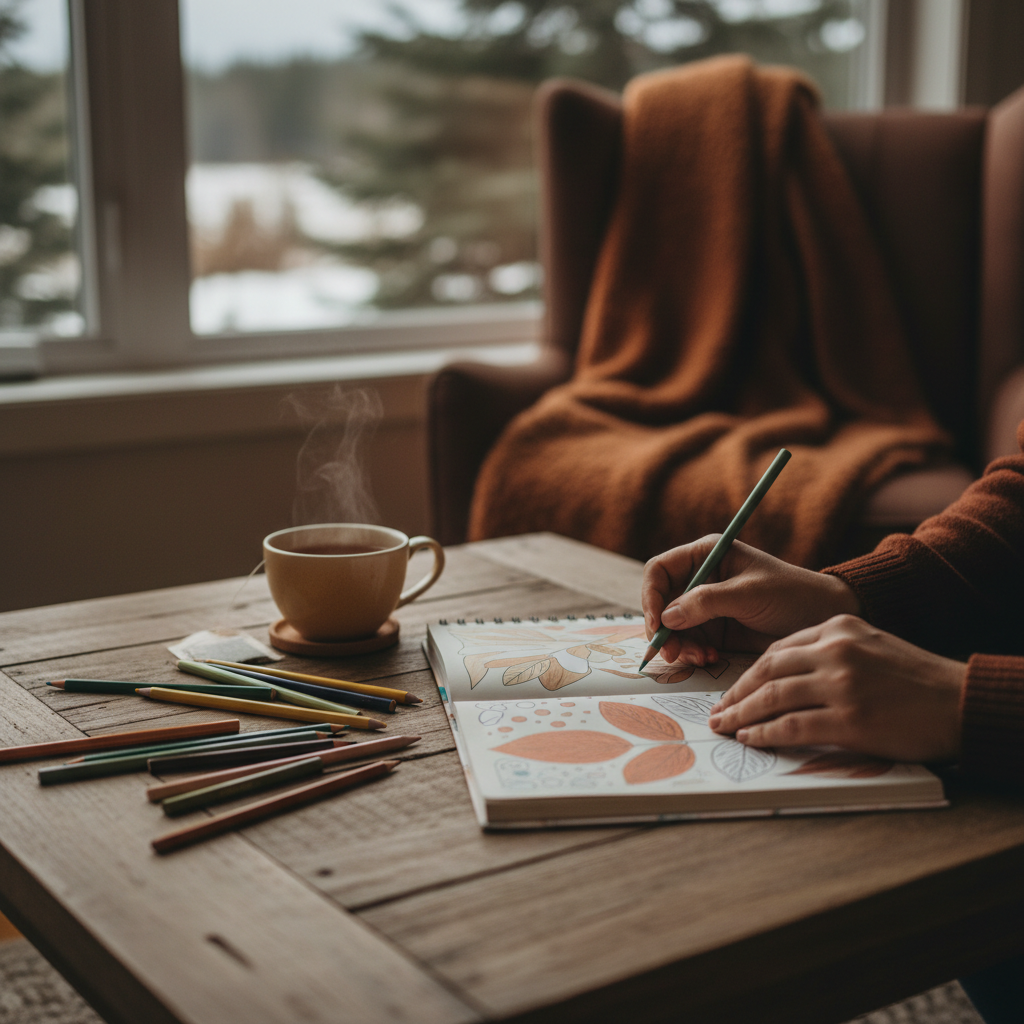
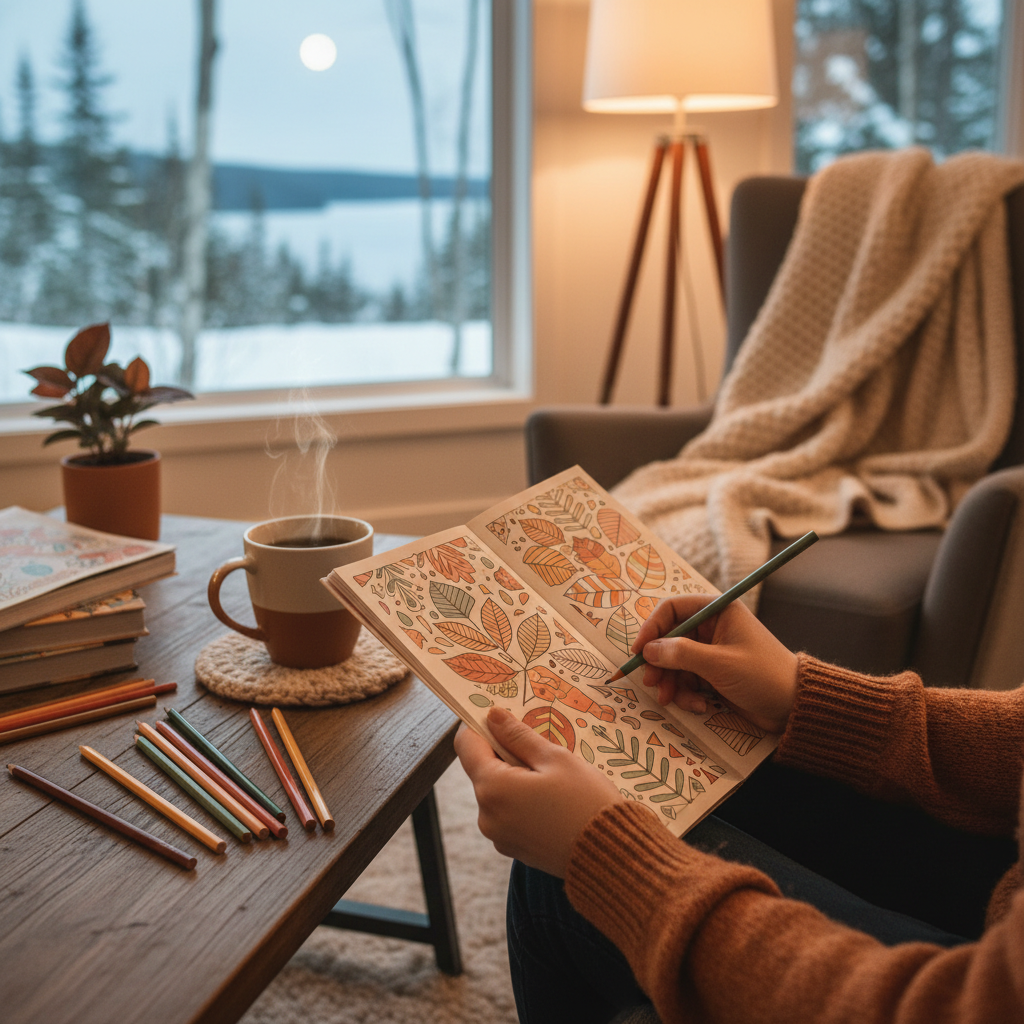
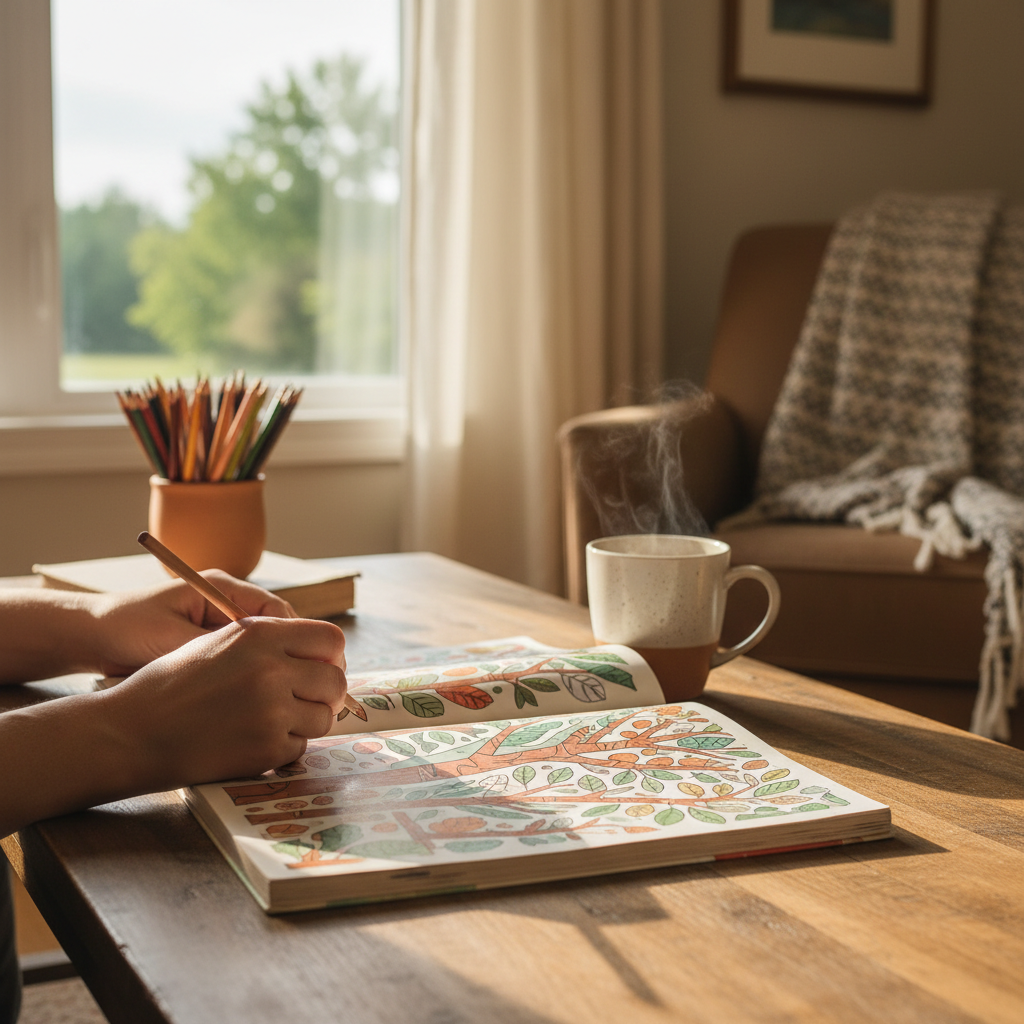
Short answer: make it simple, short, and intentional. Here is a step-by-step guide you can use anywhere.
- Choose your space
- Find a comfortable chair on your back deck in Barrie, a shaded bench at Sunnidale Park, or a quiet corner of your cottage.
- Aim for soft, indirect light in summer to avoid glare.
- Pick materials that feel good
- Soft-coloured pencils, wax-based pencils, and fine-tip markers are soothing to use.
- Avoid overly bright neon markers if you are seeking calm.
- Set a timer
- Start with 10 or 20 minutes. Short, consistent practice is more effective than rare marathon sessions.
- Start with a breathing anchor
- Take three slow, full breaths in through the nose and out through the mouth before you begin.
- Colour with intention
- Focus on the sensation of the pencil on paper, the movement of your hand, and the gradual appearance of colour.
- If your mind wanders, gently bring attention back to the next stroke.
- Close with a check-in
- Notice any shifts in body tension, breathing, or mood. You may feel calmer, clearer, or simply more grounded.
Quick session plans for different needs
- 5-minute reset: Use a single page, choose two cool colours like teal and lavender, focus on soft strokes and breathing. Great between meetings.
- 15-minute unwind: Pick a nature scene, sit outside near the waterfront in Barrie, use pencils and layer colours slowly to create texture.
- 30-minute mindful practice: Turn off devices, brew iced herbal tea, and allow yourself to explore colours without judging the outcome.
Colour, pressure, and rhythm: how to colour for maximum calm
- Pressure: Light, even pressure tends to be more calming. Heavy pressure can be grounding too but may feel more intense for some.
- Rhythm: Use small repetitive strokes or circular shading to create a meditative pattern.
- Palette: Cool colours and muted tones often reduce arousal; shades of blue, green, indigo, and soft neutrals support relaxation.
Choosing palettes for calm
Here are quick palette ideas with emotional cues you can try this summer:
- Lakeshore Calm: muted teal, soft navy, sandy beige — evokes Kempenfelt Bay evenings.
- Meadow Rest: sage green, soft mustard, mauve — like a walk through a Simcoe County field.
- Cloud Breath: pale blue, silver grey, pastel lilac — light and airy for heatwave afternoons.
Experiment with colour intuitively too. The act of choosing and arranging colour is part of the therapeutic process.
Materials matter less than the experience
High-quality supplies feel lovely but you don’t need expensive tools to benefit. Pencils from a hobby store, a small portable sketchbook, and a set of simple markers are enough. If you want to invest, look for pencils that blend smoothly and paper that accepts layers without tearing.
Creating an environment that supports regulation
- Reduce competing sensory input: lower background music volume or choose ambient nature sounds.
- Add a sensory comfort: a cool breeze, a glass of water with lemon, or a lightweight blanket can help you settle.
- Use scents carefully: lavender or citrus can be calming, but strong smells may increase stimulation for some people.
In Barrie summers try colouring on a park bench near the water so you get a gentle breeze, birdsong, and visual rest for the eyes.
Pair colouring with small nervous-system tools
- Box breathing: inhale 4 seconds, hold 4, exhale 4, hold 4. Repeat for a few cycles before or during colouring.
- Body scan: notice tension in shoulders, jaw, and stomach. Pause and breathe into those areas as you colour.
- Movement break: after colouring for 15 minutes, stand, stretch, or walk along the waterfront to integrate the calm.
When adult colouring helps most
Colouring is especially useful when you need a low-effort, low-stakes reset. It can help with:
- Transitioning between high-energy parts of your day
- Grounding before sleep or after screen overload
- Reconnecting with creativity when you feel blocked
- A gentle social activity during summer gatherings without the pressure of conversation
When to add other supports
Colouring is a helpful tool but not a replacement for professional care. If you notice persistent anxiety, panic attacks, or severe sleep disturbances, seek guidance from a healthcare provider or therapist. Combine colouring with therapy, movement practices, or mindful breathing for deeper regulation.
Making colouring a summer habit in Barrie and Simcoe County
- Create a small kit: a paperback colouring book, a tin of pencils, and a pencil sharpener. Keep it in your tote for trips to the Barrie farmers market.
- Schedule micro-practices: 10 minutes after breakfast or before dinner works well with summer rhythms.
- Invite a friend: host a calm-colour evening on your porch and trade palettes and playlists.
If you want curated kits made for adults, check our shop for supplies designed with stress relief in mind.
Mindful prompts to use while colouring
- Name five things you can feel beneath your fingertips.
- Notice three colours you are drawn to and why.
- Breathe in for four strokes, out for four strokes as you colour the same shape.
These prompts help anchor attention without forcing concentration.
Bringing nature into your colouring practice
Pairing colouring with nature amplifies benefits. Try these summer ideas:
- Colour on a picnic blanket at the Arboretum and include leaves and seed shapes in your palette.
- After a Kempenfelt Bay walk, sketch the shoreline patterns in muted blues and greys.
- Use local light: early evening sun softens contrasts and supports calming colour choices.
A brief guide for parents, caregivers, and busy adults
If you care for others or juggle shifting summer plans, keep your practice realistic:
- Aim for consistency rather than duration: 5 to 15 minutes daily is powerful.
- Use communal colouring pages during family downtime to model calm for kids.
- Keep supplies visible and accessible to reduce the friction to begin.
How to measure the benefits
Track simple markers over weeks rather than expecting instant transformation. Notice changes like:
- Easier transitions between activities
- Shorter recovery time after stressful events
- Lower tension in shoulders and jaw
- Better sleep onset after evening colouring sessions
Journalling brief notes after sessions can help you notice patterns.
Real-life stories from local summer days
Picture this: after a busy morning of errands in Barrie, you sit on a shaded bench by the waterfront with a small sketchbook. The breeze moves the pages as you lay down soft blues and greens. Ten minutes later, your shoulders have dropped, your thoughts are quieter, and you feel ready to return to the rest of the day. That simple reset is what many people in Simcoe County experience when they turn to colouring.
Practical tips to keep going
- Keep a pocket-sized kit in your car for unexpected pauses in the day.
- Pair colouring with other small rituals like herbal tea or a five-minute walk.
- Celebrate small wins: notice the calm, not the perfect shading.
If you want fresh patterns and adult-focused designs, explore our seasonal releases in the shop or read more techniques on our blog.
Final thoughts
Adult colouring is an accessible, emotionally intelligent tool for calming an overstimulated nervous system. In the summer months in Barrie and across Simcoe County, it offers a portable sanctuary from busy days and bright screens. With short, consistent practice, gentle materials, and a focus on breathing and rhythm, colouring can become a trusted way to find presence, ease, and creative pleasure.
Make it simple, make it yours, and allow colour to be a small act of self-care this summer.