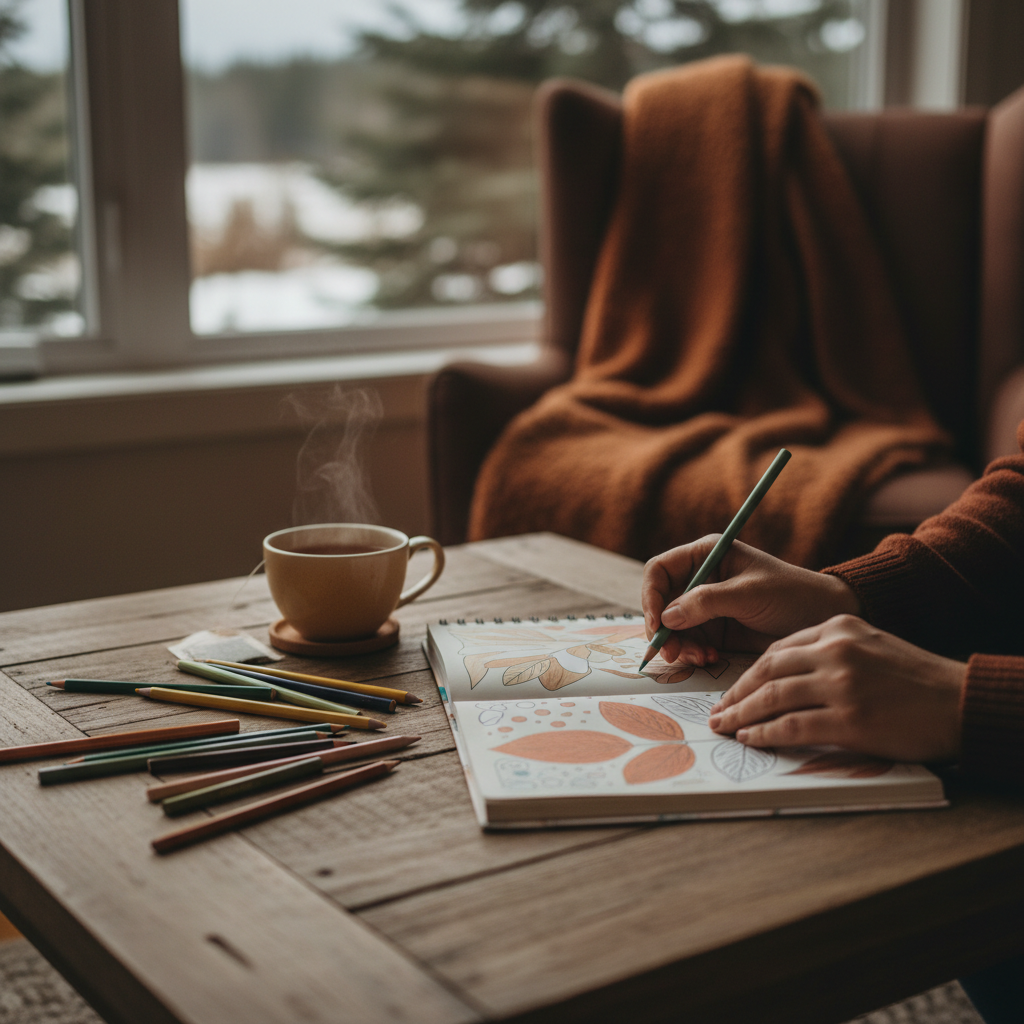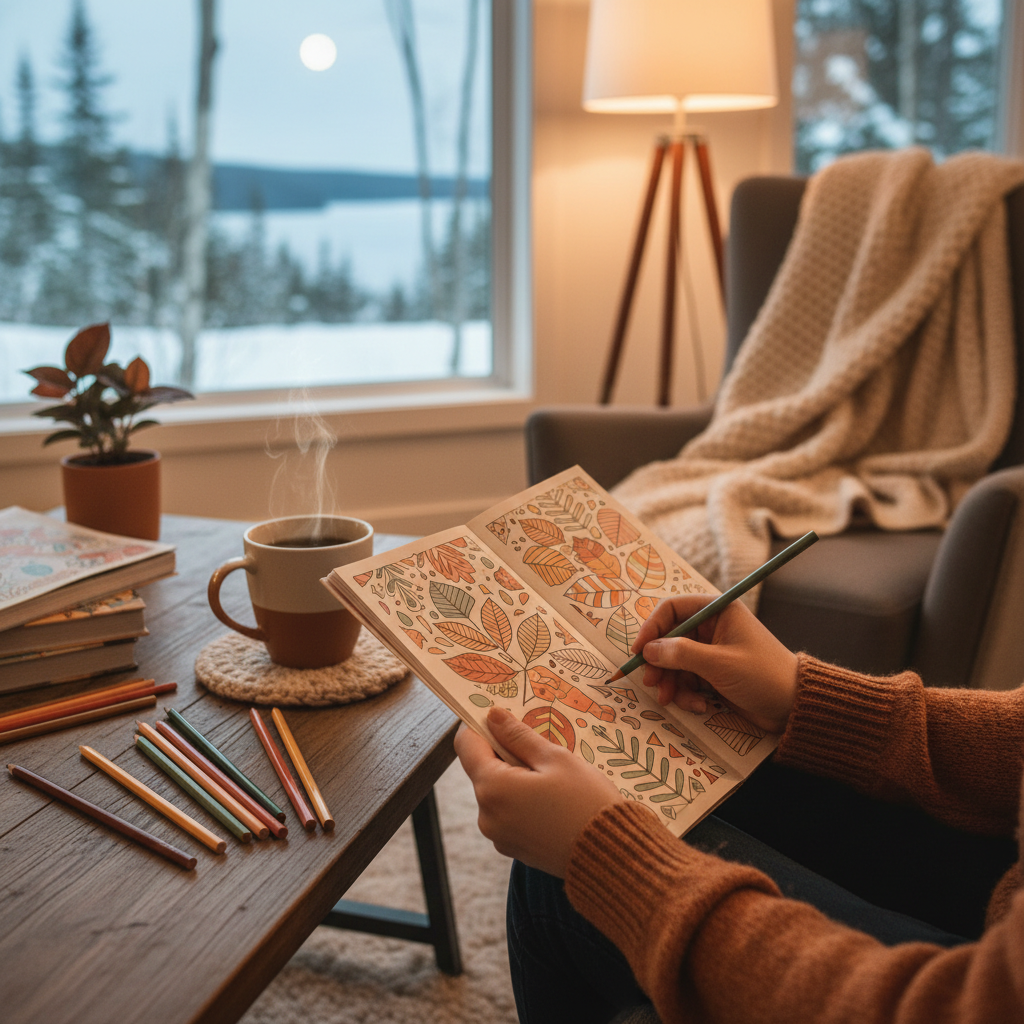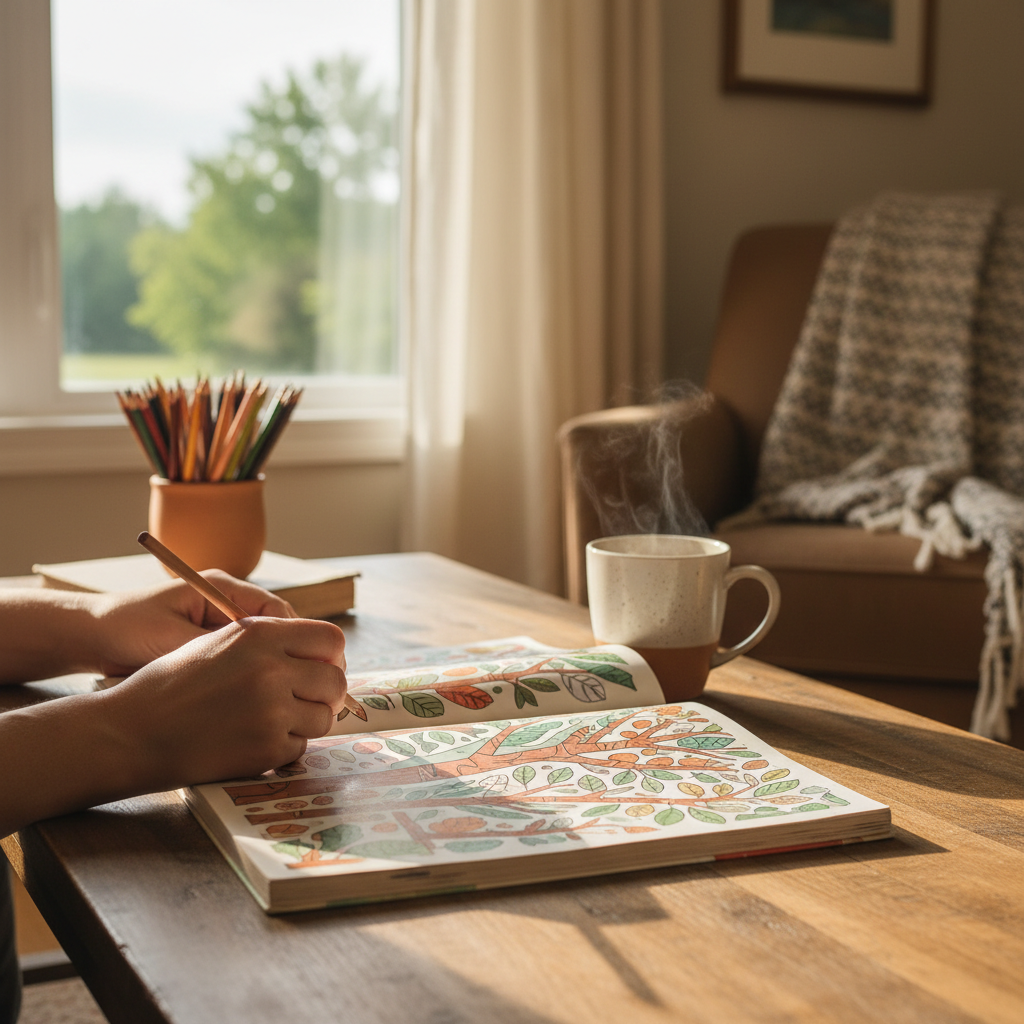
How Adult Colouring Calms an Overstimulated Nervous System This Summer
Zen Colour Art··8 min read

Quick answer: why colouring works for an overstimulated nervous system
Adult colouring calms an overstimulated nervous system by shifting attention away from threat circuits, engaging fine motor control and rhythm, and activating the parasympathetic nervous system that promotes rest and repair. Short, intentional colouring sessions can reduce heart rate, lower cortisol, and create a bridge into mindful presence — especially welcome during long, sensory-rich summer days in Barrie and Simcoe County.
Why this matters now: summer sensory overload and why adults need simple tools
Summer brings warm weather, longer days, and more social activity. For many adults that means more stimuli: backyard gatherings, lake traffic, busy schedules, and the visual noise of social media and screens. In Barrie summer feels alive with waterfront walks, Georgian Bay sunsets, and festivals. That energy is uplifting but can also push some nervous systems into overstimulation.
An overstimulated nervous system shows up as:
- irritability, impatience, or low frustration tolerance
- difficulty concentrating or frequent mind chatter
- racing heart, shallow breathing, or tension in the neck and shoulders
- trouble sleeping despite physical tiredness
Adult colouring is a low-cost, portable, screen-free tool that can be used anywhere — at a picnic in Sunnidale Park, on the deck after a day at the lake, or in a quiet corner of a Barrie cafe.
How adult colouring affects the nervous system: the science in plain language
Here are the core mechanisms that explain why colouring calms an overstimulated nervous system.
- Attention reorientation and reduced threat bias
When we colour we redirect focused attention to a simple, contained task. The brain reduces activity in the amygdala and other threat-detection areas because the environment is perceived as safe and predictable. This downregulation can lessen anxiety and hypervigilance.
- Activation of the parasympathetic nervous system
Colouring involves slow, repetitive hand movements and rhythm. Those motor actions, paired with calm breathing, stimulate the vagus nerve and increase parasympathetic tone. Result: heart rate slows, digestion improves, and the body shifts into rest-and-digest.
- Sensory integration and manageable input
Pages designed for adults offer patterns that provide enough detail to engage strongly but not so much that the task becomes overwhelming. This balanced sensory input helps integrate visual, tactile, and proprioceptive cues into a coherent experience, which reduces sensory noise.
- Flow states and reduced self-referential thinking
Flow happens when challenge and skill meet. Adult colouring can produce a mild flow state where self-criticism and rumination drop away. That relief from internal chatter lowers stress hormones like cortisol and gives the nervous system a chance to settle.
- Predictability and control
Choosing colours and filling a defined space gives people a sense of agency. When sensory environments feel chaotic, small acts of control are calming and restorative.
What a calming colouring session looks like: practical steps
You do not need to colour for hours to get benefits. Short, intentional sessions are powerful and easy to integrate into a summer routine.
Step-by-step calming session (10 to 25 minutes):
- Choose a comfortable spot
- Pick a shady bench at the waterfront or a quiet corner on your porch. Summer light is beautiful but avoid glare.
- Select a page suited to your mood
- Complex mandalas are great when you want deep focus. Open florals or gentle landscapes work well for gentle relaxation.
- Gather a small kit
- A slim set of coloured pencils, a pencil sharpener, and an eraser. Portability matters for summer outings.
- Start with breathing
- 3 long, slow breaths in through the nose and out through the mouth. Let shoulders drop.
- Set a soft timer
- 10, 15, or 25 minutes. The timer is a permission slip to do nothing else.
- Colour with intention
- Move slowly. Notice the weight of your pencil. If your mind wanders, gently bring it back to colour and touch.
- Finish with reflection
- Spend one minute noticing how your body feels. Any change in breathing, tension, or mood?
A consistent 10- to 20-minute habit can reset an overstimulated system multiple times a day. It is also a sustainable screen-free practice for summer evenings instead of doom-scrolling.
Combining breathing and colouring: a simple pairing for faster calm
Pairing breathing techniques with colouring amplifies calming effects.
Box breathing while colouring
- Inhale for a count of 4 while bringing your pencil to the page
- Hold for 4 as you fill a small shape
- Exhale for 4 as you finish the stroke
- Hold for 4 before the next inhale
This rhythm slows the heart rate and gives the mind a predictable loop to follow. Try it for 5 to 10 minutes and notice the shift.
Coherent breathing
- Breathe in for 5 counts and out for 5 counts while working on a single pattern area. This longer, even breath fosters parasympathetic activation.
Design a summer, screen-free calming routine in Barrie
Summer routines can lean on the outdoors to reinforce calm. Here are some ways to weave colouring into seasonal life around Barrie and Simcoe County.
- Morning porch ritual: 10 minutes of colouring with tea before the day begins
- Waterfront wind-down: colour at Centennial Beach after a walk to integrate movement and stillness
- Picnic calm kit: bring portable colouring sets to Kempenfelt Bay for a relaxed family break
- Cottage companion: keep a stack of adult colouring pages in the cottage drawer for evenings without screens
- Festival pause: step away from loud events like Kempenfest to colour for 10 minutes and return refreshed
These micro-habits create signals for the nervous system that 'rest' is available even while summer days stay full.
Supplies and colour choices that support calm
You do not need expensive tools. Thoughtful supplies make the experience smoother.
Recommended supplies
- Medium-soft coloured pencils for a tactile, controlled feel
- Fine-tip gel pens for precision and small details
- A small notebook or travel pad with a mix of patterns
- A sharpener and small cloth to wipe hands
Choosing colours for calming effects
- Cool tones like blues and greens tend to lower arousal and promote stability
- Pastel shades are less visually intense than neon colours
- Monochromatic or analogous palettes are soothing because they reduce visual contrast
- Try a limited palette for a session to avoid choice fatigue
Colouring for emotional release
If you feel tense or overwhelmed, allow yourself a session without rules. Use darker, saturated tones to express intensity and then transition to lighter shades to signal release. The act of holding and moving toward balance is itself restorative.
Adapting sessions for different nervous system states
Not every day feels the same. Here are quick guides for tailoring sessions to how you feel.
When you're jittery or wired
- Choose repetitive patterns like waves or spirals
- Use a slow breathing pattern and focus on long strokes
- Keep sessions to 10 minutes
When you're flat or numb
- Pick brighter colours to stimulate positive mood
- Use shorter strokes and faster pacing to evoke energy
- Combine colouring with gentle movement like standing sways
When you're emotionally flooded
- Pause until the acute feeling subsides, then use simple shapes
- Prioritize breathing over precision
- Aim for grounding: focus on the texture of the paper and the pressure of your hand
Community and places in Simcoe County that support mindful creative breaks
If you prefer social connection, Barrie and Simcoe County have easy, local options for group creativity. Combining companionship with the calming practice of colouring adds social support, which is another buffer against stress.
Local ideas
- Bring a colouring kit to a small group meet-up at a local coffee shop in downtown Barrie
- Host a backyard colouring night with friends, playing soft summer music and sharing snacks
- Look for workshops or pop-up events from local makers and artists during summer markets
- Organize a colouring walk: short strolls with 10-minute colour breaks in parks like Centennial Park or Sunnidale Park
Zen Colour Art in Barrie supports these local practices. Check our shop for portable kits, or explore calming design ideas on the blog.
Practical tips to make colouring stick as a habit
- Keep a small colouring set in your bag or car for spontaneous breaks
- Pair colouring with another daily anchor like morning coffee or an evening walk
- Use a consistent cue, such as the sound of crickets in the evening, to prompt a colouring session
- Track short wins in a calendar. Even 5 minutes counts
- Give yourself permission to do imperfect colouring. The goal is nervous system regulation, not a perfect picture
When to combine colouring with other tools
Colouring is a strong first-line tool but benefits from pairing with other health practices.
- Sleep hygiene: avoid screens for 30 to 60 minutes before bed; colouring can replace screen time
- Movement: short walks or gentle stretching before colouring help bring blood flow and ground the body
- Nature exposure: colouring outside adds the calming benefits of fresh air and natural sounds
- Professional support: if you experience chronic anxiety, panic attacks, or trauma responses, colouring should complement therapy rather than replace it
Stories from Barrie: a short example
One Barrie resident found that 10 minutes of evening colouring on the porch after a shift at the hospital helped reduce physical tension and racing thoughts. The simple, portable kit made it easy to keep the habit during a busy summer. Over weeks they reported better sleep and fewer late-night screen binges. Small, repeatable practices like this add up.
Conclusion: a simple, summer-friendly path to a calmer nervous system
Adult colouring offers a gentle, evidence-aligned approach to calming an overstimulated nervous system. It is low-cost, portable, and adaptable to the rhythms of summer in Barrie and Simcoe County. Whether you want a 10-minute reset by the lake or a longer evening ritual on the deck, colouring helps shift attention, regulate breathing, and invite the parasympathetic nervous system back online.
Try a short practice today: pack a small kit, choose cool colours, and set a 10-minute timer. Notice how your body and mind respond. If you like curated kits and locally designed pages, browse our options at shop and read more calming creativity ideas on our blog. Enjoy summer, and give your nervous system the small, consistent kindness it deserves.