Why 10 Minutes of Summer Colouring Wins Over Nighttime Doom-Scrolling
Zen Colour Art··8 min read

Why a 10-minute colouring ritual can change your nights
You know that moment: it's late, the sun has just set over Kempenfelt Bay, you meant to put your phone away, but one swipe becomes twenty minutes, then an hour. Doom-scrolling fills up summer nights on patios and porches across Barrie and Simcoe County. It promises connection and information, but too often it gives anxiety, shallow sleep, and a restless mind.
Ten minutes of colouring changes that story. It offers a short, deliberate pause that replaces reactive scrolling with gentle, creative attention. For adults seeking stress relief, mindfulness, and screen-free creativity, colouring is simple, immediate, and surprisingly powerful.
This article explains why 10 minutes of colouring beats doom-scrolling at night, especially in summer. You’ll get quick science-backed reasons, a bedtime-friendly routine, calming prompts, and ways to bring this habit to life whether you live downtown Barrie or cottage-country in Simcoe County.
Quick answer for voice search and featured snippets
If you ask your phone: "Is colouring better than doom-scrolling at night?" here's a short, clear answer:
Yes. Ten minutes of colouring reduces stress, improves sleep quality, and engages focused attention—benefits that doom-scrolling does not provide. Colouring is a screen-free, calming activity that supports relaxation and bedtime routines.
Why this works in one line:
- Colouring activates the parasympathetic nervous system and flow states in short bursts.
- Doom-scrolling increases arousal, negative emotion, and blue-light exposure that delays sleep.
How 10 minutes of colouring helps: the science and the feels
You don't need to be an artist. Colouring taps into a few simple human processes that make it an ideal nightly ritual.
- Calms the nervous system: Slow, repetitive actions like colouring can lower heart rate and cortisol. Even short sessions reduce physiological arousal.
- Focuses attention: Colouring encourages present-moment awareness—your hand, the pencil, the page—so your brain stops replaying the day's worries.
- Encourages flow: Ten focused minutes is long enough to enter a small flow state where time fades and the mind rests.
- Reduces blue light and stimulus: Replacing screen time with paper or a book cuts exposure to blue light and endless alerts.
- Boosts creativity and agency: Making colour choices restores a sense of control and play that doom-scrolling rarely offers.
These benefits are especially helpful during summer evenings when long daylight and social media FOMO can keep you online far past your intended bedtime.
The costs of doom-scrolling at night
Doom-scrolling seems harmless at first. But here are the real costs, even in short stints:
- Increased anxiety and negative mood from constant bad-news exposure.
- Sleep disruption from blue light and mental arousal.
- Reduced attention the next day due to fragmented sleep.
- Feelings of comparison and decreased self-worth.
- Lost time that could be spent connecting, creating, or resting.
In Simcoe County, where summer evenings invite outdoor relaxation, doom-scrolling steals the restorative power of slow outdoor nights and lakeside calm.
A gentle 10-minute nighttime colouring routine (perfect for summer)
You can make this simple ritual part of your nightly routine. It takes just ten minutes and works whether you’re on a condo balcony in Barrie, a backyard patio, or a cottage dock.
- Set an intention (30 seconds)
- Say it aloud or in your head: "I want to relax and prepare for sleep." Simple intention guides the mind.
- Choose a small colouring page (1 minute)
- Pick a compact design—floral, waves, or geometric patterns work well for short sessions.
- Pick 2-4 colours (1 minute)
- Limiting choices prevents decision fatigue and speeds immersion.
- Colour with a gentle rhythm (6 minutes)
- Breathe slowly. Notice your strokes. If your mind wanders, return with kindness.
- Close with gratitude (30 seconds)
- Fold the page, set it aside, and thank yourself for taking this time.
This ritual is adaptable. On humid summer nights after a walk by the waterfront, you might colour outside with a cup of chamomile tea. On a rainy evening in Barrie, bring the pages to your kitchen table and listen to the soft patter of rain.
Supplies that make 10 minutes feel luxurious
You don't need a studio. A few simple supplies transform this into a ritual you look forward to:
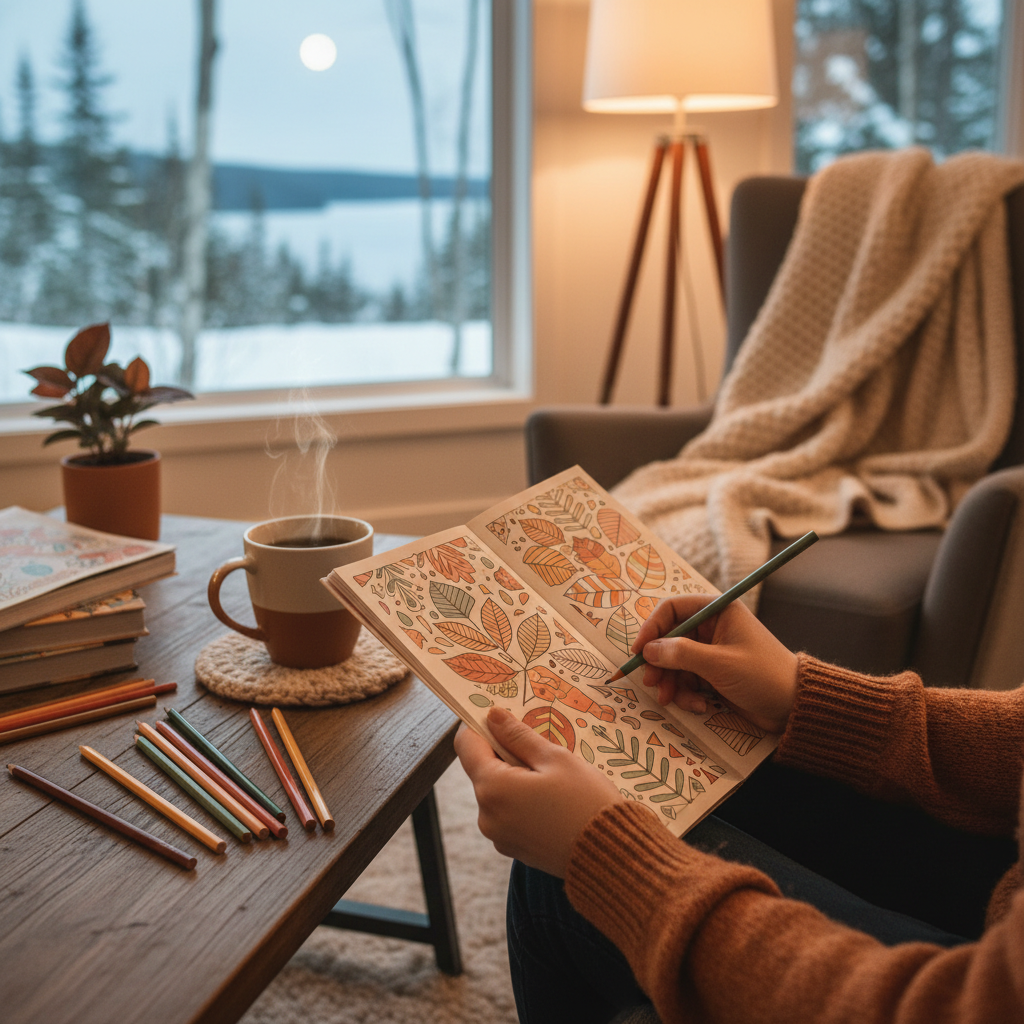
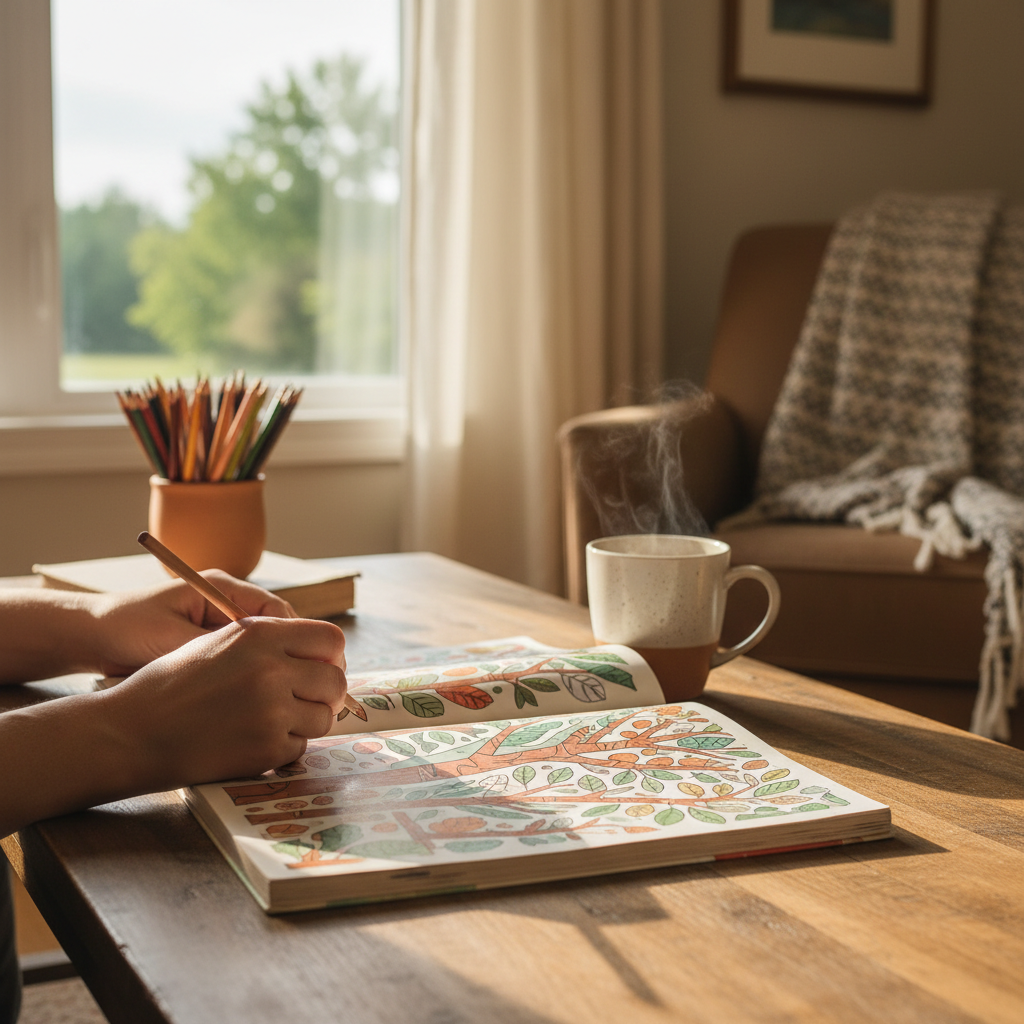
- A small adult colouring book or loose pages. Choose portable designs for ten-minute sessions.
- A set of soft-coloured pencils or markers. Smooth pigments and good grip make colouring easier.
- A lap desk or a small wooden clipboard for outdoor evenings.
- A soft light lamp for late sunsets in summer when the light fades slowly.
- A calming playlist or the sounds of the lake—no notifications.
If you want curated pages designed for adults, browse our collection at shop for seasonal summer-themed pages and palettes.
Prompts and mini-projects for 10-minute sessions
Short sessions work best with clear, playful prompts. Try these:
- Seaglass palette: Use three shades of blue-green for a page of waves.
- Sunset banding: Create horizontal bands of colour that mimic a Barrie sunset over Kempenfelt Bay.
- Flower focus: Pick one flower and make it vibrant while colouring the background softly.
- Pattern repetition: Choose one repeating shape and colour it in a rhythm.
- Gratitude border: Colour a narrow border while thinking of three things you appreciated today.
These prompts steer the mind without overwhelming it.
Social and seasonal ways to keep the habit
Small habits are easier to keep when they're social or tied to the season.
- Buddy up: Invite a friend for a nightly 10-minute colouring call—colour together on video, then close screens.
- Porch ritual: Colour on your front porch or balcony after dinner while neighbours walk by.
- Cottage evenings: Keep a stack of pages in your cottage bag for sunset sessions by the dock.
- Community nights: Host a summer colouring get-together at a park in Barrie or a potluck at a Simcoe County beach.
These ideas make the habit part of your social season rather than an isolated chore.
How colouring helps sleep (and how to make it work)
Replacing doom-scrolling with colouring supports sleep in several ways:
- Reduces cognitive arousal: Quiet focus lets your mind downshift before bed.
- Limits screen exposure: Less blue light means your melatonin rhythm won't be delayed.
- Creates a signal to your brain: A consistent 10-minute routine signals bedtime is coming.
To maximise benefits, stop all screens at least 30 minutes before bed if possible. Use your colouring time as an anchor to begin that screen-free window.
Short, evidence-oriented notes for the skeptical mind
If you like data, here are concise, research-informed reasons colouring helps:
- Repetitive manual tasks engage sensorimotor regions and reduce worry circuits in short sessions.
- Creative activities trigger reward pathways and provide small dopamine boosts without the unpredictability of social media.
- Sleep hygiene guidelines emphasise cutting late-night screen time; colouring is a low-arousal alternative.
While colouring is not a panacea, as a nightly micro-habit it's inexpensive, low-risk, and often surprisingly effective.
Dealing with resistance: what if I still want to scroll?
You're not alone. Old habits are sticky. Try these nudges:
- Put your phone in another room when you start colouring.
- Use an actual timer to commit to 10 minutes; the ticking gives structure.
- Bundle the habit with something you already do, like making tea after dinner.
- Keep a small stack of pages in visible places—near your kettle, on a nightstand, or by the back door.
Positive reinforcement works: notice how you feel after ten minutes and write one sentence about it. Small wins build momentum.
Bringing Barrie and Simcoe County into your practice
Local cues make the habit feel anchored to place and season. Try these regionally inspired ideas:
- Kempenfelt Bay palette: Choose blues, golds, and rose tones to echo summer sunsets.
- Georgian Bay wildflowers: Colour floral pages inspired by local trails around Simcoe County.
- Patio ritual: Set a small tray outside with your pencils and a drink during long summer evenings in Barrie.
- Cottage kit: Keep a mini-colouring kit in your cottage bag—perfect for lakeside quiet time.
Linking the practice to the places you love makes it richer and more likely to stick.
What to expect in the first week
If you try a 10-minute nightly colouring habit, here’s a realistic timeline:
- Night 1-2: You may feel restless. The contrast with habitual scrolling is noticeable.
- Night 3-5: The ritual becomes easier. You may notice a calmer mind and better sleep onset.
- After one week: A small but meaningful improvement in sleep quality and evening mood is common.
Keep expectations modest. The goal is steady, sustainable change, not overnight transformation.
When to seek other supports
Colouring is a helpful self-care tool, but it's not a replacement for professional support when needed.
Consider talking to a therapist or a sleep specialist if:
- You have persistent insomnia despite better routines.
- Anxiety or intrusive thoughts are severe or worsening.
- You're experiencing depressive symptoms or persistent low mood.
Colouring can be part of a broader plan that includes therapy, exercise, and good sleep hygiene.
Try this tonight: a guided 10-minute colouring script
- Prepare: Place a single page and 3 pencils on a small tray. Put your phone on do-not-disturb in another room.
- Set a timer for 10 minutes.
- Take three deep breaths. Notice how your body meets the chair.
- Choose the first colour and make one slow stroke. Breathe out.
- Keep a gentle tempo. If your mind wanders, notice and return without judgement.
- When the timer rings, close the page, set it aside, and take a final deep breath.
This simple script gives structure and reduces the friction of getting started.
A final word: small acts, big summer evenings
Summer in Barrie and around Simcoe County invites slow evenings, long shadows, and that soft post-dinner hush. Ten minutes of colouring lets you claim those moments back from the pull of endless feeds. It replaces reactive doom-scrolling with deliberate, calming creativity.
If you want to explore more pages, seasonal packs, or tips for building a daily habit, visit our shop and check related reads on our blog. Small, consistent shifts add up. Ten minutes tonight can help you sleep better, feel calmer, and enjoy summer evenings more fully.
Frequently referenced next steps
- Try the 10-minute routine for a week.
- Create a summer palette inspired by Kempenfelt Bay.
- Invite a friend to a nightly colouring call and make it social.
Your phone will still be there tomorrow. Tonight, choose colour.