Mindful Colouring for Beginners: A Simple Starting Routine
Nicholas Lynn··6 min read

Mindful colouring is the practice of focusing your attention entirely on the physical act of putting colour onto paper. Instead of worrying about creating a finished masterpiece, you pay attention to the sensory experience: the texture of the paper, the steady back-and-forth movement of your hand, and the simple choice of shade. For beginners, a predictable ten-minute routine provides an easy way to step away from glowing screens, quiet a busy mind, and reset your attention without pressure.
Many people hesitate to try adult colouring because they feel they lack artistic skill, or they worry they do not have enough spare time. You do not need to be an artist, and you do not need an open afternoon. With a few basic tools and a quiet corner, you can build a gentle creative habit that fits into ordinary days.
Here is a practical, step-by-step guide to establishing your own mindful colouring routine from scratch.
Why Mindful Colouring Works for Beginners
Traditional meditation can feel intimidating when your thoughts are racing. Sitting in complete stillness often gives a busy mind more room to fret. Mindful colouring offers what psychologists call an "active rest" or a grounding focal point.
When you colour, your brain engages in a gentle, low-stakes task. Your eyes track lines, your fingers adjust pressure, and your mind makes basic aesthetic decisions. This gentle focus may help ease nervous tension and quiet mental chatter. Because the outlines are already drawn for you, there is no fear of a blank page. The structure gives you boundaries, which allows your nervous system to relax.
Many people find that replacing ten or fifteen minutes of late-night phone scrolling with physical colouring helps them transition into deeper evening rest. If you want to explore screen-free wind-down habits further, read our guide on screen-free evening routines and wind-down colouring.
What You Need to Get Started
You do not need an elaborate art studio or an expensive set of hundreds of pens. In fact, having too many choices can create decision fatigue, which defeats the purpose of relaxing.
To begin, gather just three things:
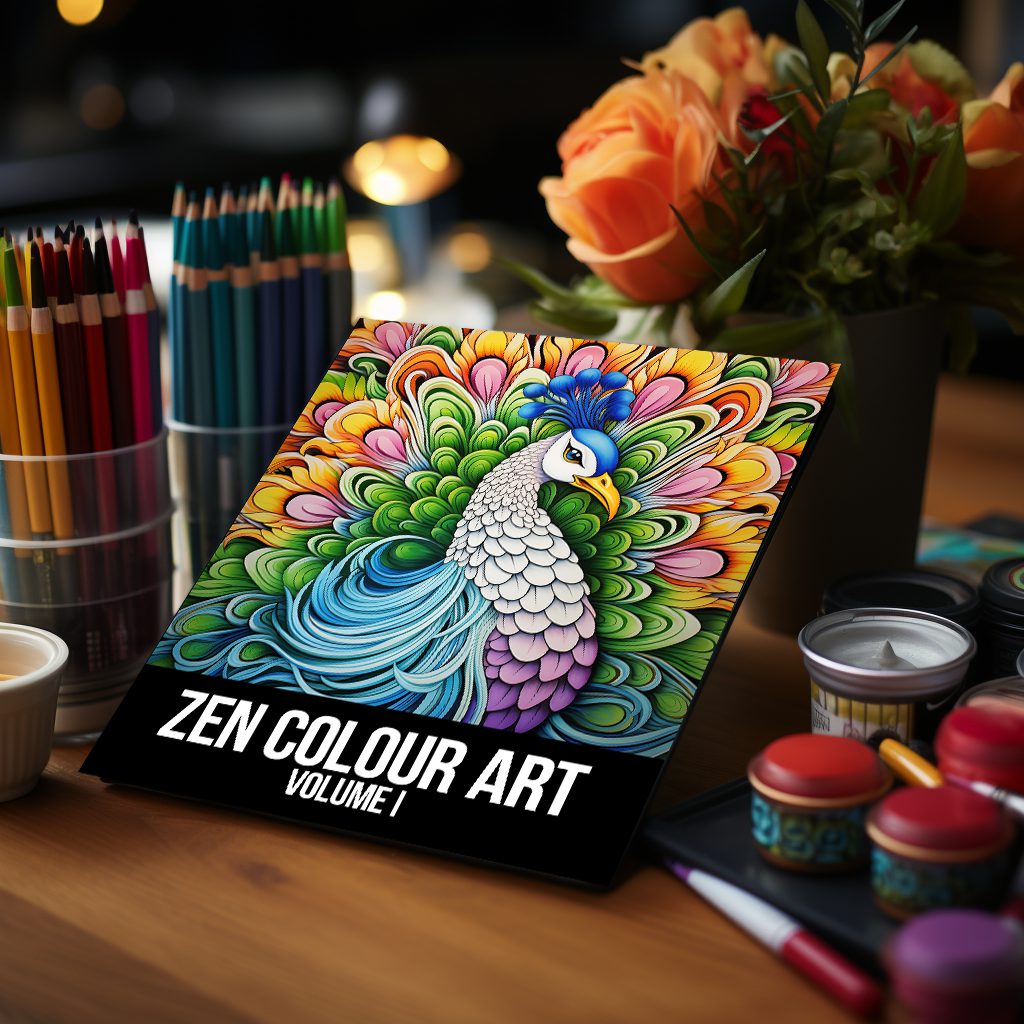
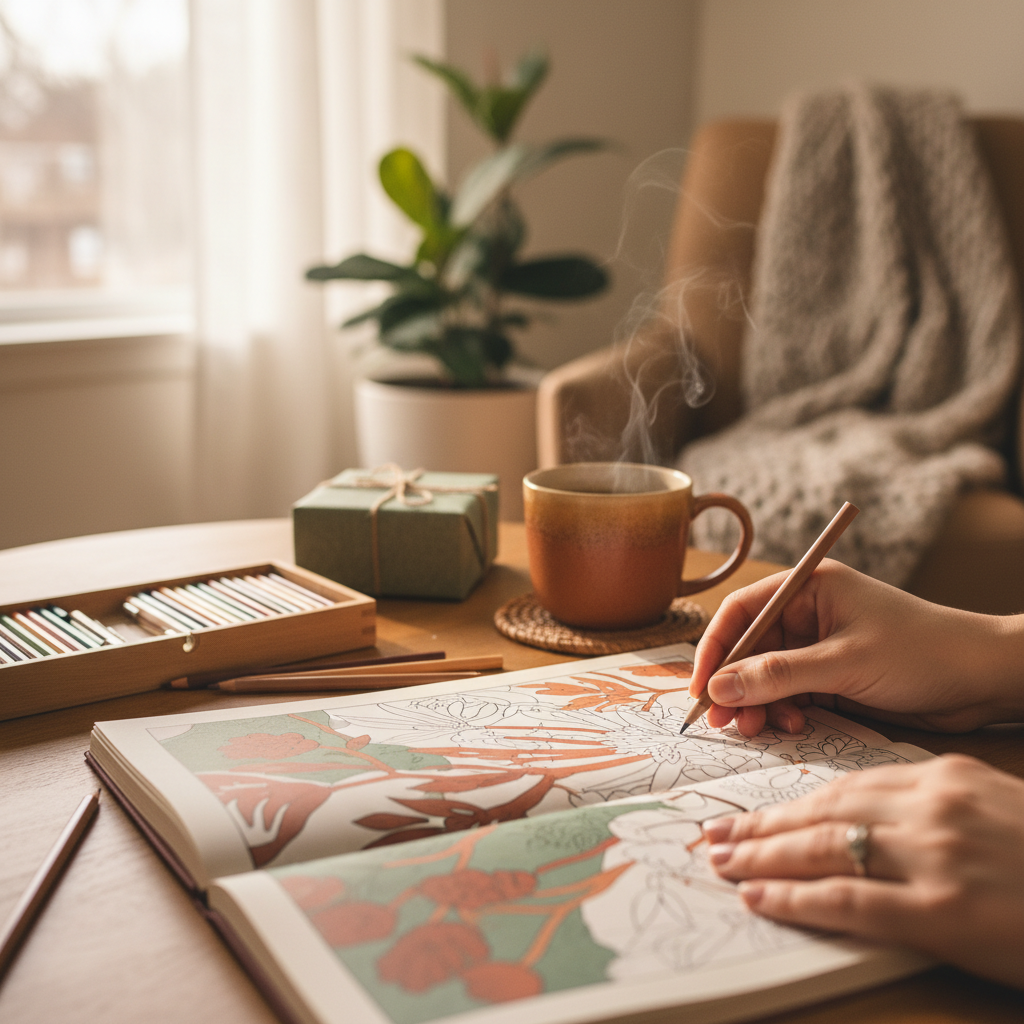
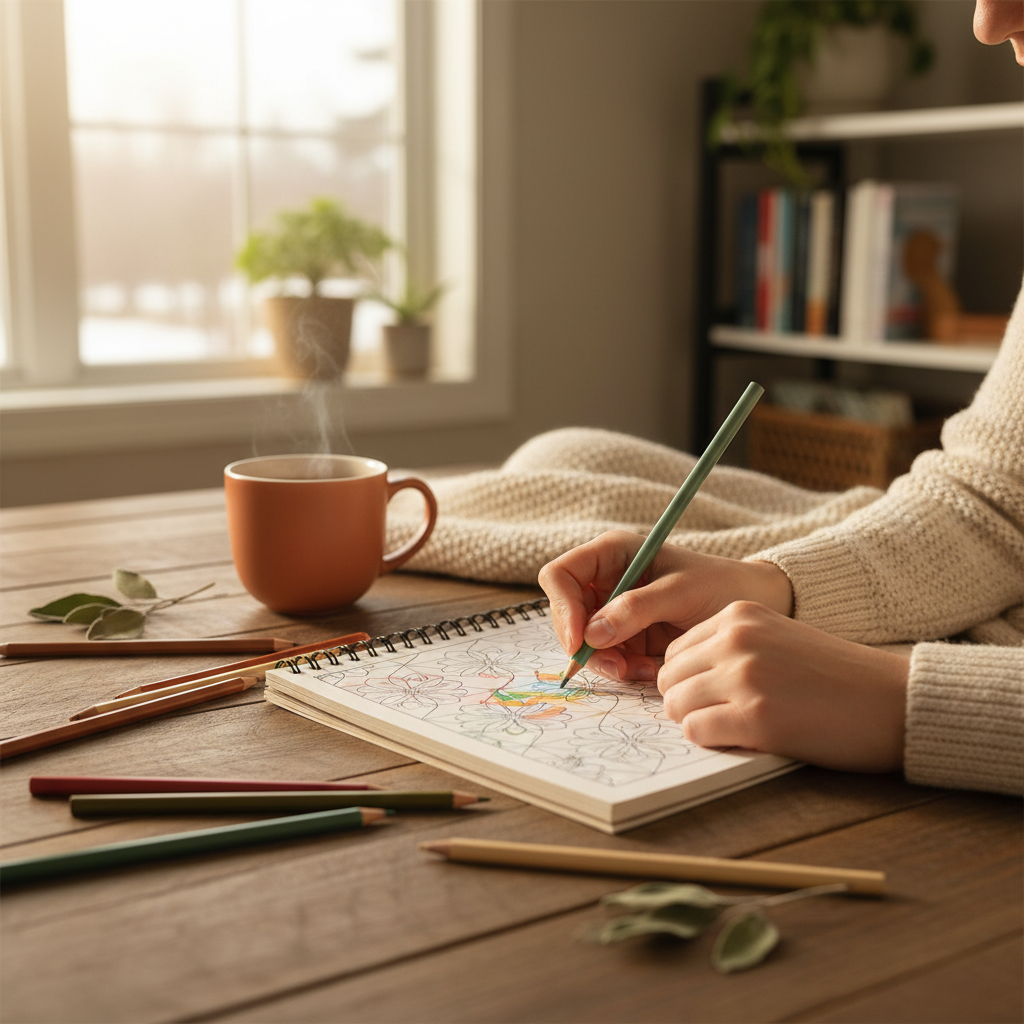
- A handful of colouring tools: A basic set of 12 to 24 coloured pencils or gel pens is plenty. Coloured pencils are especially forgiving because you can vary the shade simply by pressing lighter or firmer.
- Quality paper: Thin paper can tear or buckle, which can make the experience frustrating. Look for books printed on heavier stock. At Zen Colour Art, our books are printed on 120gsm acid-free artist paper so pencils glide smoothly and ink does not bleed through.
- An inviting page: Choose an illustration that feels pleasant rather than overwhelming. Designs with moderate detail and open space are much easier to start with than hyper-intricate sheets with tiny microscopic sections.
The 10-Minute Starting Routine: Step by Step
To make mindful colouring a lasting habit, keep your starting routine brief and predictable. Follow these four simple steps whenever you need a mindful reset.
Step 1: Create a Low-Distraction Space (1 Minute)
Set yourself up for calm before you touch a pencil. Move your mobile phone into another room or turn on do-not-disturb mode. Clear a small surface at your kitchen table or desk. If you enjoy background sound, turn on gentle instrumental music or simply enjoy the quiet. Take three slow, natural breaths to signal to your body that this moment is meant for slowing down.
Step 2: Limit Your Colour Palette (1 Minute)
Too many choices can feel stressful. Before you look at the whole illustration, pick just three or four pencils that feel pleasing together. You might choose:
- Cool tones: A soft blue, sage green, and lavender for quiet calm.
- Warm tones: Peach, dusty rose, and warm gold for gentle comfort.
- Monochrome: Three different shades of one colour, such as pale sky blue, medium cornflower, and deep navy.
By limiting your palette, you take away the pressure of "matching" colours correctly. Whatever you colour will look cohesive.
Step 3: Focus on Sensation, Not Perfection (7 Minutes)
Open your book and pick one small section to begin. As you colour, gently anchor your attention to your physical senses:
- Notice the touch: Feel the smooth barrel of the pencil resting against your fingers.
- Listen to the sound: Pay attention to the soft, rhythmic scratch of pigment catching the paper.
- Watch the space fill: Watch how the white paper transforms as you lay down colour.
If your mind wanders to your to-do list or daily worries—which is completely natural—simply notice the thought without self-judgment, and gently guide your attention back to your hand moving across the page. There is no right or wrong way to fill in a shape. Staying inside the lines is optional; the goal is relaxation, not a test score.
Step 4: Close with a Gentle Check-In (1 Minute)
When your ten minutes are up, or when you finish a section, set your pencil down. You do not need to finish the entire page in one sitting. In fact, leaving a page partially completed gives you an inviting starting point for tomorrow.
Take one deep breath, look over the small patch of colour you created, and notice how your body feels compared to when you sat down. Even a brief pause can support a calmer state of mind.
Choosing the Right Designs for Mindfulness
The type of illustration you choose can shape your experience. As Nicholas Lynn, creator of Zen Colour Art, shares in his design philosophy, pages should feel inviting rather than intimidating, offering a thoughtful balance of open space and detail.
Here are three popular styles for beginners:
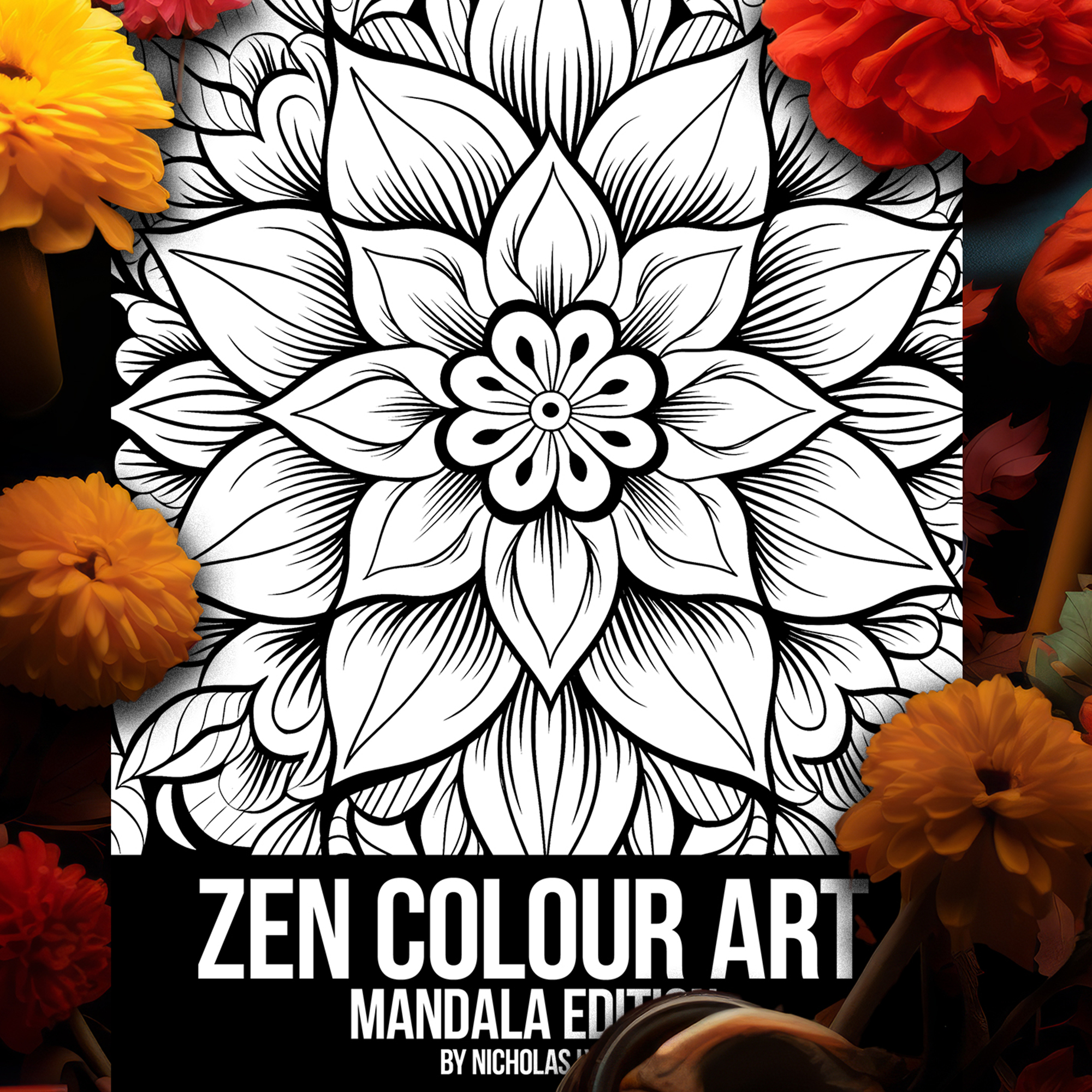
- Mandalas: Circular patterns that radiate from a central point provide a natural, rhythmic rhythm. Colouring symmetrically from the inside out can feel deeply grounding. Our title Mindful Mandalas, Vol. 1 features forty hand-drawn mandalas on 120gsm paper, printed single-sided so you never have to worry about marks showing through to the next design.
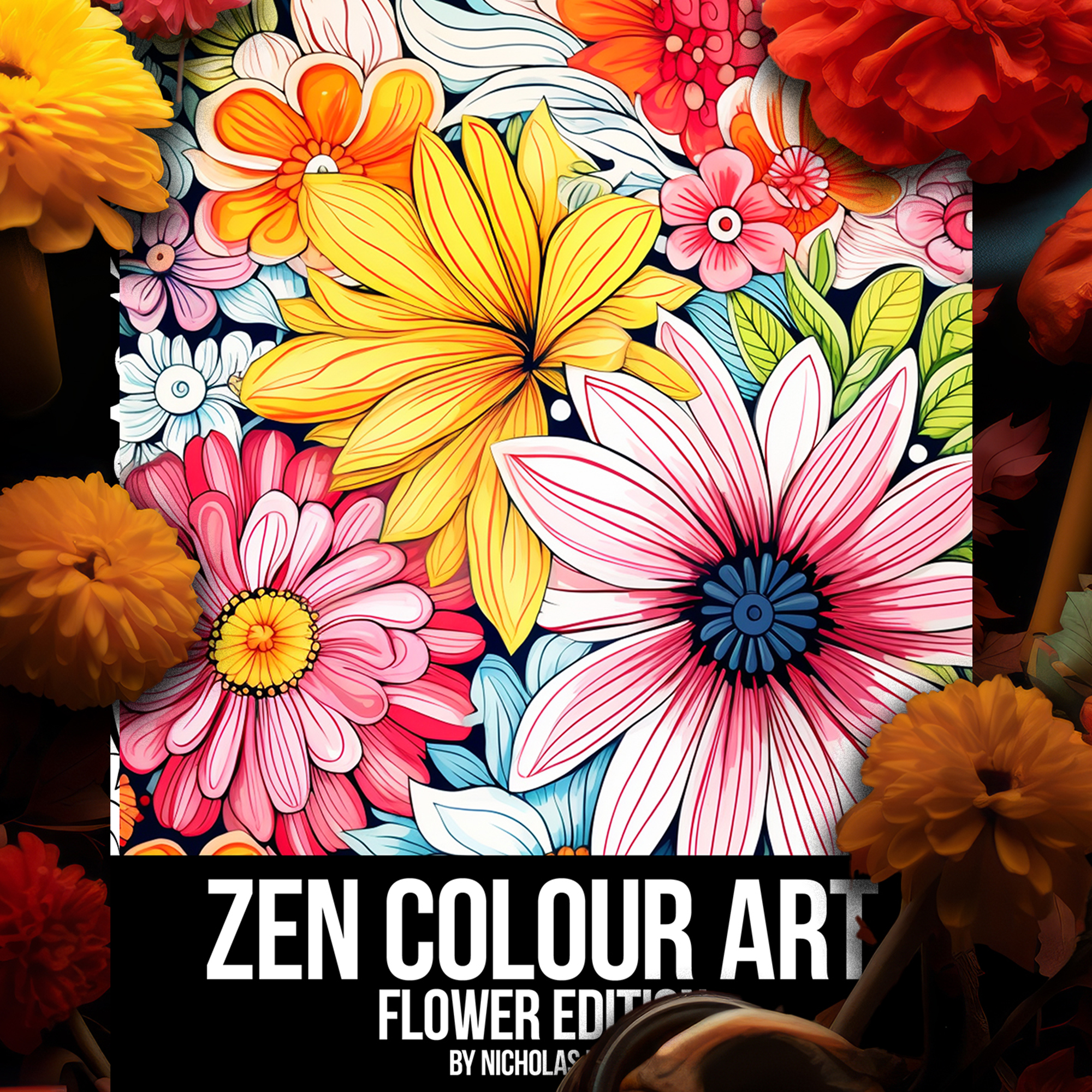
- Botanicals and Florals: Leaves, petals, and organic vines have natural variations that make them very forgiving. If you prefer nature-inspired themes, Floral Reverie offers lush peony gardens and wild bouquets made specifically for slow, quiet afternoons.
- Gentle Doodles: Whimsical, lighthearted patterns are ideal when you only have five or ten minutes to spare. A book like Doodle Garden features swirling vines and small worlds that let you finish a tiny element quickly during a tea break.
For a broader introduction to using regular sessions as a calm ritual, take a look at our guide on colouring as meditation.
Practical Tips for Staying Consistent
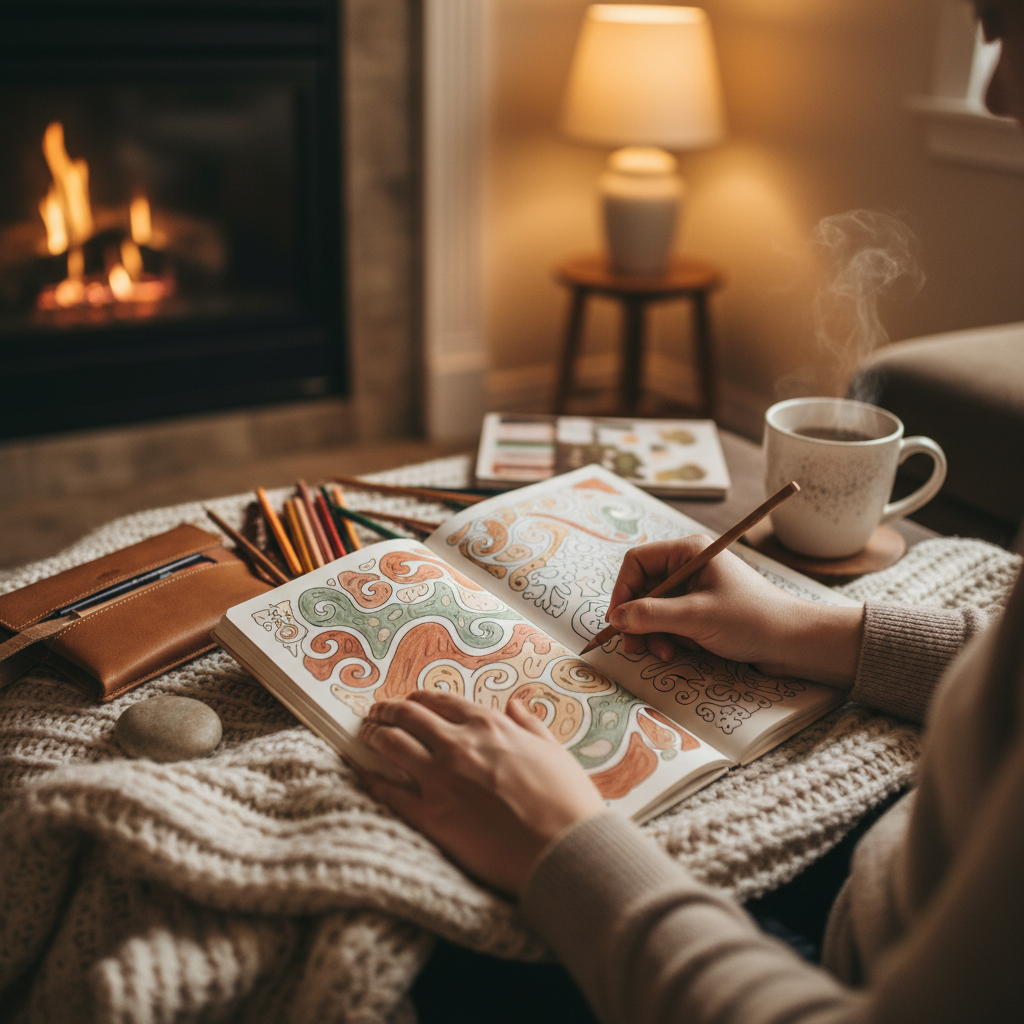
- Keep your supplies visible: If your colouring book is hidden under a stack of paperwork in a drawer, you will likely forget it. Leave your book and a small jar of pencils on your bedside table or beside your favourite armchair.
- Tie it to an existing habit: Pair colouring with an established daily routine. You might colour for ten minutes right after making your morning coffee, during an afternoon work break, or right before turning off your bedside lamp.
- Give yourself permission to stop: A mindful routine should never feel like a chore on a checklist. If you colour for five minutes and feel refreshed, that is enough.
Unwind at Your Own Pace
Starting a mindful colouring routine is one of the simplest, most accessible ways to bring screen-free calm into your weekly rhythm. By keeping your tools minimal, letting go of perfection, and focusing on the quiet physical sensory experience, you create a private pocket of peace in your day.
Whether you are looking for soothing mandalas or quiet florals, our collection of books is created to support your downtime. Explore The Calm Collection or browse our full range at the Zen Colour Art shop to find a design that speaks to you.