Screen-Free Evening Routines: How Adult Colouring Supports Better Wind-Down
Nicholas Lynn··5 min read
A screen-free evening routine is a intentional series of low-stimulation activities done during the hour before bed to help your brain transition from daytime focus to nighttime rest. By replacing bright phone displays and streaming screens with tactile, unhurried habits like adult colouring, reading, or gentle stretching, you can quiet mental chatter and signal to your body that it is time to unwind.
Many adults find that the final hours of the day slip away to endless scrolling, checking notifications, or streaming background television. While these habits feel restful in the moment, glowing screens often leave the mind alert and overstimulated. Shifting to physical, screen-free rituals offers a practical way to reclaim your evenings and build a predictable bridge to sleep.
Why Evening Screen Time Makes It Hard to Settle
The challenge with late-night phone or tablet use is twofold: optical stimulation and psychological engagement. Backlit screens emit light that tells your internal clock it is still daytime, delaying natural tiredness. At the same time, social feeds and news updates demand constant mini-decisions, comparisons, and micro-reactions.
When you scroll through updates late at night, your attention jumps between unrelated topics every few seconds. This fragmenting of focus makes it harder for your nervous system to downshift. Stepping away from digital devices for even thirty minutes before sleep removes that friction, giving your thoughts room to settle.
The Anatomy of an Unhurried Screen-Free Routine
A sustainable nighttime routine does not require hours of complicated rituals or expensive accessories. It works best when it is predictable, quiet, and easy to maintain on an ordinary weeknight.
Here is a simple four-part structure you can adapt to your own home:
1. The Digital Sunset
Choose a fixed cutoff time—typically 30 to 60 minutes before you intend to turn out the light. Put your phone in another room or tuck it face-down away from your bed. If you use your phone as an alarm, consider switching to a basic bedside clock so you are not tempted to check notifications during the night.
2. Lowering the Sensory Baseline
Bright overhead lighting cues your brain to stay awake. In our studio in Barrie, we often talk about softening the room before settling into quiet creative work. Turn off harsh overhead bulbs and rely on warm bedside lamps or dim ambient lighting. Put on comfortable clothes, pour a cup of caffeine-free herbal tea, and let the room feel noticeably quieter.
3. A Tactile, Creative Wind-Down
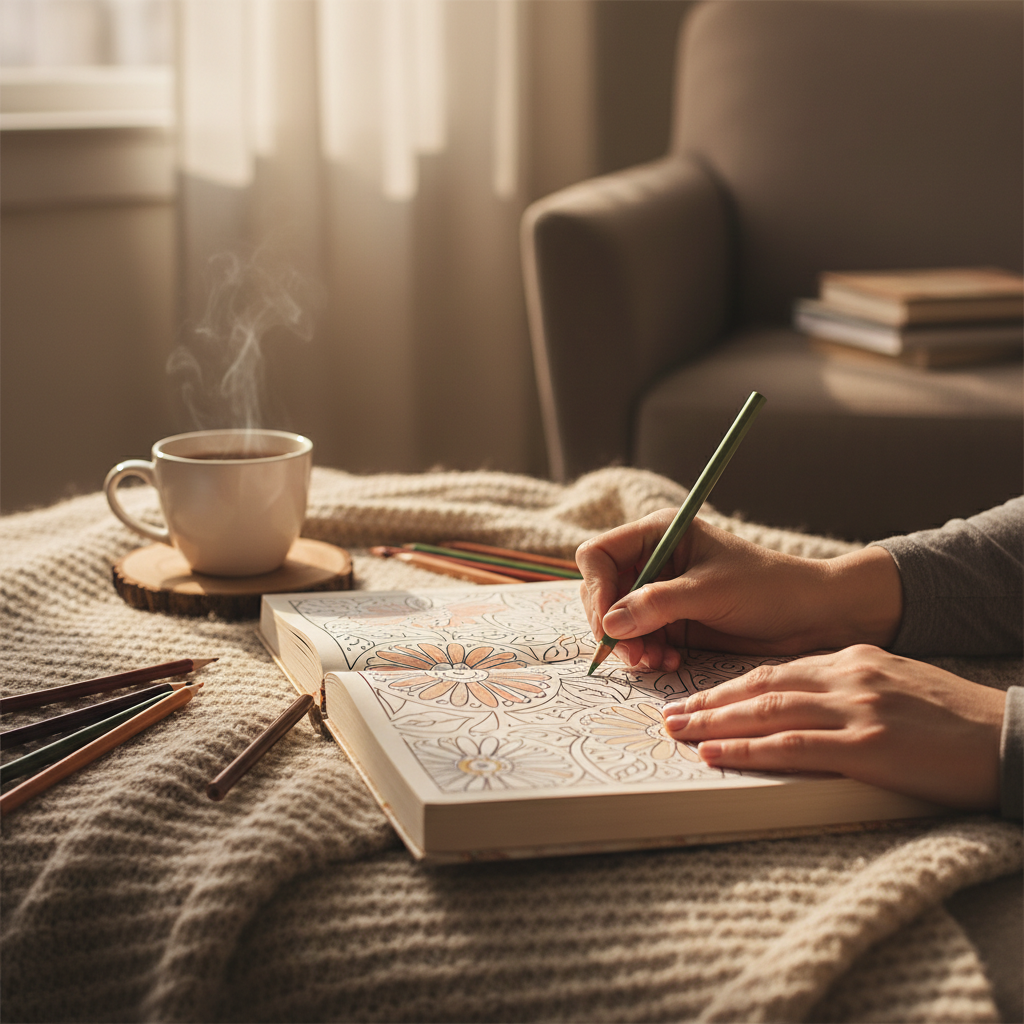
This is where an engaging, hands-on activity takes the place of passive browsing. Activities like adult colouring, journaling, or working on a slow craft occupy your hands while freeing your mind from decision fatigue. You are not multitasking or trying to produce work for anyone else; you are simply resting inside the movement.
4. A Five-Minute Transition to Sleep
End your evening by tidying away your supplies, setting out tomorrow's clothes, or reading two or three pages of a physical book. This final closure keeps your sleep space feeling clear and calm.
Why Colouring Fits Naturally into Nighttime Routines
Not every screen-free activity is suitable for bedtime. Some hobbies—like competitive puzzles, intricate woodworking, or intense non-fiction books—can stimulate critical thinking rather than resting it. Adult colouring strikes a balance that many people find uniquely helpful before sleep.
Repetitive Motion and Focus
The rhythmic, repetitive motion of filling shapes with coloured pencil requires just enough attention to keep your mind from drifting back to workday worries, without demanding deep analytical effort. Focusing on the simple boundary of an illustration can provide a grounding anchor when your thoughts feel scattered.
No Pressure to Perform
Unlike drawing or painting on a blank canvas, colouring provides a welcoming framework. The composition is already balanced, meaning you never have to worry about what to draw next. Nicholas Lynn, creator of Zen Colour Art, designs pages with an intentional balance of open space and quiet detail so the page feels inviting rather than intimidating. When an activity feels approachable, your nervous system can relax into it without performance anxiety.
Physical, Screen-Free Satisfaction
There is real tactile comfort in holding a wooden pencil, feeling the tooth of heavy artist paper, and watching pigment layer across a clean white sheet. In a day filled with glass surfaces and virtual buttons, working with physical materials grounds you in the present room.
How to Build a 15-Minute Evening Colouring Practice
You do not need to finish an entire illustration in one sitting. In fact, approaching a colouring book as a multi-night project is one of the best ways to keep the habit peaceful. Here is how to set up a short, restorative evening session:
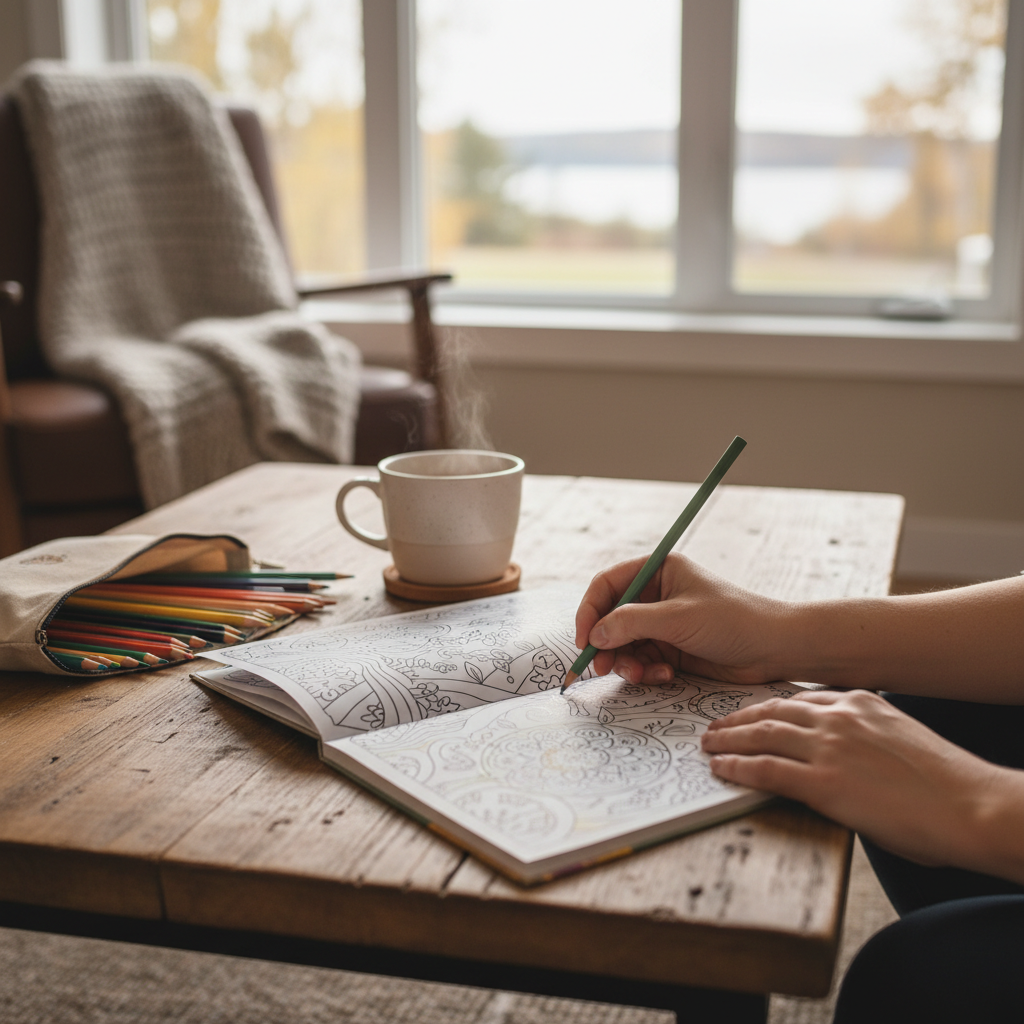
- Keep your kit bedside: Store a dedicated colouring book and a small tin of 12 to 24 coloured pencils on your nightstand or next to your favourite armchair so there is no friction to starting.
- Select low-contrast palettes: For nighttime sessions, gentle earthy tones, soft blues, deep forest greens, and warm lavenders can feel calmer on the eyes than bright, saturated neons.
- Work in small clusters: Pick one section of a design—three petals, a single geometric corner, or one quiet branch. Complete just that area and let that be enough for the evening.
- Let your breathing match your strokes: As your pencil moves back and forth, take slow, natural breaths. If you want to explore this further, our guide on combining breathwork with colouring offers gentle pairing ideas.
If you are looking for pages specifically arranged for nighttime calm, titles like Moonlight Mandalas feature low-stimulation mandalas designed to be coloured before bed. Printed single-sided on 120gsm acid-free paper, the pages keep pencils and pens gliding smoothly without ghosting through.
Combining Colouring with Other Calm Habits
Colouring works well on its own, but it can also anchor a larger wind-down rhythm when combined with other gentle sensory habits:
- Herbal tea rituals: Brew a cup of chamomile, peppermint, or rooibos tea. Let the warmth of the mug accompany the first few minutes of colouring.
- Quiet audio accompaniment: While screens are best avoided, low-volume soundscapes—like soft instrumental music, nature recordings, or quiet ambient tracks—can help mask household noise or outside traffic.
- Gentle stretching first: Spending three minutes rolling your shoulders and loosening your wrists before picking up a pencil releases physical tension carried over from desk work.
For colourists who prefer quiet botanical scenes to mandalas, keeping a copy of The Calm Collection nearby offers a mix of soothing florals and balanced patterns curated specifically for deep relaxation.
Small Steps to Reclaim Your Nights
Changing an evening habit does not require an all-or-nothing overhaul. Start small: pick two nights this week to set your phone aside twenty minutes before sleep, sit under a warm lamp, and colour a few shapes on a page. You may find that those quiet, tactile moments become the most restorative part of your day.