Choosing the Right Colouring Book for Kids Aged 4 to 8
Nicholas Lynn··4 min read
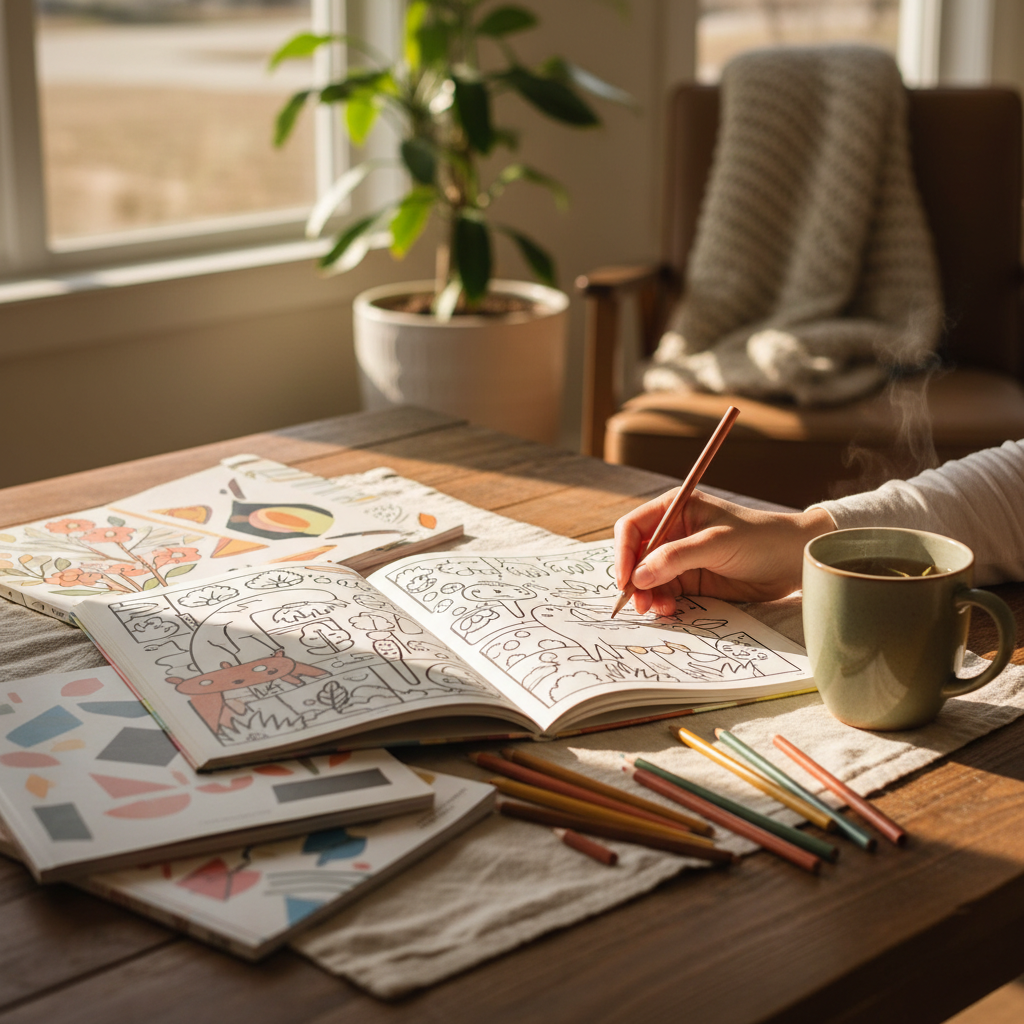
Choosing the best colouring book for a child between the ages of 4 and 8 comes down to three practical elements: paper weight, line weight, and the balance of open space. Children in this age group are developing fine motor skills and creative confidence. A book with thick paper (such as 120gsm) prevents marker bleed-through, while clear, bold outlines give early artists the visual guidance they need to succeed without feeling restricted.
Between junior kindergarten and the third grade, a child’s motor control, grip, and attention span shift quickly. A colouring book designed with care supports this transition, turning a quiet afternoon into a calming, screen-free ritual.
Understanding the Developmental Window: Ages 4 to 8
Children do not experience art the same way adults do. Between ages 4 and 8, children move through distinct developmental milestones with drawing tools:
Ages 4 to 5: Building Hand Strength and Coordination
At four and five, children are refining their tripod grip and strengthening the small muscles in their hands and wrists. They naturally work with broader arm motions and often apply heavy pressure with crayons or markers.
For this group, pages with delicate micro-details can lead to quick frustration. They thrive on bold lines, recognizable silhouettes, and large open areas where broad strokes look intentional and vibrant.
Ages 6 to 8: Exploring Detail, Story, and Pattern
By ages six, seven, and eight, children have developed greater finger dexterity. They enjoy experimenting with colour combinations, blending, and adding their own background doodles or textures.
At this stage, children appreciate illustrations that feel slightly more mature. They want engaging scenes—like woodland critters, magical villages, or nature adventures—that invite them into a story without overcrowding the page.
4 Practical Things to Look for in a Children's Colouring Book
When browsing bookstore shelves or shopping online, look past the front cover. Here are the specific features that separate a frustrating book from one your child will return to day after day.
1. Sturdy Paper Weight (100gsm to 120gsm)
Most mass-market colouring books use thin, grey newsprint under 70gsm. When a young child presses down with a wet washable marker or a juicy gel pen, the ink quickly bleeds through to the illustration on the reverse side. Thin paper also tears easily under the pressure of enthusiastic crayon strokes.
Choosing books printed on heavier, acid-free artist paper (such as 120gsm) handles pencils, gel pens, and most fine-tip markers cleanly. Sturdy paper gives young artists the freedom to use their favourite supplies without ruining the next page.
2. Thoughtful Line Thickness and Spatial Balance
Lines serve as visual anchors for developing eyes. Look for illustrations featuring crisp, solid outlines rather than faint, sketchy grey lines.
Equally important is negative space. Pages that pack fifty tiny elements into a small frame leave little room for self-expression. A well-designed page mixes defined outlines with generous open areas, leaving space for children to add their own details, skies, or patterns.
3. Open, Imaginative Themes
Children are naturally curious about animals, fantasy worlds, the natural outdoors, and everyday adventures. When picking a theme, follow your child's genuine interests.
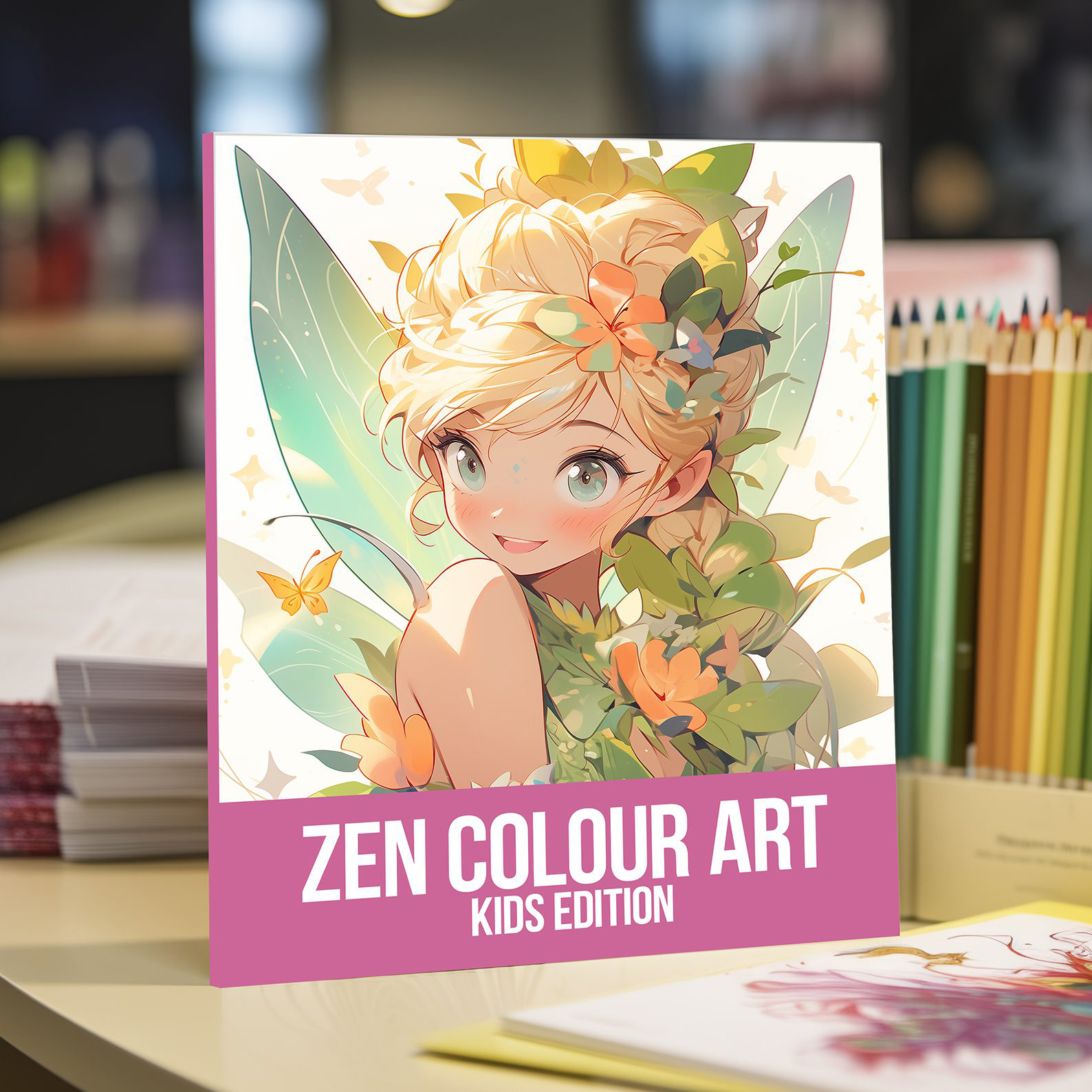
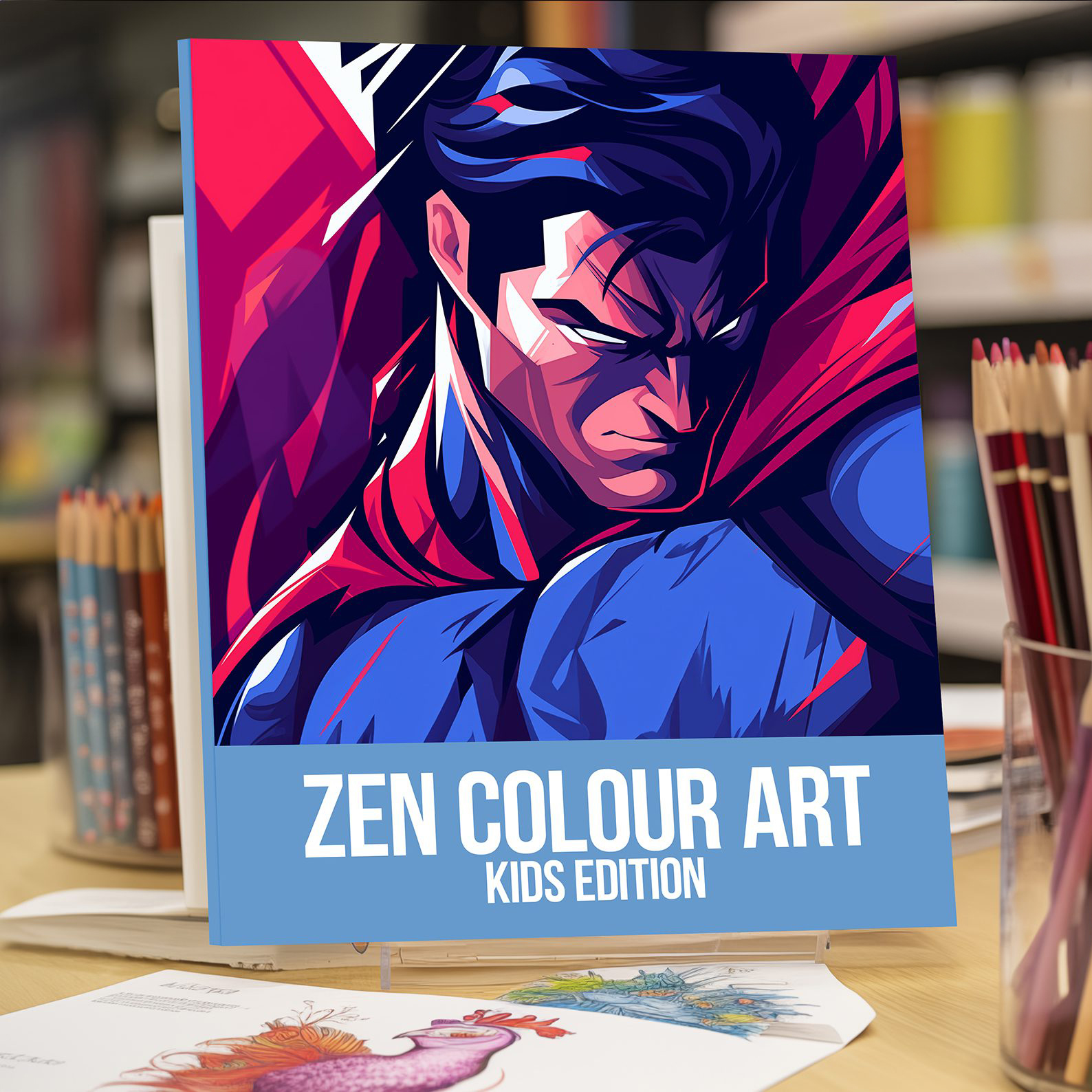
At Zen Colour Art, our kids collections are created around inviting concepts open to every young colourist:
- Kids Edition: Boys (Little Explorers) features friendly animals, bold shapes, and outdoor scenes on 48 pages of 120gsm paper ($18.00 CAD). The large, forgiving lines make it a favourite for young hands building confidence.
- Kids Edition: Girls (Enchanted Fairies) offers 72 pages of fairy gardens, woodland mushrooms, and starlit forests ($26.00 CAD), providing gentle detail that older kids and beginners love.
Both collections are named for their themes rather than who should use them. Any child who loves nature, woodland creatures, or whimsical worlds can freely enjoy either book.
4. Single-Sided or Forgiving Layouts
If your child loves markers or mixed media, single-sided printing is a major asset. It ensures ink will not ghost onto a drawing behind it, and it allows you to easily remove finished artwork to display on the fridge or frame for their bedroom wall.
Setting Up a Calming, Screen-Free Colouring Routine
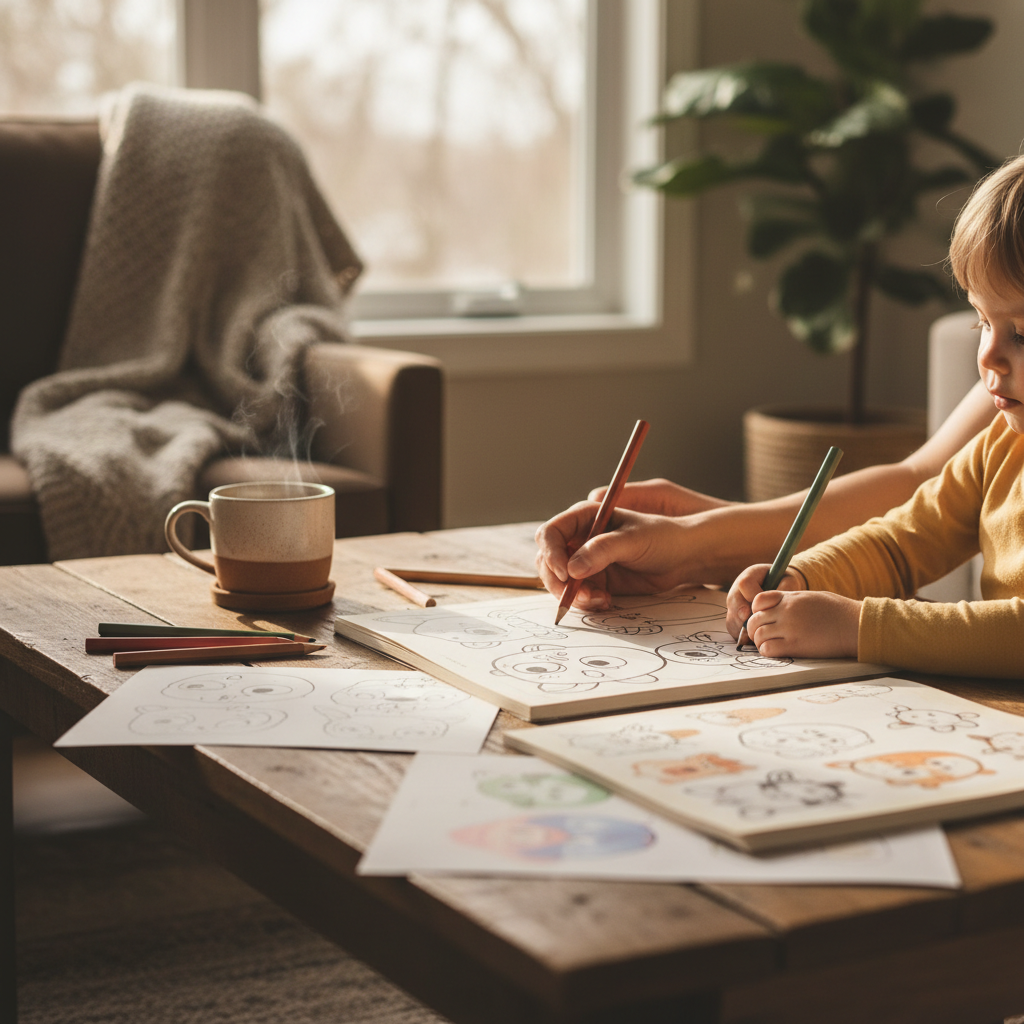
Colouring works wonderfully as a reset button between busy school hours and dinner, or as a wind-down habit before bedtime. Many parents find that a short creative session can support a calmer evening routine for the entire family.
To make colouring inviting at home:
- Keep supplies accessible: A simple wooden cup or caddy filled with pre-sharpened coloured pencils, triangular crayons, or washable markers makes it easy for children to start independently.
- Focus on the process, not perfection: Avoid asking children to stay strictly inside the lines or choose realistic colours. A purple bear or a striped tree is a creative choice that should be welcomed.
- Colour alongside them: Sitting down at the kitchen table with your own book—such as The Calm Collection—models calm, screen-free focus. It opens up an unhurried space for quiet conversation while working side by side.
For more ideas on how tactile activities foster focus in group settings, explore our guide on colouring as a quiet classroom activity in Simcoe County.
Finding Books Locally in Ontario
If you live in Barrie or across Simcoe County, Zen Colour Art offers free local delivery throughout the county and easy local pickup at 101 Grace Crescent in Barrie. We also ship across Canada, with orders typically arriving within 3 to 7 business days. Whether you are building a quiet-time corner at home or looking for a birthday gift, selecting well-made pages printed on heavy paper makes creative time rewarding for young artists.