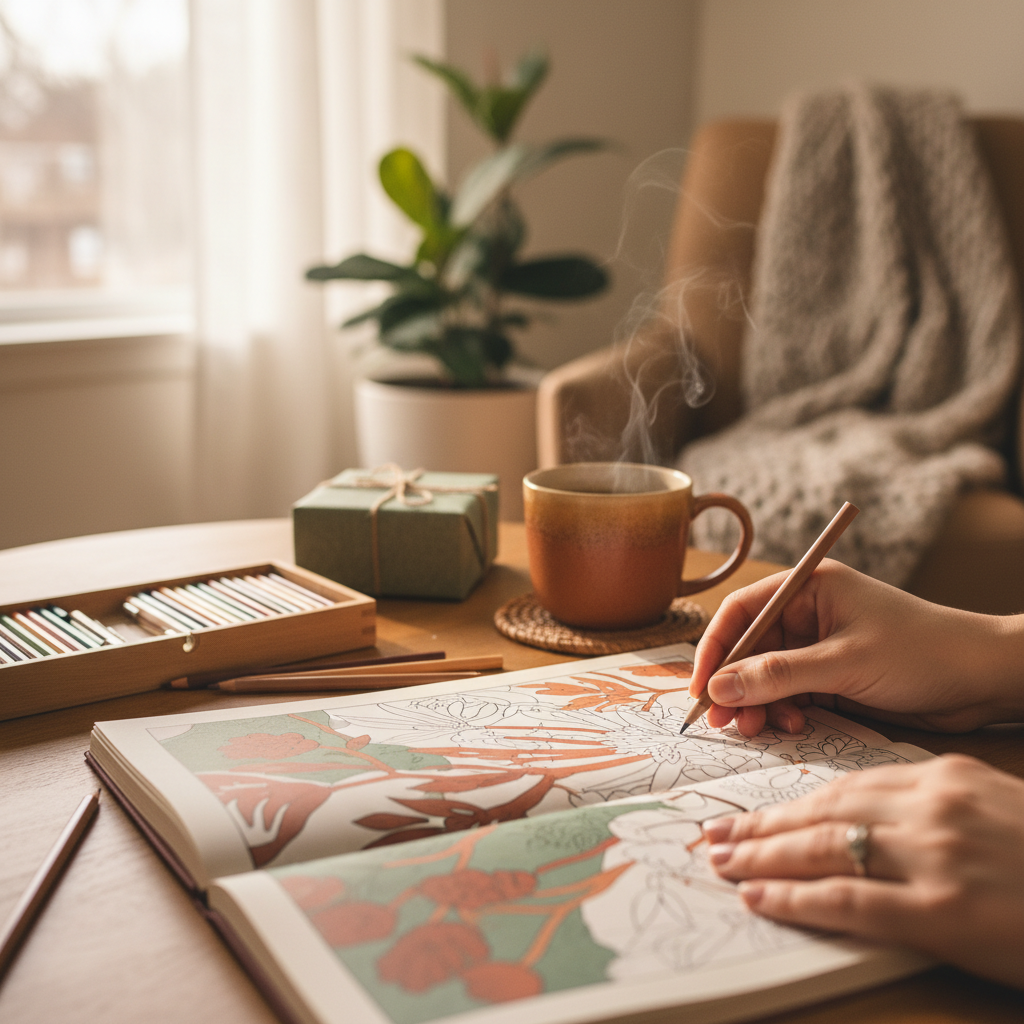
Screen-Free Evening Routines: Simple Ways to Wind Down with Colouring
Nicholas Lynn··5 min read
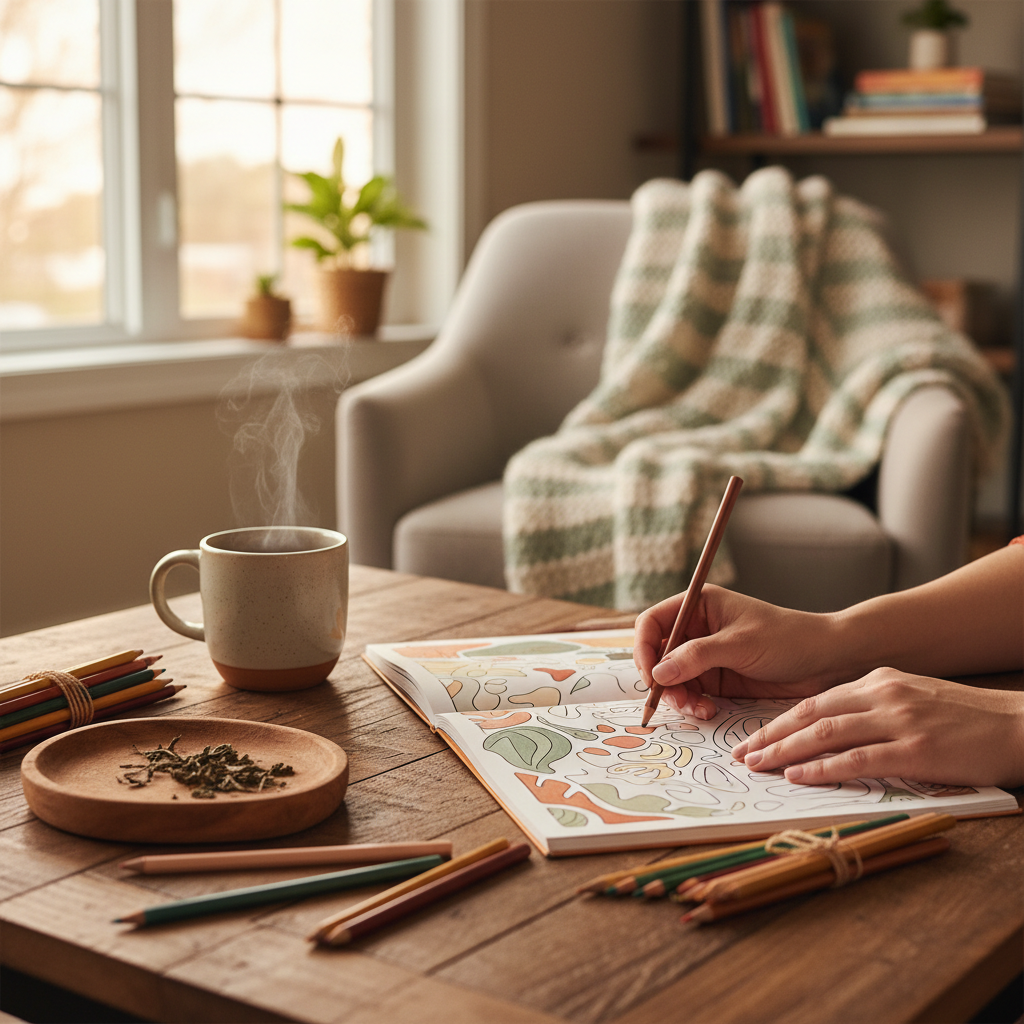
If you find yourself lying in bed with tired eyes and an active mind, your evening routine might be missing a quiet buffer between the day and sleep. Many adults spend their final waking hours moving between phones, tablets, and televisions. While scrolling can feel like resting, glowing screens and fast digital streams often keep your brain alert when it should be settling down.
A screen-free evening routine gives your nervous system a clear signal that the work of the day is finished. By swapping digital stimulation for low-stakes, tactile activities like adult colouring, you create an unhurried window of time that can support deeper relaxation and better rest.
Here is how to design a realistic screen-free evening routine, why tactile creativity works so well at night, and how to fit ten or twenty minutes of colouring into your bedside ritual.
Why Your Brain Needs a Screen-Free Buffer
The transition into sleep is not an on-off switch; it is a gradual slowing down. When you look at screens late in the evening, two distinct factors work against that slowdown:
- Blue Light Exposure: The blue light emitted by phones and laptops mimics daytime sunlight, which can delay the natural release of melatonin—the hormone that signals to your body that it is time to sleep.
- Mental Engagement: Digital feeds are built around novelty. Reading news alerts, checking work messages, or browsing social media asks your brain to process new information, evaluate opinions, or react emotionally.
Stepping away from screens thirty to sixty minutes before sleep creates a cognitive buffer. In that quiet window, your sensory input drops, your eyes get a break from artificial glare, and your attention shifts from consuming information to simply being present.
Building a Realistic 3-Step Evening Wind-Down
You do not need an elaborate two-hour ritual to feel the benefits of an evening reset. In fact, complicated routines often add pressure. A sustainable routine should feel gentle, predictable, and easy to maintain even after a tiring day.
1. The Digital Sunset (60 Minutes Before Bed)
Plug your phone into a charger that is not on your nightstand. If you use your phone as an alarm clock, consider setting it across the room or switching to a simple analogue alarm. Closing your laptop and setting devices aside creates a clean physical boundary between daytime productivity and nighttime rest.
2. Physical Comfort and Environment (45 Minutes Before Bed)
Dim the overhead lights in your living room or bedroom, opting for warm floor lamps or bedside lamps instead. Lowering the light level in your home signals to your circadian rhythm that night has arrived. Change into comfortable clothes, prepare a cup of caffeine-free tea, or put on quiet, ambient music if you enjoy gentle background sound.
3. Tactile, Low-Stakes Focus (15–30 Minutes Before Bed)
Rather than sitting in silence trying to force yourself to feel sleepy, give your hands and mind a quiet, structured task. This is where tactile activities like reading a physical book, gentle journaling, or colouring fit in naturally.
How Adult Colouring Fits into an Evening Routine
Colouring is often thought of as an art project, but as part of an evening routine, it functions more like a gentle mental anchor. You do not need to invent an illustration from scratch or worry about technique. The lines are already there, which removes the pressure of a blank page.
Here is why many people find adult colouring particularly well-suited to nighttime relaxation:
Repetition Quiets Racing Thoughts
The small, repetitive motion of filling in shapes with a pencil or gel pen requires just enough focus to pull your mind away from daytime worries, without requiring the critical thinking that keeps you awake. It gives overactive thoughts a gentle rhythm to rest against.
A Tactile Counterpart to Flat Screens
We spend hours touching flat, frictionless glass. Picking up a wooden pencil, feeling the tooth of artist paper, and seeing physical pigment transfer onto a page grounds your senses. That tactile feedback helps quiet mental noise by anchoring your attention in the physical room.
Freedom from Performance
There are no grades, deadlines, or expectations attached to a colouring page. You can colour for ten minutes, stop mid-page, or stick to two peaceful shades. It is an activity focused entirely on the process rather than the end product.
If you would like to explore simple ways to begin, take a look at our guide to mindful colouring for beginners.
Setting Up a Nighttime Colouring Nook
To make your evening colouring habit effortless, keep your supplies close at hand and ready to use. If you have to hunt through drawers for pencils, you are far more likely to default to picking up your phone.
- Choose Soft, Nighttime Lighting: A warm reading lamp positioned over your shoulder or table provides plenty of light to see your page without filling the room with harsh white glare.
- Select Low-Friction Supplies: Coloured pencils are ideal for evening wind-downs because they require zero setup or cleanup. You can also use fine-tip markers or gel pens if you prefer smooth ink application.
- Pick Calming Palettes: At night, many colourists gravitate toward cooler, low-contrast palettes—deep blues, muted greens, slate greys, and soft lavenders. These tones feel quiet and restful to look at before bed.
- Use Sturdy, Single-Sided Paper: Flimsy paper that tears or bleeds through causes needless annoyance. Quality books printed on heavy artist paper let you focus on the movement of your hand rather than worrying about ruining the page underneath.
A Bedtime Title Designed for Nighttime Calm
When we design books at Zen Colour Art, we focus on balancing detail with generous open space so the page feels inviting rather than intimidating. For late-night routines, having illustrations that do not demand extreme precision is key.
Our nighttime title, Moonlight Mandalas (CAD $24.00), was created specifically for this ritual. It features 72 pages of low-stimulation mandalas designed to be coloured in low light before bed. Like all of our adult titles, it is printed on 120gsm acid-free artist paper with single-sided pages, meaning your gel pens or pencils will never ghost through to the next illustration.
If you prefer botanical illustrations alongside quiet patterns, The Calm Collection (CAD $28.00) offers 96 pages of curated florals and mandalas created for unhurried, mindful evenings.
Give Yourself Permission to Stop
One common mistake adults make when adopting an evening creative habit is treating it like a project that must be finished. If you colour three petals of a flower or two rings of a mandala and feel your eyelids growing heavy, set the pencil down.
The goal of an evening routine is not to finish a masterpiece—it is to give your mind a quiet ramp into a good night's rest. By trading late-night screens for tactile, screen-free minutes on paper, you make space for calm at the end of every day.