Adult Colouring for Stress Relief: A Slow, Screen-Free Ritual for Busy Minds
Zen Colour Art··10 min read

The 9 p.m. quiet you've been chasing
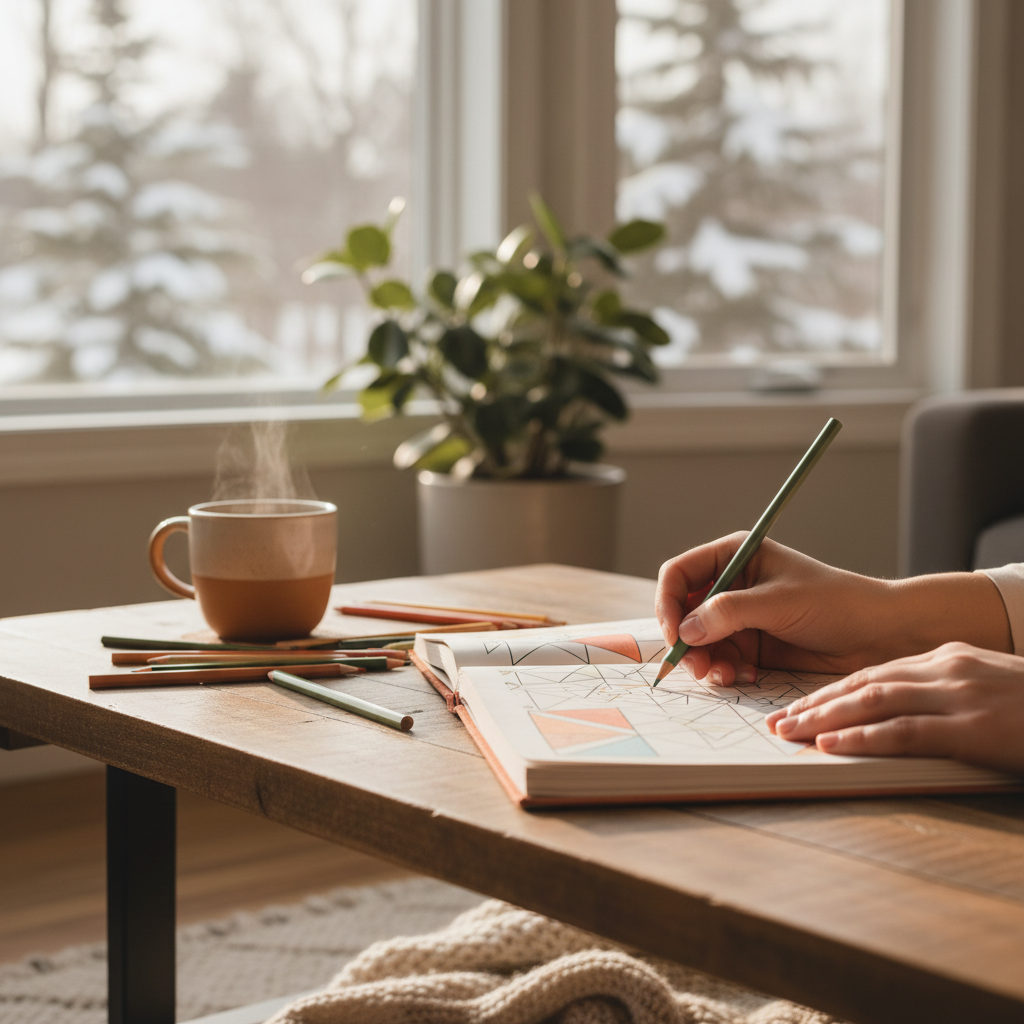
It's 9 p.m. in Barrie. The dishwasher hums. Your phone is face-down on the counter — finally — and the kettle's just clicked off. You sit down with a colouring book, a cheap tin of pencils, and one open page. Ten minutes later, your shoulders have dropped two inches and you didn't even notice it happen.
That's the strange, almost embarrassing magic of adult colouring for stress relief. It looks like nothing. It feels like everything. And it's been quietly helping anxious, overstimulated, screen-tired adults across Ontario find their way back to a calmer nervous system — without an app, a subscription, or a single notification.
This guide is the long, conversational version of what we wish someone had told us when we first started Zen Colour Art here in Barrie. We'll cover what colouring actually does to your brain, how long it takes to feel different, the simple ten-minute ritual we recommend to first-timers, and how to choose a book that won't frustrate you on page two.
What is adult colouring, really?
Adult colouring is a mindfulness practice that uses repetitive, low-stakes creative focus to slow racing thoughts and downshift the nervous system. The pages are more intricate than children's books — mandalas, florals, geometric patterns, layered scenes — but the goal is the opposite of "art." There's no critic, no audience, no finished product anyone needs to see.
Think of it as meditation with a pencil in your hand. Traditional meditation asks you to sit still and watch your thoughts. For a lot of people — especially anyone with ADHD-flavoured brain chatter or post-work-screen burnout — that's brutal. Colouring gives the busy part of your mind a small, satisfying job (stay inside this line, pick the next colour) so the rest of you can actually settle.
It's also one of the few hobbies left that costs almost nothing to start, doesn't require Wi-Fi, and looks the same in 2025 as it did in 1955.
Does colouring actually reduce stress? (the science)
Yes — short colouring sessions have been shown to lower self-reported anxiety and shift the brain into a calmer, more focused state. Studies from researchers like Nancy Curry and Tim Kasser found that adults who coloured intricate geometric patterns (like mandalas) for just 20 minutes reported significantly lower anxiety than those doing free-form drawing or unrelated tasks.
What's happening under the hood is interesting. When you colour a structured pattern, you engage the prefrontal cortex — the planning, focusing part of your brain — in a low-stakes way. That gentle engagement appears to quiet the amygdala, the brain's smoke alarm, which is the structure most responsible for the wired, jumpy feeling we call stress. Your breathing slows on its own. Your heart rate softens. You drift, just a little, into what psychologist Mihaly Csikszentmihalyi called flow: the absorbed, time-warping state where self-criticism goes quiet.
The American Art Therapy Association has been clear that colouring isn't formal art therapy — there's no therapist, no interpretation. But as a self-directed mindfulness tool, it sits in the same family as journaling, knitting, and walking: simple, repetitive, screen-free practices that help a modern nervous system come back to baseline.
The best part? Unlike meditation apps, you can't doomscroll your colouring book.
How long does it take to feel calmer?
Most people feel a noticeable shift within ten to twenty minutes. That's the consistent finding across the small but growing pile of studies on colouring and anxiety: by the twenty-minute mark, self-reported stress drops measurably. Some people feel it within five minutes — a kind of "oh, my jaw was clenched" awareness. Others need a full half-hour the first few times.
The trick is not to chase the feeling. If you sit down already grading yourself ("am I relaxed yet?"), you've turned a calming hobby into another performance. Set a soft timer for fifteen minutes, pick one page, and let whatever happens happen. The calm tends to arrive when you stop watching for it.
The Barrie connection: why slow rituals matter here
We started Zen Colour Art in Barrie for a very specific reason: this town is built for slow rituals, and most of us aren't using them.
If you've ever watched the light change over Kempenfelt Bay on a winter afternoon, or sat with a long coffee at one of the small downtown cafés on a Sunday morning, you already know what we mean. There's a pace to Barrie — and to small-town Ontario more broadly — that the rest of life keeps trying to override. Long winters, early sunsets, and that particular Georgian Bay quiet are a gift, but only if you actually sit down inside them.
A colouring book on the kitchen table is one of the easiest ways we've found to honour that. It pairs with tea and a Mariposa snowstorm. It gives you something to do with your hands while a podcast plays. It's the antidote to the 11 p.m. scroll. We've heard from customers who colour after a walk along the waterfront trail, parents who colour beside their kids' homework, and ER nurses at RVH who keep a book in their bag for the bus home.
You don't need to live in Barrie for this to work. But if you do, you have an unfair advantage: this place was practically designed for it.
A simple 10-minute mindful colouring ritual
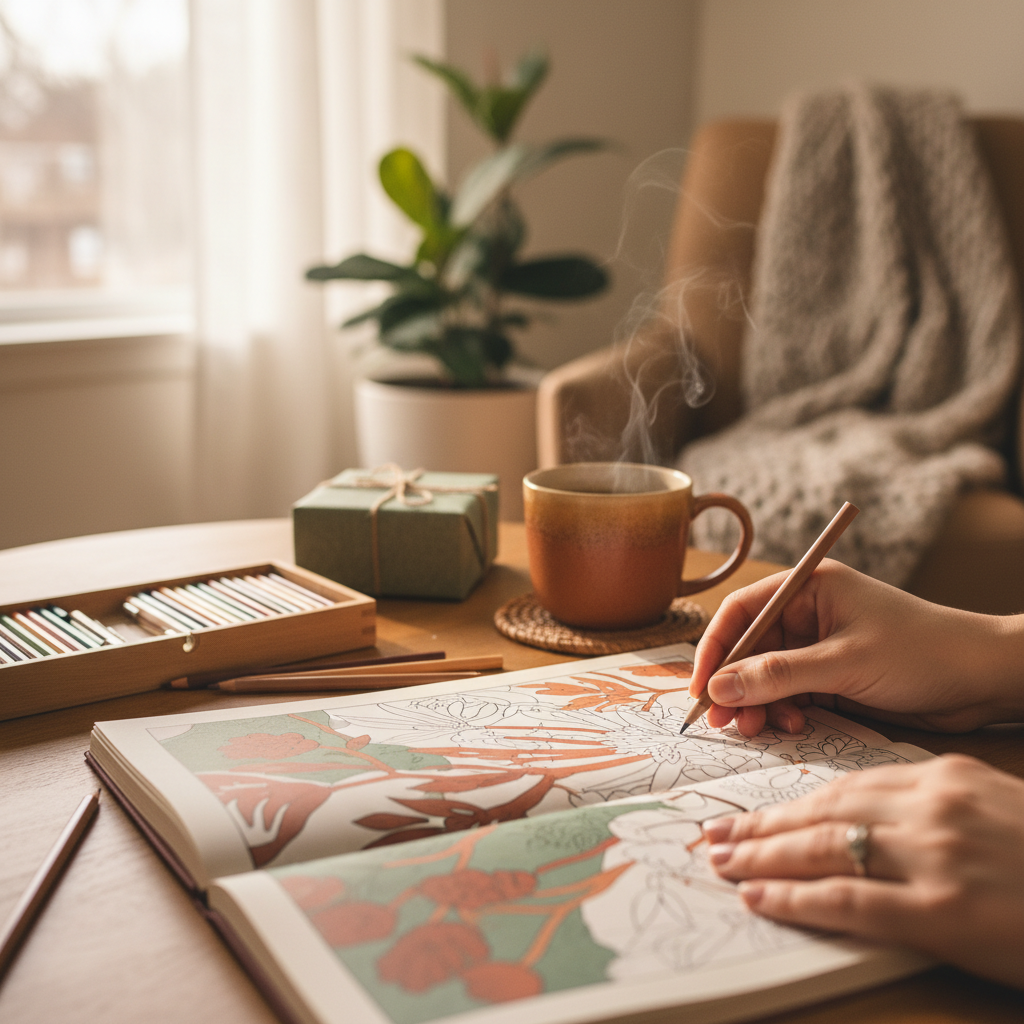
Here's the exact ritual we suggest to first-timers. Don't overthink it.
- Set the scene (1 minute). Phone in another room or on Do Not Disturb. Warm drink within reach. One lamp on, overhead light off if you can.
- Choose one page (30 seconds). Don't flip through the whole book. Open it, find a page that pulls your eye, commit. Decision fatigue is the enemy of calm.
- Take three slow breaths (30 seconds). In through the nose for four, out through the mouth for six. This alone tells your nervous system you're switching modes.
- Pick a starting colour (30 seconds). Whatever you reach for first. No palette planning. You can change your mind later.
- Colour one small section (8 minutes). Stay inside one area — a single petal, one curl of a wave, one corner of the mandala. The tiny scope is the point. If your mind wanders, just notice it and come back to the line.
- Close the book (30 seconds). Even if the page isn't done. Especially if the page isn't done. Leaving things unfinished and pleasant is part of the practice.
That's it. No journaling, no app, no streak to break. Do it three or four times a week and within a month you'll notice a real change in how quickly you can downshift in the evening. Browse more mindfulness reads when you're ready to go deeper.
Choosing a colouring book that won't frustrate you
Most of the cheap colouring books at big-box stores are designed for one thing: looking good on a shelf. They're often printed on thin, slightly shiny paper that bleeds, with bindings that fight you every time you try to lay the book flat. That's a fast way to give up on a habit before it starts.
When you're shopping for a mindful colouring book, look for:
- Heavier paper (at least 100 gsm). Pencils glide better, markers don't bleed through, and the page doesn't tear when you erase.
- A flat-lay binding. Spiral or lay-flat perfect-bound is a small detail that makes a huge difference at the kitchen table.
- Single-sided pages. So you can use any pen or marker without worrying about ruining the next design.
- A range of complexity. A good book mixes "I have ten minutes" pages with "I want to disappear into this for an hour" pages.
- A theme that pulls you in. Mandalas, florals, forests, spooky-cute — your nervous system relaxes faster when you're drawn to the imagery.
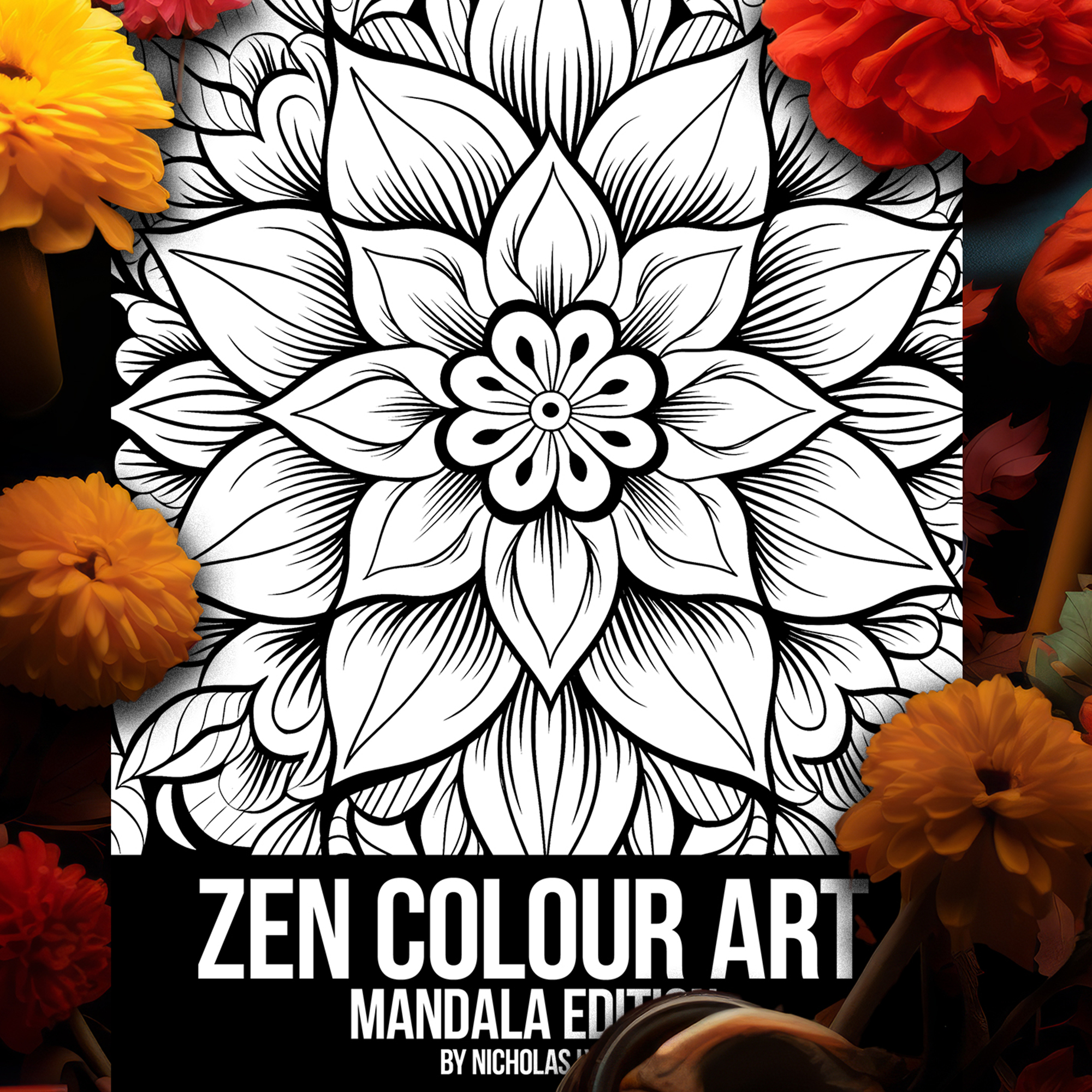
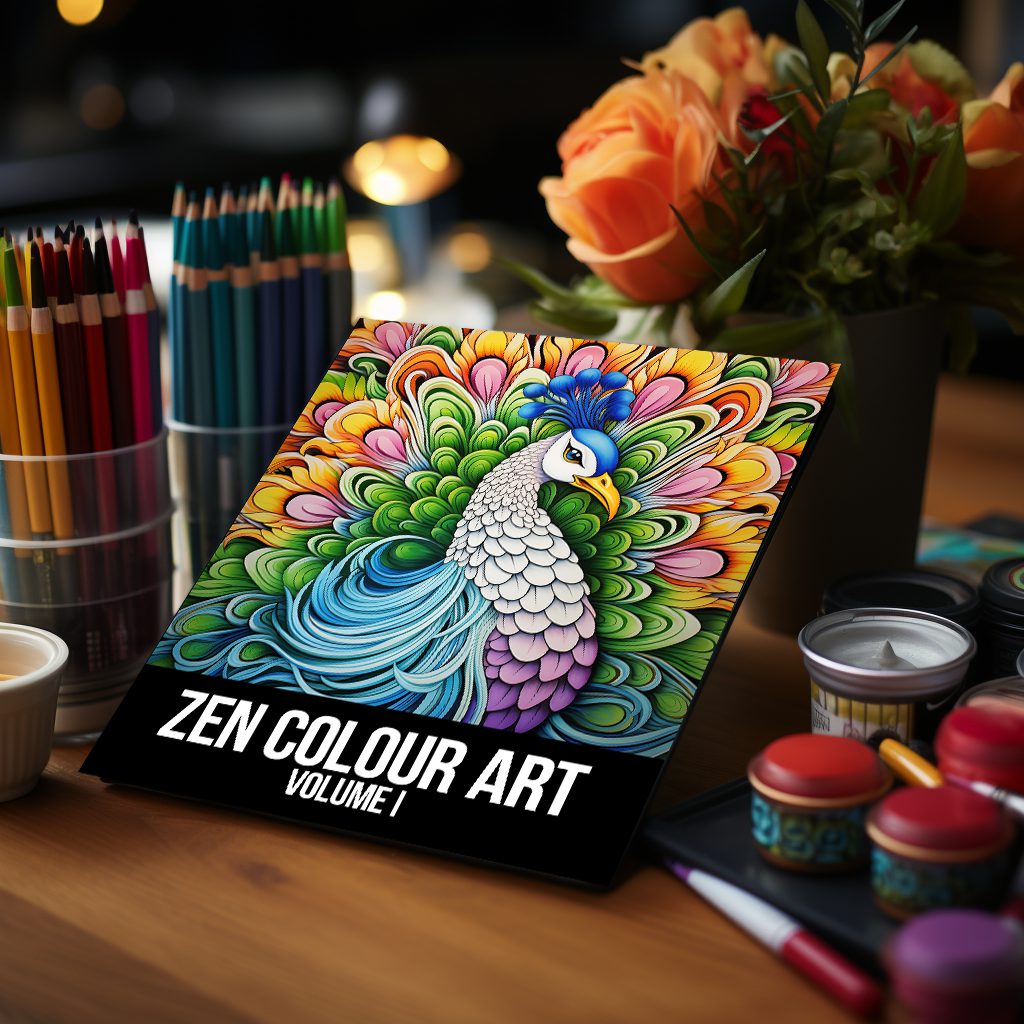
This is exactly what we obsess over at Zen Colour Art. Mindful Mandalas, Vol. 1 was built around the ten-minute ritual above, and The Calm Collection bundles three of our most-loved books for people who want a full season's worth of pages. If you'd rather see everything in one place, you can browse every mindful book on our shop page.
Pencils vs. markers vs. gel pens (a quick guide)
The "right" tools are the ones you'll actually pick up. But here's the honest comparison:
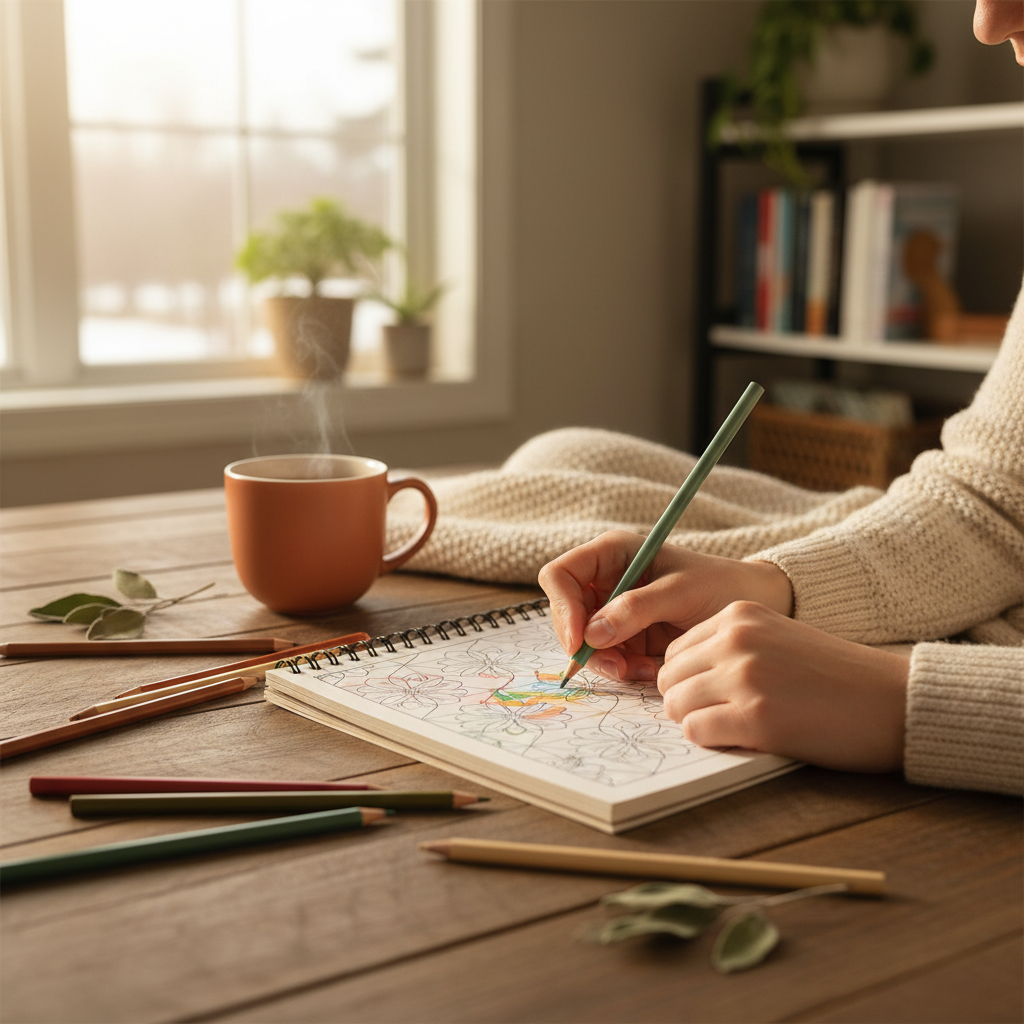
- Coloured pencils — Most forgiving. Quiet, controllable, easy to layer. Best for mandalas and any page where you want gradients. Our pick for beginners.
- Fineliner markers — Bold, satisfying, fast. Great when you want a finished-looking page in one sitting. Test on a back page first to check for bleed.
- Gel pens — Brilliant for tiny details, glitter, and white highlights on darker designs. Less useful for filling large areas.
- Watercolour pencils — A nice middle path. Colour normally, then go over a section with a damp brush for a soft wash. Only on heavy paper.
You do not need an expensive set. A 24-pack of Crayola or basic Faber-Castells is plenty for the first six months. Upgrade only when you actually feel limited — not because Instagram told you to.
Building a screen-free habit that actually sticks
The reason most "I'll colour to relax" plans die in week two isn't motivation. It's friction. The book is in a drawer. The pencils are in another drawer. By the time you've assembled everything you've already opened your phone "for one second."
Three small fixes that work:
- Leave it visible. Book open on the coffee table or kitchen island. Pencils in a small cup beside it. Setup time: zero.
- Stack it on an existing habit. After dinner. Before bed. While the kettle boils on Saturday morning. New habits stick when they ride on top of old ones.
- Use the two-minute rule. Promise yourself only two minutes. You'll almost always keep going — but on the rough days when you don't, you've still kept the streak alive.
If you'd like a gentle nudge once a month with new pages, ritual ideas, and seasonal drops, you can join the slow-letters newsletter — no spam, no urgency, just a quiet email from us in Barrie.
When colouring is (and isn't) enough
We want to be honest here, because our story in Barrie is built on it: colouring is a beautiful daily practice, but it isn't treatment for clinical anxiety, depression, PTSD, or burnout. If your stress has teeth — if it's affecting your sleep, your work, your relationships, or your body — please talk to a family doctor or a registered therapist. In Simcoe County, CMHA Simcoe and your family physician are good first calls.
Think of colouring the way you'd think of a daily walk: genuinely good for almost everyone, often surprisingly powerful, but not a substitute for real care when real care is what you need. The best mindfulness practice in the world works alongside good support, not instead of it.
The quietest ten minutes of your day
If you take one thing from this article, take this: you don't need a new app, a new course, or a new identity to feel calmer in the evening. You need ten quiet minutes, a page with lines on it, and something to fill them with. Everything else is marketing.
We make books for that ten minutes. Handcrafted here in Barrie, printed on paper that can take a pencil, designed by people who actually use them at their own kitchen tables. If you'd like to start tonight, Mindful Mandalas, Vol. 1 is a good place to begin — and your future, less-clenched-jaw self will thank you.
Frequently asked questions
Is adult colouring really good for anxiety? Yes — research suggests that 10–20 minutes of colouring intricate, structured patterns like mandalas can measurably lower self-reported anxiety. It works as a mindfulness aid, not a clinical treatment, so it pairs best with sleep, movement, and professional support when needed.
How long should I colour for stress relief? Ten to twenty minutes is the sweet spot. That's long enough for your breathing to slow and your nervous system to downshift, but short enough that it doesn't feel like another task. Three to four short sessions a week beats one long session.
Do I need expensive pencils to start? No. A basic 24-pack of coloured pencils from any Barrie or Ontario stationery store is more than enough for the first six months. Upgrade only when you feel genuinely limited — not because of marketing.
Is colouring better than meditation for beginners? For many people, yes. Sitting still with your thoughts is hard. Colouring gives the busy part of your mind a small job so the rest of you can actually settle, which makes it a gentler on-ramp to mindfulness than seated meditation.
What's the best adult colouring book for stress relief? Look for heavy paper (100 gsm or more), single-sided pages, a flat-lay binding, and imagery you're naturally drawn to. Mindful Mandalas, Vol. 1 from Zen Colour Art was designed specifically around a 10-minute calming ritual.
Where can I buy mindful colouring books in Barrie, Ontario? You can order any Zen Colour Art book online at zen-art-ignite.lovable.app with shipping across Ontario and Canada. We're based in Barrie and our books are designed and curated locally for adults who want a screen-free wind-down ritual.