How to Choose a Colouring Book for a Child Aged 4 to 8
Nicholas Lynn··5 min read
To choose the best colouring book for a child aged 4 to 8, look for three essential elements: heavy paper that resists marker bleed, clear outlines with generous open spaces, and subjects that spark curiosity without overwhelming developing motor skills. Books with thick lines and sturdy pages keep colouring fun rather than frustrating.
Between the ages of four and eight, children experience rapid growth in fine motor coordination, hand strength, and attention span. However, an overly complex illustration filled with tiny slivers can lead to hand fatigue and tears. Conversely, an overly plain design can bore an eager seven-year-old. Finding the sweet spot gives children a calm, screen-free outlet where they can build confidence one page at a time.
Understanding Fine Motor Stages: Ages 4 to 8
A four-year-old and an eight-year-old approach a blank page with very different physical capabilities. Understanding these developmental milestones helps you pick a book that supports your child where they are today.
Ages 4 to 5: Building Hand Strength and Control
At age four or five, children are transitioning from a whole-hand fist grip to a five-finger or tripod pencil grasp. Their colouring motions come largely from the wrist and elbow rather than isolated finger movements.
- What they need: Bold, thick line art that provides a clear visual border, alongside large, open shapes.
- Common pitfall: Tiny, cramped patterns. When a four-year-old repeatedly crosses outside intricate borders, they may feel discouraged and abandon the activity.
Ages 6 to 8: Precision, Shading, and Storytelling
By six to eight years old, most children have settled into a dynamic tripod grip. They can control smaller finger movements, stay within lines with greater ease, and begin experimenting with colour blending, patterns, and background storytelling.
- What they need: Illustrations that feature distinct focal characters surrounded by thoughtful secondary details—like clouds, tiny critters, or foliage.
- Common pitfall: Babyish imagery. School-age children often want pages that feel mature, creative, and imaginative.
4 Key Features to Look For in a Children's Colouring Book
When shopping for children's colouring books in local shops or online, look beyond the cover graphic. Check the physical construction of the book using these four criteria.
1. Paper Quality and Weight
Most mass-market colouring books are printed on thin, greyish newsprint (often around 50 to 65 gsm). This paper tears easily under the pressure of enthusiastic crayons and absorbs water-based marker ink immediately, soaking through to spoil the picture on the reverse side.
For a satisfying experience, look for artist-grade paper of at least 100 to 120 gsm. Thicker, acid-free paper holds up to:
- Heavy wax crayon pressure without ripping.
- Washable felt markers without feathering or bleed-through.
- Light water-based paints or gel pens.
2. Single-Sided Printing
Single-sided pages are an immediate marker of quality. When illustrations are printed on only one side of each sheet, children can use their favourite vibrant markers without worrying about ruining an illustration on the back. It also makes it simple to cut out a completed masterpiece and display it on the refrigerator or slip it into a frame.
3. Balanced Line Thickness and Open Shapes
At Zen Colour Art, our creative philosophy centres on making pages that feel inviting rather than intimidating. For children aged 4 to 8, line weight acts as a supportive guide. Distinct, clean outlines define the core shapes, while generous white space allows room for big strokes of colour. A good children's illustration leaves space for the child's imagination—they might even choose to draw their own stars, flowers, or patterns in the open areas.
4. Engaging, Open-Ended Themes
Children engage most deeply when the artwork taps into universal themes of adventure, magic, and nature. Look for titles that tell a quiet visual story—woodland animals building dens, fairies tending mushroom gardens, or friendly creatures exploring new landscapes.
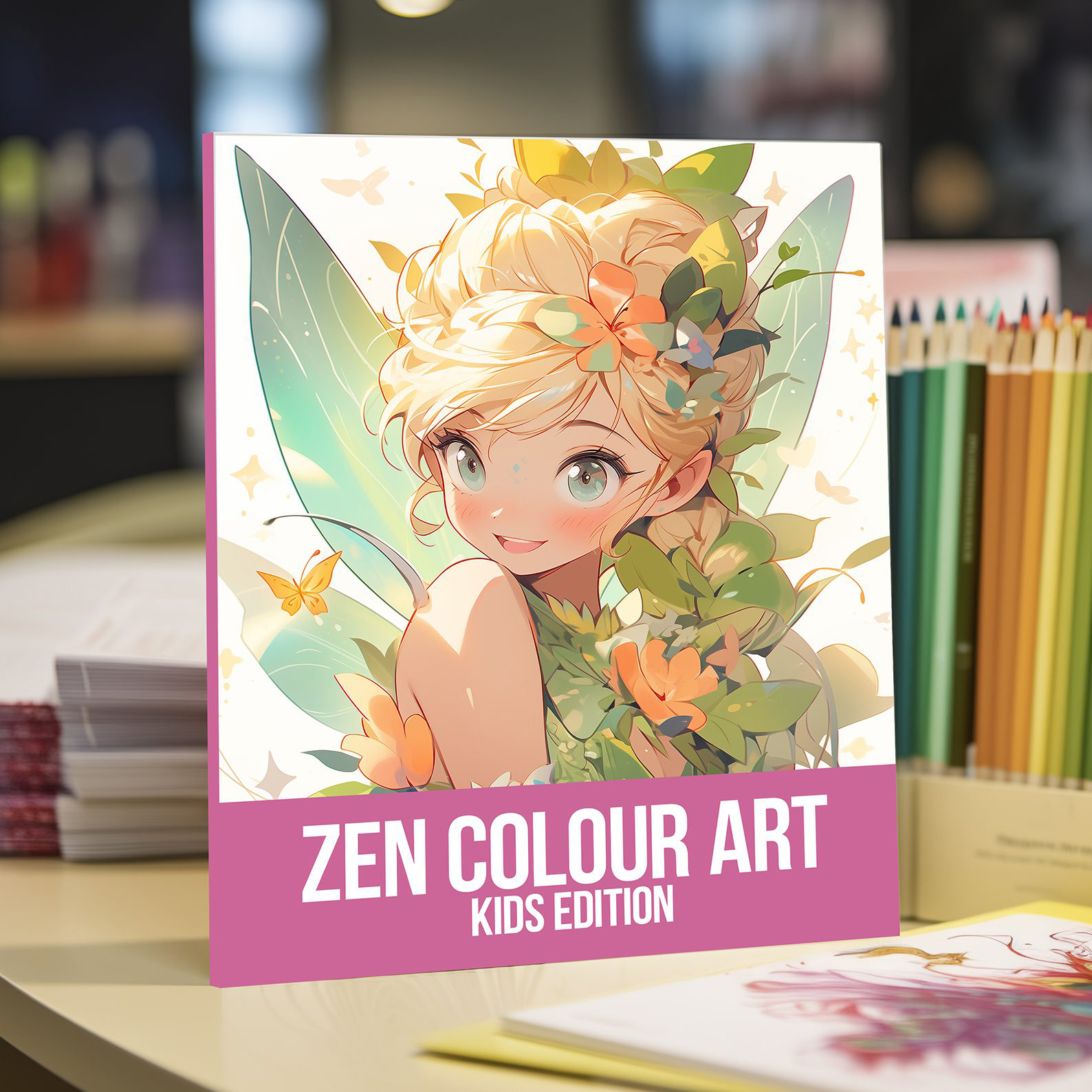
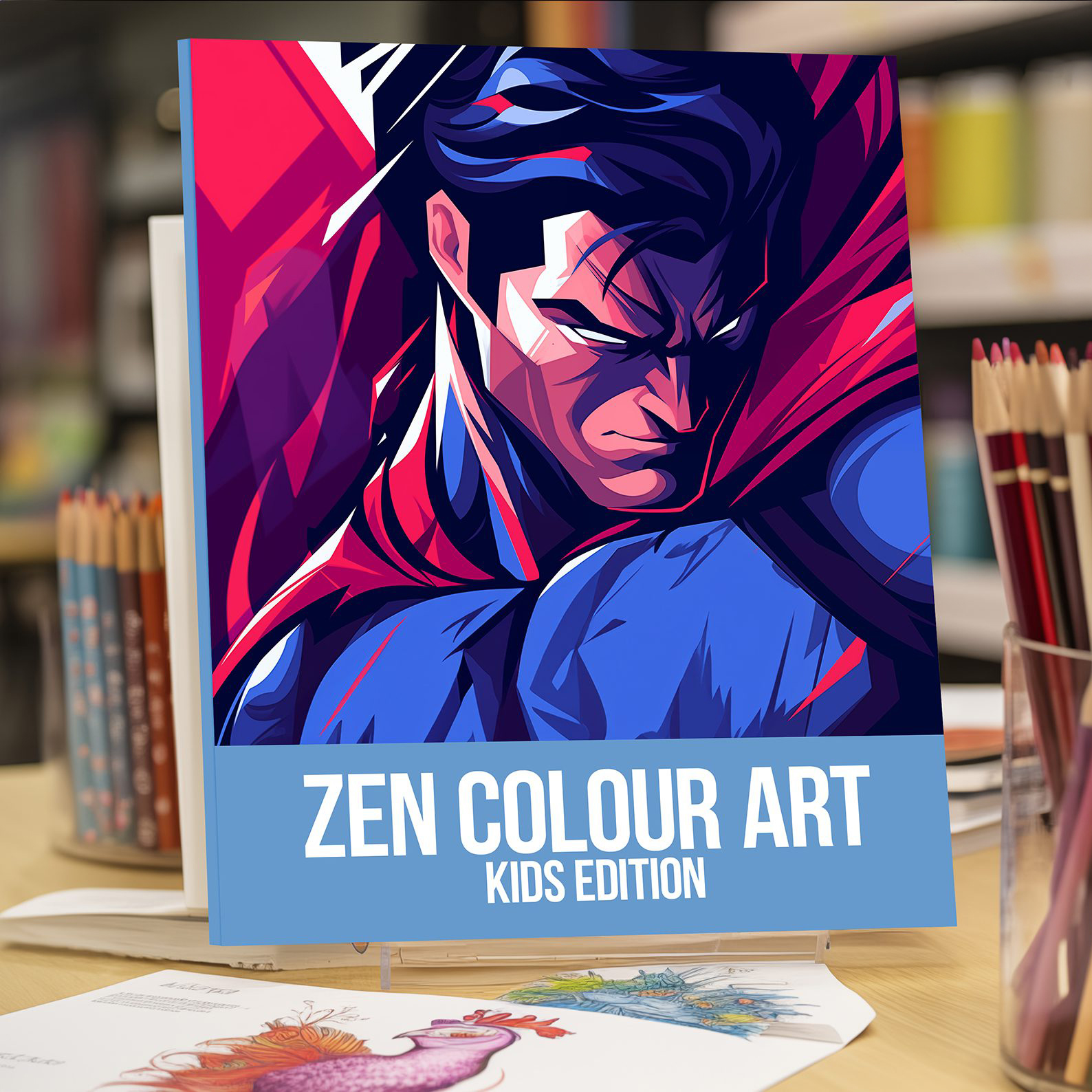
Avoid rigid categorisation. At Zen Colour Art, our Kids Edition: Boys (featuring friendly animal explorers) and Kids Edition: Girls (featuring whimsical fairies and forest scenes) are titled purely for thematic reference. Both collections are completely open to every child. A child's creative joy comes from their personal interests, not stereotypes.
Matching Supplies to the Book
A great colouring book is only half of the equation. Pairing the book with ergonomic, age-appropriate art supplies makes a noticeable difference in hand comfort.
| Age Group | Recommended Medium | Why It Works |
|---|---|---|
| Ages 4–5 | Triangular beeswax crayons or broad-tip washable markers | Triangular barrels naturally promote a proper pencil grip while broad tips fill large shapes quickly. |
| Ages 6–7 | Thick-core coloured pencils and fine-line markers | Pencils allow early shading practice without breaking easily under variable hand pressure. |
| Age 8 | Classic coloured pencils, gel pens, and dual-tip markers | Older children appreciate fine control for intricate accents and vibrant detailing. |
How Colouring Supports Calm and Focus
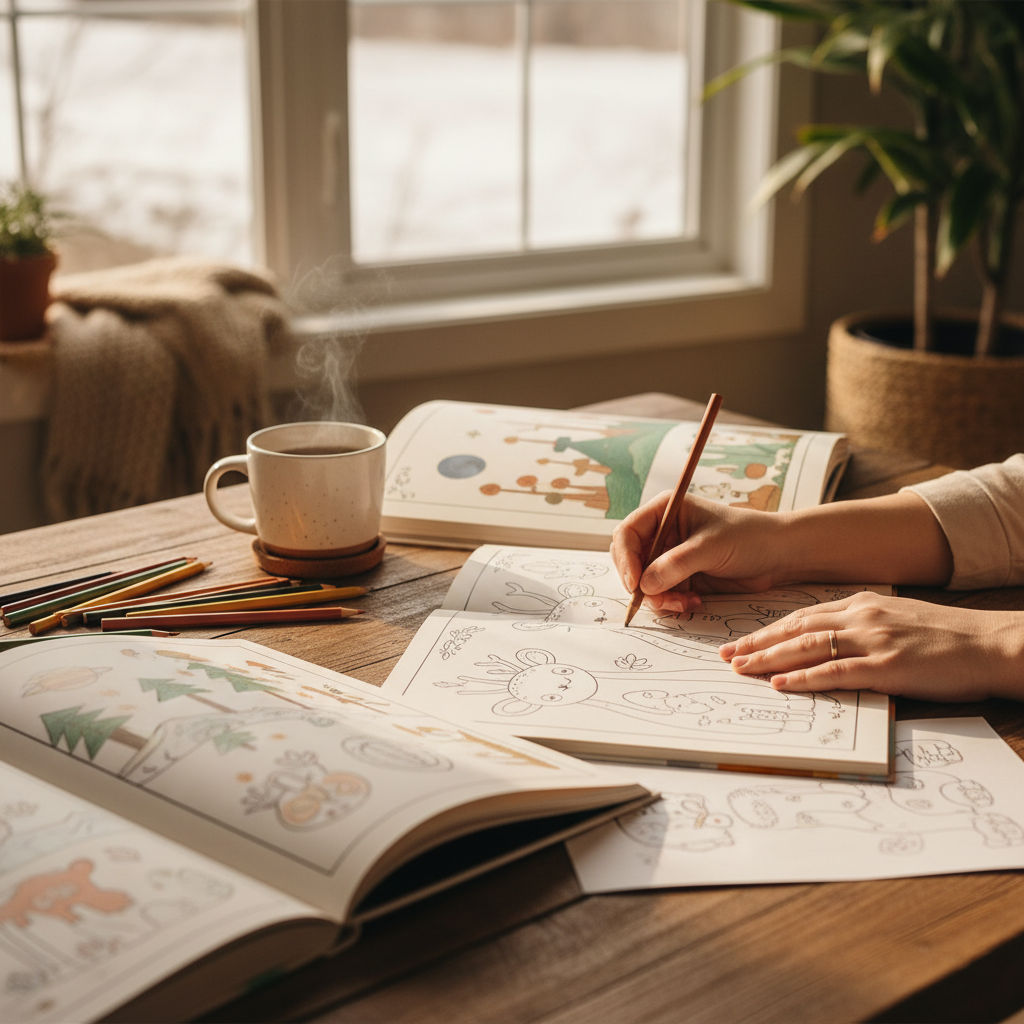
Parents and educators frequently seek out colouring books as a peaceful, tactile alternative to tablets and television. While colouring is not a clinical treatment for behavioural conditions, many people find that sitting down with paper and pencils can support quiet focus and act as a gentle reset after a stimulating school day.
A predictable, rhythmic activity like colouring gives the hands something calming to do while the mind rests. It offers children autonomy: they make every choice about palette, sequence, and pacing without right or wrong answers.
Quality Colouring from Zen Colour Art
If you are searching for thoughtfully crafted books for young creators, Zen Colour Art offers titles designed specifically to support calm, confident creativity. Founded by Nicholas Lynn in Barrie, Ontario, our studio prints every children's title on premium 120gsm artist paper, ensuring that marker ink stays where it belongs.
- Kids Edition: Boys (Little Explorers): 48 pages of friendly animals, bold shapes, and outdoor scenes tailored for developing hands (CAD $18.00).
- Kids Edition: Girls (Enchanted Fairies): 72 pages of starlit forests, mushroom villages, and whimsical fairy gardens (CAD $26.00).
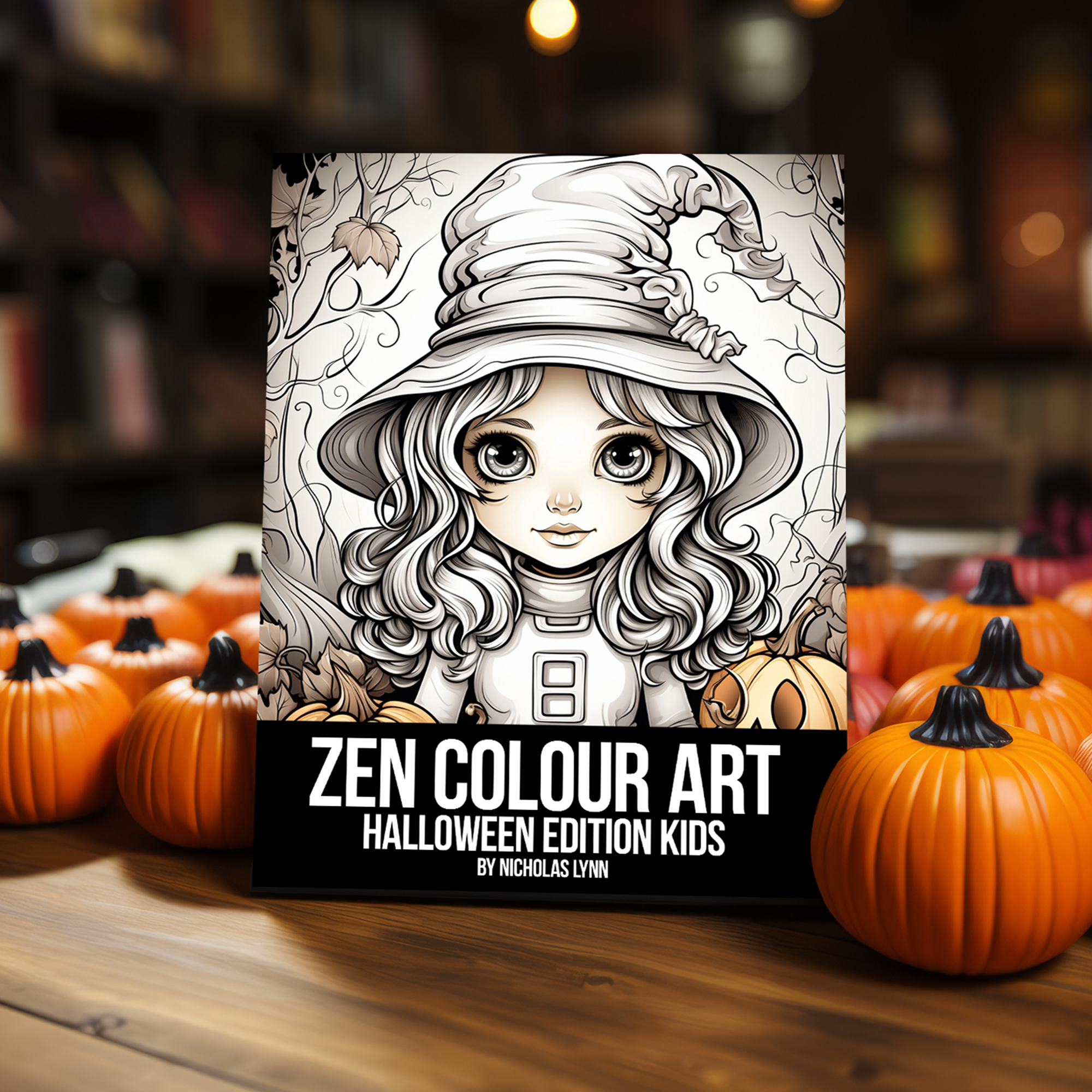
- Halloween: Spooky & Cute: 56 pages of friendly pumpkins and gentle autumn doodles suitable for the whole family (CAD $20.00).
All orders ship across Canada from Barrie within 1 to 2 business days, with local pickup available at 101 Grace Crescent and free delivery throughout Simcoe County.
Finding Joy on the Page
Choosing a colouring book for a child between four and eight comes down to respecting their physical stage while nurturing their imagination. By prioritizing sturdy 120gsm paper, clear and inviting line art, and open themes, you give them more than just an activity book—you give them a peaceful space to create, unwind, and build pride in their work.